Search Icon
    RetailNext Alternative: Vemcount vs RetailNext Compared

    Looking for a RetailNext Alternative? Compare Vemcount

    Vemcount is people counting and retail analytics software that runs on current 3D and AI sensors from independent manufacturers, so the sensor you install today never ties you to one software vendor. You start with counting and grow into sales, tracking, tenant and facility management on the same platform. Vemco Group has built the software for more than 20 years and runs it in 55,000+ installations across 98+ countries. This page compares Vemcount with RetailNext on the points that decide a platform choice.

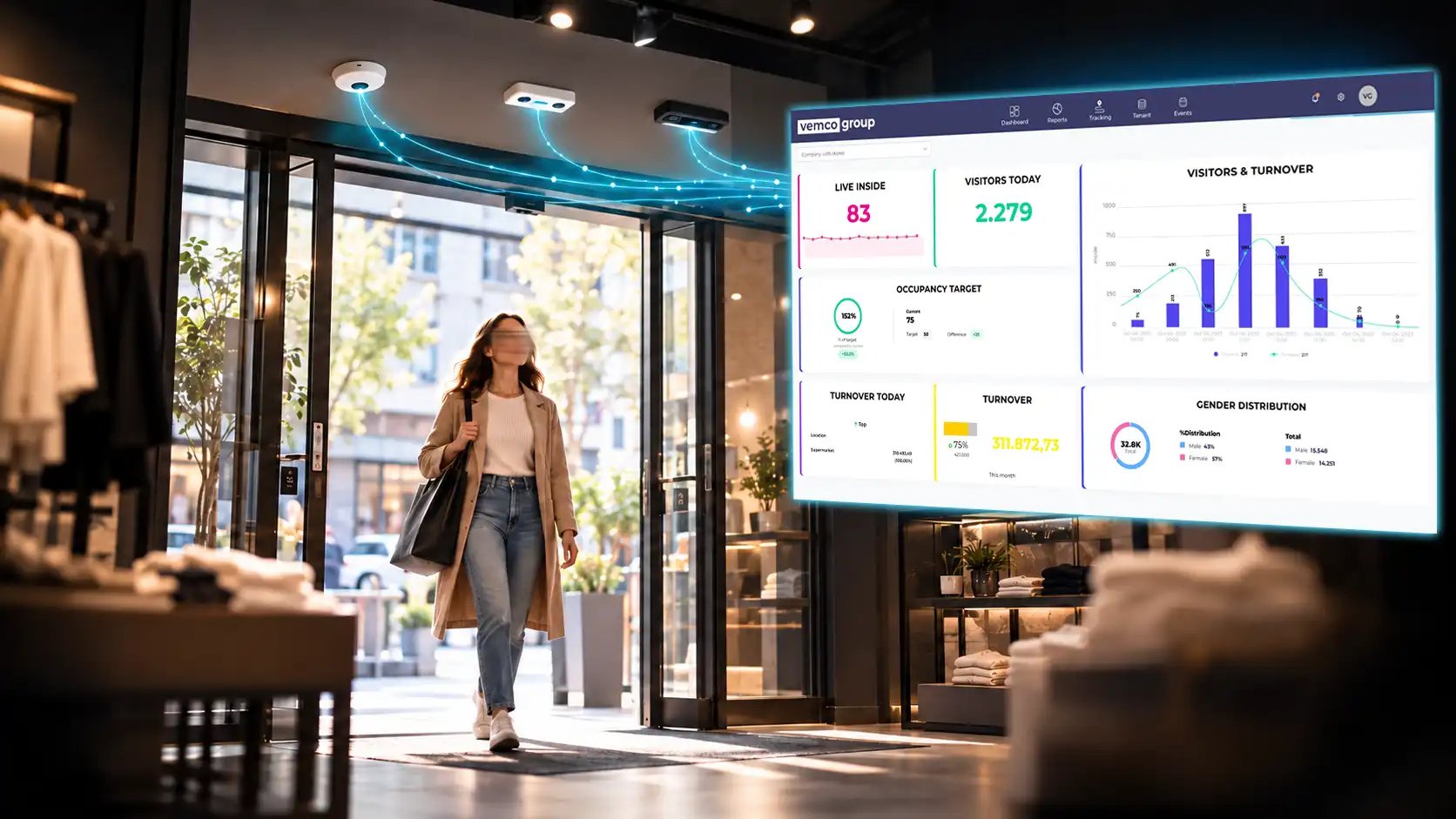
    RetailNext alternative: Vemcount people counting and retail analytics dashboard compared with RetailNext

    Four Differences to Understand Before You Choose a RetailNext Alternative

    Locked Hardware

    RetailNext runs on its own Aurora sensors. Those sensors expose no web interface, so no other platform can integrate them. The sensor is the largest part of the investment, and if you change software after three years the sensors have to be replaced with it. Vemcount has integrated more than 40 hardware vendors over the years, so the sensors you install stay useful whatever you decide about software later.

    Video to the Cloud or Counting on the Device

    Aurora sensors stream video to servers in the USA, where the counting lines are placed and the counting is done. That is a continuous bandwidth load per entrance and a data flow your IT and privacy teams will want to review. The sensors Vemcount works with count on the device and send only the counts, so bandwidth is minimal and no video needs to leave the store.

    Estimates You Cannot See

    When a RetailNext sensor is blocked or offline, the gap is filled with aggregated, estimated data, and the figure looks like any other number in the report. Vemcount marks aggregated data as aggregated, the sensor health checker tells you which sensor is not delivering, and when the real data arrives the estimate is replaced automatically. You always know which numbers were measured.

    Real Time That Is Real

    RetailNext refreshes in one minute or more. Vemcount shows a visitor on the dashboard about two seconds after they pass the sensor. That is what makes occupancy limits, queue alerts and staffing calls actionable, with alerts by SMS, WhatsApp, webhook, screen or audio, and MQTT to trigger sirens, sliding doors and building management systems.

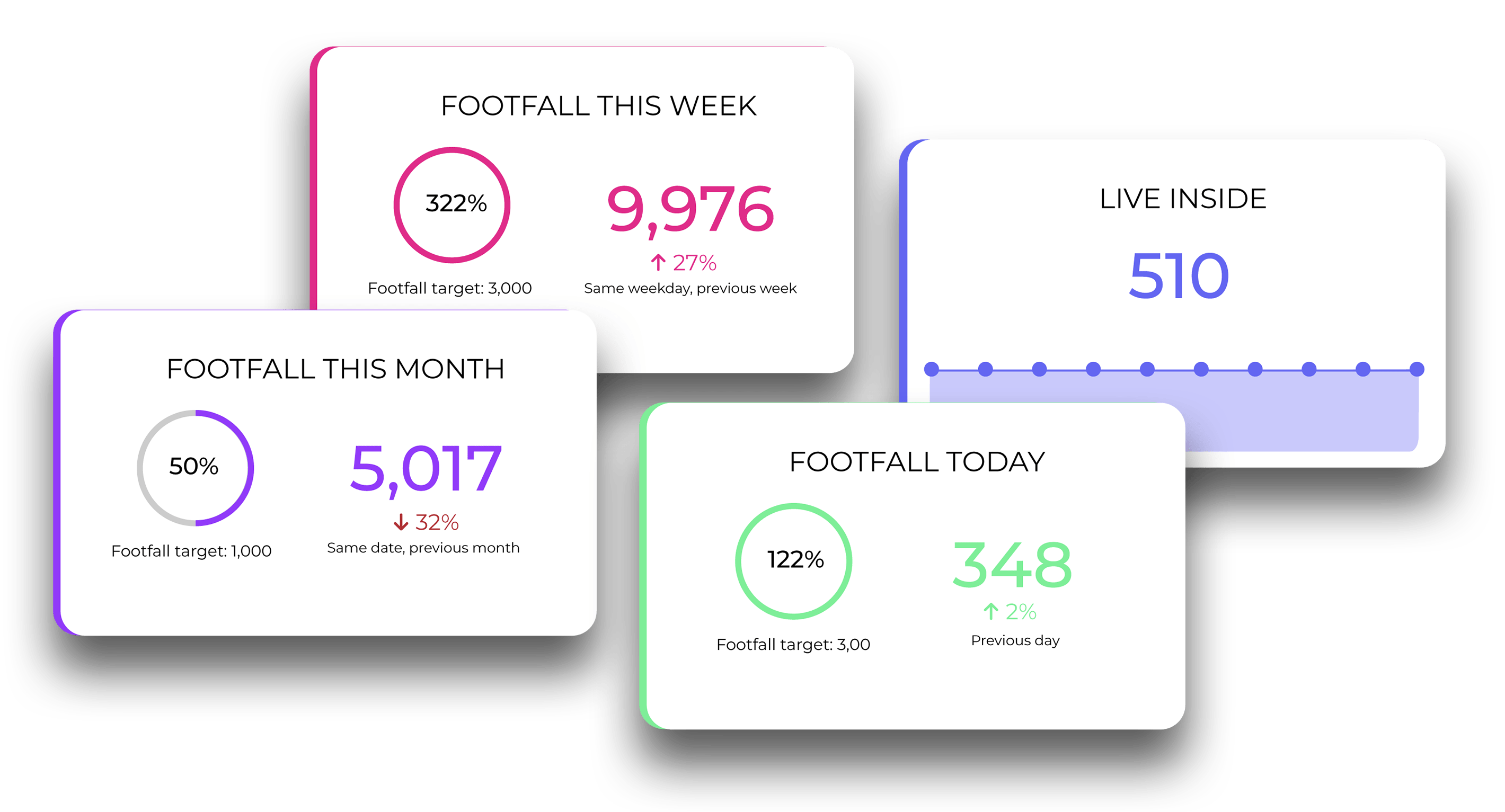
    Vemcount retail analytics dashboard, a hardware independent alternative to RetailNext

    Who Vemco Group Is, and Why This Comparison Exists

    RetailNext is a well known in-store analytics platform built around its own sensor. Vemcount takes a different approach: independent hardware, counting on the device and a platform that grows with you.

    Vemco Group has built people counting and retail analytics software for more than 20 years. Vemcount runs in 55,000+ installations across 98+ countries, counts more than 60 million people every day, serves 800+ shopping malls alongside retail chains, airports and public buildings, and is available in 8 languages. Over those years we have integrated more than 40 hardware vendors, from Xovis, Irisys and Brickstream to Hikvision, Avigilon Alta, Eco-Counter, Axis, Hella Aglaia, Intenta, TDI and VIVOTEK. RetailNext's Aurora sensor is the exception, because it exposes no interface another platform can connect to. That one design decision shapes everything else in this comparison: who owns the hardware, where the counting happens, how much bandwidth it uses and what you can do with the data afterwards. The sections below set out the facts so you can decide which model fits your estate.

    Vemcount vs RetailNext: Seven Differences That Matter

    • Hardware and Lock-In

    • Where Counting Happens and Bandwidth

    • Offline Data and Health Checking

    • Real Time and Alerts

    • From Footfall to a Platform

    • Reporting and AI

    • Commercial Model and Ownership

    Hardware independence: Vemcount works with sensors from independent manufacturers, RetailNext counts only with its own Aurora sensors

    RetailNext customers count with the vendor's own Aurora sensors. Those sensors expose no web interface, which means no other software platform can read them. In practice the sensor, the largest single item in a people counting budget, is tied to the software contract for its whole life. If the support situation changes, if a data protection review raises questions you would rather not have to answer, or if you simply want different software in three years, the sensors have to be replaced along with it, and across an estate that is an expensive journey. Vemcount is built the other way round. Over more than 20 years Vemco has integrated more than 40 different hardware vendors, and Vemcount works today with current 3D and AI sensors from independent manufacturers such as Xovis, Irisys, Brickstream, Hikvision, Avigilon Alta, Eco-Counter, Axis, Hella Aglaia, Intenta, TDI and VIVOTEK. You pick the right sensor for each entrance, keep counters you already own and change either the hardware or the software later without losing the other. RetailNext's sensors are the one family we cannot connect, because it is not technically possible.

    Counting on the device with Vemcount versus video streamed to cloud servers for counting

    Aurora sensors stream video to RetailNext servers in the USA. The counting lines are drawn there and the counting itself happens there. Two consequences follow. Every entrance carries a continuous video upload, so bandwidth consumption is high and the store network has to be sized for it. And video of your customers leaves the building and the region as a matter of routine, which your data protection officer will want to assess, particularly in Europe. The sensors Vemcount works with do the counting on the device. Lines are configured on the sensor, people are counted there, and only the counts travel to the platform. The bandwidth per sensor is negligible, a temporary connection drop does not lose the count because the device buffers it, and no video needs to leave the store. During a pilot, measure the traffic per sensor on both systems. The difference is not subtle.

    Vemcount sensor health checker and marked aggregated data compared with unmarked estimates

    Sensors get blocked by a display, lose power or drop off the network. What matters is what the software does next. RetailNext fills the gap with aggregated data, an estimate derived from other periods, and the figure appears in reports like any measured value. The user cannot see whether a number is real or estimated. Vemcount treats the two differently. The sensor health checker reports when a sensor stops delivering, so the store or the service partner can act on the actual problem. Where aggregated data is used to keep the trend readable, it is shown as aggregated. When the sensor pushes its real data, the estimate disappears automatically and the measured figure takes its place. For anyone using footfall to pay rent, staff a store or judge a campaign, knowing which numbers were measured is not a detail. Pull one sensor offline during your pilot and look at how each system presents the gap the next morning.

    Vemcount real time dashboard with two second latency and alerts by SMS, WhatsApp, webhook and MQTT

    RetailNext's real time view refreshes at one minute or more. Vemcount shows a person on the dashboard about two seconds after they pass the sensor. At one minute you can review what happened. At two seconds you can act on it, and that is the difference between a live occupancy figure you can enforce at the door and one you glance at afterwards. Vemcount turns the live data into action. Alerts go out by SMS, WhatsApp, webhook, on-screen or audio notification when occupancy, queue length or any other threshold is crossed. Through MQTT the platform triggers third party devices directly: a siren when a limit is reached, a sliding door that holds until the count drops, a building management system that adjusts ventilation to the number of people in the space. RetailNext does not offer this. If real time matters to your operation, test the latency side by side rather than reading about it.

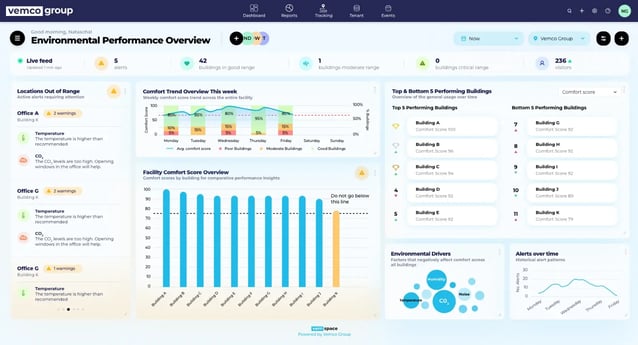
    Vemcount platform scope: counting, sales, tracking and Re-ID, VemTenant, VemSpace and IoT devices

    RetailNext focuses on people counting and in-store analytics data. That is a clear scope and it does that job. Vemcount is designed as the starting point of a platform. You begin with counting and add what the business needs next. The sales module connects any POS, with 19 native connectors, to give conversion, sales per visitor and average basket against traffic per store and per hour. Tracking and Re-ID show routes, dwell and repeat visits. VemTenant gives property owners footfall and turnover reporting per tenant, which is why more than 800 malls run on Vemco software. VemSpace covers space and facility management, integrating not only people counters but a large portfolio of IoT devices on LoRaWAN, Sigfox and NB-IoT: air quality, temperature, desk and room occupancy, energy and more. 3D maps and further modules are available today, and VemIndex, an advanced benchmarking module, is planned for release in November 2026. One platform, one login, one data model, growing at the pace you set.

    Vemcount BI layer with Snap Reports, advanced dashboards and a built-in AI advisor

    With RetailNext, what you see is what you get: the reports and views the platform provides. Vemcount has a BI layer on top of the data with two ways of working. Snap Reports are one click: choose the report, get the data, on screen or scheduled to each recipient in their own language, in any of 8 languages. Advanced reports and dashboards are where you really work with the data: combine footfall, sales, occupancy and IoT data across sites and periods, build the views your finance and operations teams ask for, and publish them across the organisation. For companies that want an AI advisor on their data, AI is built into the platform, so a regional manager can ask why conversion dropped on Saturday and get an answer grounded in the actual figures. Vemcount is enterprise software built to enterprise security requirements, for organisations that need more than in-store analytics data. Ask both vendors to reproduce one of your real monthly board reports during the pilot.

    Ownership comparison: Vemcount SaaS per location with sensors you own or rent versus a per sensor subscription

    RetailNext publishes a per sensor per month subscription that bundles the Aurora hardware, the software and the warranty. The sensor stays part of the subscription rather than an asset you own, and because no other software can read it, it has no use outside that contract. Vemcount separates the two decisions. The software is licensed as SaaS per location, with users, API access and reports included. The sensors you buy outright and own, rent per entrance with service included, or keep from your existing installation if they are on the supported list. Sensors typically outlive a software contract, and independent sensors keep their value at renewal time. Compare both offers over five years on your real store and entrance count, and ask what happens to the hardware at the end of the term. That question tends to settle the decision.

    How to Run a Side by Side Pilot
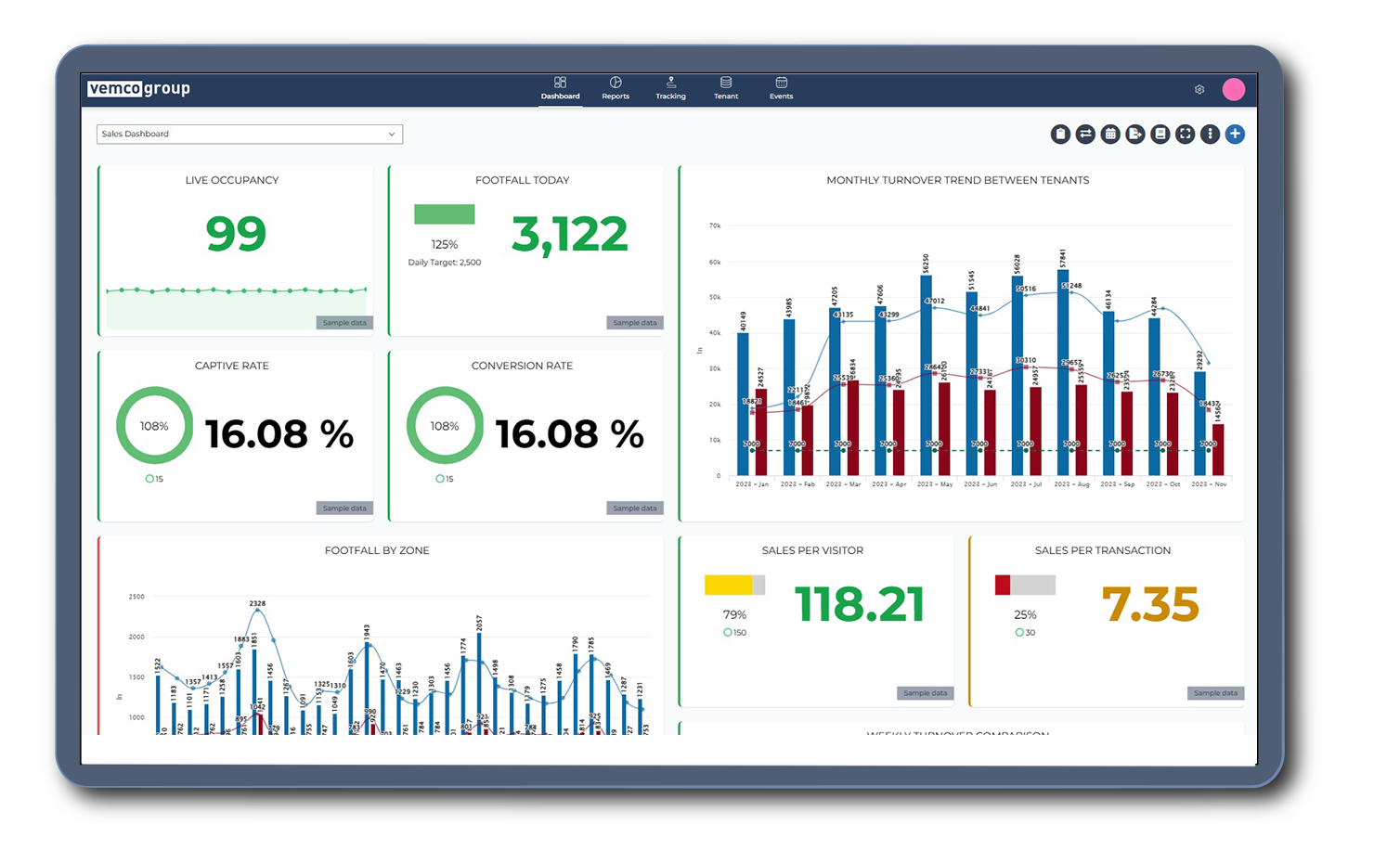
    Side by side pilot dashboard comparing people counting accuracy and conversion between Vemcount and another platform

    The fairest way to compare Vemcount with RetailNext is a 30 day pilot on two entrances of different character, a wide main entrance and a narrow side door, with both systems counting the same doors at the same time. Verify each against manual counts on at least three trading days including a peak, and agree the accuracy clause and the measurement method in writing before the pilot starts. Vemcount is contracted at a minimum of 96 percent and typically delivers 98 to 99 percent.

    Then test what rarely gets tested. Walk through the door and time how long it takes for your own visit to appear on each dashboard; Vemcount shows it in about two seconds. Pull a sensor offline for an afternoon and see how each system marks the gap the next morning. Measure the bandwidth per sensor on the store network. Connect the POS and check that conversion is calculated the way your finance team expects. Export a month of data through each API into your own BI tool. Log a support ticket and time the answer. Finally, price both offers over five years on your real store and entrance count, including what happens to the sensors at the end of the term.

    RetailNext and Aurora are trademarks of their respective owners. This comparison is based on publicly available information and Vemco's integration experience as of September 2026.

    Switching Without Disruption: How a Move to Vemcount Works

    1. Sensor Audit

    We review every entrance and every sensor in place. Sensors from the 40+ vendors Vemco has integrated connect directly. Aurora sensors cannot be reused, because they expose no interface another platform can read, so for those entrances we recommend a current 3D or AI sensor you buy or rent, matched to the width and height of the door.

    2. Parallel Running

    Both platforms count side by side for a few weeks. Daily totals are reconciled per entrance, differences are explained and the accuracy commitment is verified against manual counts before the old system is switched off. You also see the two second dashboard and the sensor health checker working on your own doors before you commit.

    3. History Import

    Where your current contract allows an export, historical footfall is imported into Vemcount so year on year comparisons and seasonal benchmarks continue without a gap. Check your data export rights before you give notice, and ask how estimated periods are marked in the export so you know which history was measured.

    4. Integrations and Training

    POS connectors, BI exports, Snap Reports and API access are set up during parallel running, so conversion reporting is live on day one. Alerts and any MQTT triggers are configured with your operations team. Store, regional and head office users are trained in their own language before go-live.

    Vemcount vs RetailNext: Feature Comparison at a Glance

    CategoryRetailNextVemcount
    Best forRetailers that want in-store analytics built around one sensor of their own.Retailers, malls and property owners who want to choose sensors freely and grow from footfall into sales, tenant and facility data on one platform.
    SensorsOwn Aurora sensor. Ask which third-party sensors are supported.40+ hardware vendors integrated, including Xovis, Irisys, Brickstream, Hikvision and Axis. See supported sensors.
    Hardware modelAsk the vendor about rental and replacement terms.Buy, rent with no capex, or rent-to-own. Rented sensors are serviced and replaced free of charge.
    Accuracy commitmentAsk for the contractual minimum in writing.Contractual minimum of 96 percent, typically 98 to 99 percent, verified by a 24 hour validation test.
    Real timeTime the latency during your pilot.About 2 seconds from sensor to dashboard. Alerts by SMS, WhatsApp, webhook and MQTT.
    Missing dataCheck how offline periods are shown afterwards.Sensors buffer 10 to 120 days of data and resend after an outage. Estimates are shown as a separate, marked line.
    POS and conversionCheck the published integration list.Sales module with 19 native POS connectors. Conversion per store and per hour.
    Tracking and heatmapsCheck the current module list.VemTrack: heatmaps, paths, zones, dwell time and Re-ID.
    Tenant and leaseCheck the current module list.VemTenant tenant sales and VemLease lease management on the same platform.
    Facility and indoor climateCheck the current module list.VemSpace: occupancy, desks and indoor air quality over LoRaWAN, Sigfox and NB-IoT.
    Data ownership and exitCheck the data export terms in the contract.Your data stays yours. Export any time, 60 days of free export after termination, and help to migrate.
    API and reportingCheck API access and what it costs.Open API included in the licence, Snap Reports, scheduled reports and a built in AI advisor.
    SecurityAsk for the security documentation.Yearly independent penetration test to OWASP, vulnerability scanning twice a week, hosted on AWS in Frankfurt for EU customers.
    Free trialAsk the vendor.60-day free trial of the software.
    SupportAsk where support is based.Local offices in ten countries, a named account manager and 24/7 sensor monitoring.

    RetailNext is a trademark of its owner. RetailNext cells are questions to put to the vendor, based on publicly available information as of October 2026. Start a 60-day free trial or book a demo.

    Vemcount vs RetailNext at a Glance: Eight Criteria

    Hardware Independence

    Vemcount: Works with current 3D and AI sensors from independent manufacturers including Xovis, Irisys, Brickstream, Hikvision, Avigilon Alta, Axis and VIVOTEK. More than 40 hardware vendors integrated over the years, and existing sensors are kept.

    RetailNext: Counts with its own Aurora sensors. They expose no web interface, so no other platform can integrate them.

    Where Counting Happens

    Vemcount: The sensor counts on the device and sends only the counts. Bandwidth per entrance is minimal and no video needs to leave the store.

    RetailNext: Aurora sensors stream video to servers in the USA, where the counting lines are placed and the counting is done. Bandwidth consumption per entrance is high.

    Offline and Estimated Data

    Vemcount: The sensor health checker reports a sensor that is not delivering. Aggregated data is marked as aggregated and replaced automatically when the real data arrives.

    RetailNext: Gaps are filled with aggregated, estimated data, and the user cannot see whether a figure is estimated or measured.

    Real Time and Alerts

    Vemcount: A visitor appears on the dashboard about two seconds after passing the sensor. Alerts by SMS, WhatsApp, webhook, screen or audio, and MQTT triggers for sirens, sliding doors and building management systems.

    RetailNext: Real time refreshes at one minute or more. Triggering third party devices is not offered.

    Accuracy Commitment

    Vemcount: Contractual minimum of 96 percent, typically 98 to 99 percent with current 3D and AI sensors, verified against manual counts.

    RetailNext: Published figure of 95 to 99 percent.

    Platform Scope

    Vemcount: Start with counting and add the sales module (any POS, 19 native connectors), tracking and Re-ID, VemTenant for property management, VemSpace for space and facility management with IoT devices on LoRaWAN, Sigfox and NB-IoT, and 3D maps. VemIndex, an advanced benchmarking module, is planned for November 2026.

    RetailNext: Focused on people counting and in-store analytics data.

    Reporting and AI

    Vemcount: A BI layer with Snap Reports for one click data and advanced reports and dashboards for working with the data, AI advisor built in, reports delivered in 8 languages. Enterprise software built to enterprise security requirements.

    RetailNext: What you see is what you get: the reports and views the platform provides.

    Ownership and Commercial Model

    Vemcount: SaaS licence per location with users, API and reports included. Sensors are bought, rented per entrance or kept, and they remain usable with other software.

    RetailNext: Per sensor per month subscription bundling hardware, software and warranty, as published. The sensor stays part of the subscription and works only with RetailNext.


    A Solution to Every Problem

    Luksusbaby A/S
    Problem

    Luksusbaby wanted to view real-time, accurate KPIs regarding their physical stores, such as hit and conversion rates, for improved decision-making. 

    Solution

    Our solution helped Luksusbaby take action based on facts rather than intuition while discovering the age of their incoming visitors for accurate conversion rate data.

    luksusbaby
    Daells Bolighus
    Problem

    Daells Bolighus struggled to keep up with the changing market and had been in an economic deficit for 16 years. The main problems were old-fashioned marketing strategy and a lack of insight into customer data.

    Solution

    Vemco Group installed people counters in both Daells Bolighus stores and integrated sales and visitor data from the physical stores with online data from their website, allowing them to view and compare data across locations.

    reduced Daells Bolighus Vemco Group
    Magasin
    Problem

    Magasin had an outdated, unreliable people counting solution and wanted a hosted solution, exporting data into a central BI system to give them insight into customer behavior in all their department stores.

    Solution

    We delivered an accurate, up-to-date people counting solution to Magasin, which allowed them to reduce operational costs by outsourcing their customer data to us.

    magasin
    Odense Municipality
    Problem

    Odense Municipality wanted to access insight into how the citizens and visitors of Odense use the city and act on these insights based on factual decision-making rather than intuition.

    Solution

    To measure how the citizens and visitors of Odense use the shopping street, we cover all relevant entrances and exits with weather-resistant sensors that cover heights up to 20 meters.

    Odense v2

    Frequently Asked Questions About RetailNext Alternatives

    Is Vemcount a good alternative to RetailNext?

    Vemcount is a strong alternative for retailers, shopping centres and public venues that want to keep control of their hardware decision. It runs on current 3D and AI sensors from independent manufacturers, counts on the device rather than streaming video to the cloud, shows visitors on the dashboard within about two seconds and grows from counting into sales, tracking, tenant and facility management on one platform. Vemco Group has built the software for more than 20 years and runs it in 55,000+ installations across 98+ countries, counting more than 60 million people a day. RetailNext is an established platform focused on in-store analytics data, built around its own Aurora sensor. If you want the sensor and the software to stay independent of each other, Vemcount is built for that.

    Can I keep my existing sensors when switching to Vemcount?

    If they come from an independent manufacturer, almost certainly yes. Vemco has integrated more than 40 hardware vendors over the years, including Xovis, Irisys, Brickstream, Hikvision, Avigilon Alta, Eco-Counter, Axis, Hella Aglaia, Intenta, TDI and VIVOTEK, and supported sensors connect directly and report alongside any new ones. RetailNext's Aurora sensors are the exception: they expose no web interface, so no other platform can integrate them, and those entrances need a new sensor, which you can buy or rent. We confirm every model and firmware version in the sensor audit before the project starts.

    How does accuracy compare between Vemcount and RetailNext?

    Vemcount is contracted at a minimum of 96 percent counting accuracy and typically delivers 98 to 99 percent with current 3D and AI sensors at a well planned entrance, verified against manual counts. RetailNext's published figure is 95 to 99 percent. Accuracy depends on the sensor, the entrance and the installation, so agree the measurement method in writing and verify both systems against manual counts during a pilot. Also check how each system handles the hours when a sensor is blocked or offline. Vemcount marks aggregated data as aggregated and replaces it when the real data arrives, so an accuracy figure is never quietly propped up by estimates.

    Does Vemcount integrate with my POS system?

    Yes. Vemcount's sales module connects to any POS, with 19 native connectors including Shopify, Dynamics 365 Business Central and Lightspeed Retail, and an open API for systems that are not on the list. Transactions are matched to footfall per store and per hour to calculate conversion rate, sales per visitor and average transaction against traffic, and the results flow straight into Snap Reports and the advanced dashboards. The full list is on our integrations page.

    How long does migration from RetailNext to Vemcount take?

    A typical migration runs four to eight weeks from sensor audit to go-live, depending on the number of sites. Because Aurora sensors cannot be read by other software, a move from RetailNext means a new sensor at each counted entrance; we plan that per door and roll large estates out in regional waves. Both systems count in parallel for a few weeks so daily totals are reconciled per entrance, POS and BI integrations are configured during that period, and history is imported where your current contract allows an export.

    How does Vemcount pricing compare with RetailNext?

    Neither vendor publishes a price list, so compare the models. RetailNext's published model is a per sensor per month subscription that bundles the Aurora hardware, software and warranty; the sensor stays part of the subscription and works only with RetailNext. Vemcount is licensed as SaaS per location with users, API access and reports included, and you buy the sensors outright, rent them per entrance or keep the ones you have. Independent sensors keep their value at renewal time, which is where the two models diverge most. Compare both on a five year total for your real store and entrance count, including what happens to the hardware at the end of the term.

    Is Vemcount available in my region and language?

    Vemcount is available in 8 languages and used in 98+ countries, with scheduled reports delivered to each user in their own language. Vemco Group is headquartered in Denmark and works through its own teams and partners across Scandinavia, the United Kingdom, Spain, Turkey and the Middle East and North Africa, with installation partners in many further markets. Because the sensors count on the device and send only counts, no video needs to leave the store, which simplifies data protection reviews in Europe and elsewhere.

    What other RetailNext alternatives should I evaluate?

    Buyers typically shortlist Sensormatic ShopperTrak, FootfallCam and V-Count alongside Vemcount and RetailNext. Ask every vendor the same questions: can another platform read the sensors, where does the counting happen and how much bandwidth does it use, how are offline periods marked in reports, how fast is real time and what can it trigger, how far does the platform go beyond counting, and what happens to the hardware when the contract ends. Then run the finalists side by side on the same doors for 30 days.

    Content Hub

    Queue Management Systems: Measuring Wait Times That Matter

    Blog

    Queue Management Systems: Measuring Wait Times That Matter
    Learn More double right
    V-Count Alternative: How V-Count and Vemcount Compare

    Blog

    V-Count Alternative: How V-Count and Vemcount Compare
    Learn More double right
    Real Estate Asset Management Software: RFP Requirements Checklist

    Blog

    Real Estate Asset Management Software: RFP Requirements Checklist
    Learn More double right
    Property Management Software Migration: A Step-by-Step Cutover Plan

    Blog

    Property Management Software Migration: A Step-by-Step Cutover Plan
    Learn More double right
    Indoor CO2 Levels and Cognitive Performance: What the Research Actually Found (2026)

    Blog

    Indoor CO2 Levels and Cognitive Performance: What the Research Actually Found (2026)
    Learn More double right
    Queue Abandonment Statistics 2026: What the Verified Research Says

    Blog

    Queue Abandonment Statistics 2026: What the Verified Research Says
    Learn More double right

    Let’s Get in Touch!

    main-page-
    connect-icon3
    globe
    coment-box