









Every museum has two visitor numbers. There is the one in the annual report, and there is the one the front-of-house manager actually believes. The gap between them usually comes from the same three sources: tickets that count transactions rather than people, a clicker at the door that gets abandoned at 14:00 on a busy Saturday, and a grant application that asked for "visits" when the ticketing system only knows "admissions". If you are responsible for reporting those figures to a board, a city council, a cultural ministry or a landlord, that gap is not an academic problem. It is the difference between a number you can defend and a number you hope nobody questions.
Museum people counting is, at its core, the discipline of making the second number the same as the first. This article looks at why ticketing data fails as a visitor count, what a sensor-based visitor counter changes, where occupancy counting becomes a legal matter rather than a nice-to-have, and what you need in place so the figure in the report survives scrutiny.
Why ticket sales are not a visitor number
Ticketing systems are built to reconcile revenue, not people. A family ticket is one transaction. A school group is one booking with a headcount that was estimated three weeks earlier. Free-admission institutions, which are a large share of publicly funded museums, have no transaction at all for most of their visitors. Members walk past the desk with a card. Café and shop customers enter without visiting a gallery. Staff, contractors, delivery drivers and the cleaning team all walk through the same doors.
Funders have started noticing. Several national arts bodies now ask for methodology alongside the headline figure: how was it measured, at which entrances, over which hours, and how were staff excluded. A museum that answers "clickers and ticket data" is increasingly asked to explain the error margin. A museum that answers "sensors at every public entrance, audited quarterly against manual counts" is not.
What a sensor-based visitor counter actually measures
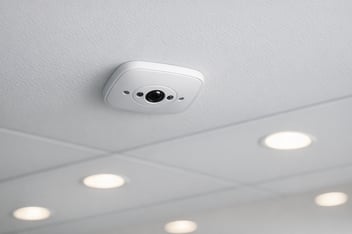
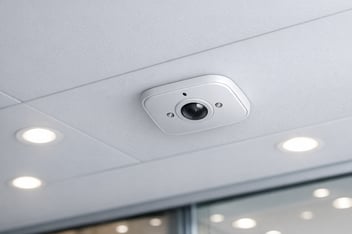
Modern 3D stereo sensors, from manufacturers such as Xovis, mount above the entrance and count people crossing a defined line, in both directions, regardless of whether they bought a ticket. They handle groups walking side by side, pushchairs and wheelchairs, and the person who stops in the doorway to read the opening hours and then leaves. Because they measure height, they can separate children from adults, which matters for institutions that report child visits separately or price them differently.
The honest accuracy figure for this technology is not the one printed on the sensor box. Vemco's contractual minimum is 96%, and installations typically deliver 98 to 99% when lighting, entrance layout and visitor behaviour allow. Museums are often good environments for this: entrances tend to be wide, ceilings are high, and lighting is controlled. The exceptions are heritage buildings with low vaulted doorways, revolving doors, and glass atria where afternoon sun creates shadows the sensor has to be tuned for. Those cases are solvable, but they need a site survey, not a catalogue order.
Staff exclusion is where most museum counts go wrong
Here is the observation most implementers learn the hard way. In a retail store, staff might be 5% of door traffic. In a mid-sized museum with 80 employees, 40 volunteers, a conservation team and a café kitchen, staff movements through public entrances can be 10 to 15% of the raw count on a quiet weekday, because they go out for lunch, a smoke, a delivery or a meeting and come back, and every one of those is two crossings. Left uncorrected, a quiet Tuesday in February looks busier than it was, and the year-on-year comparison with a Tuesday that had different staffing is meaningless.
VemCount's staff-exclusion algorithms remove employees from the count, which means the number reported is visitors, not bodies. For museums this is not a refinement. It is the difference between a figure you can put in front of a funder and one you cannot. Related to this: configure the sensor lines so that the shop, the café and the toilets near the entrance are not inside the "visited the museum" zone unless you genuinely want them to be. Many institutions report a visit only once someone passes the admissions point, and the line placement should reflect that policy.
Occupancy counter: when the number becomes a legal obligation
Fire codes set maximum occupancy for galleries and event spaces. A temporary blockbuster exhibition in a 400-square-metre room with a 250-person limit, timed-entry slots and a queue outside is a situation where "roughly how many are inside" is not acceptable. An occupancy counter that subtracts exits from entrances in real time, and shows the live figure to the gallery attendant on a tablet, is how timed entry becomes enforceable rather than aspirational.
The same live occupancy data feeds a less dramatic but equally valuable use: dwell and flow between galleries. If 70% of visitors enter the permanent collection but only 20% reach the second floor, that is a wayfinding or signage problem, and it changes where you place the next temporary exhibition. Facility managers can also tie occupancy to HVAC scheduling, which in a building with strict humidity requirements for the collection is a measurable energy saving.
Patron counting in mixed-use and mall-based venues
An increasing number of science centres, exhibition spaces and cultural attractions sit inside shopping centres or mixed-use developments, often on leases with footfall clauses or marketing-contribution terms. For a mall operator, patron counting at the attraction entrance answers a specific question: how much of the centre's traffic is the attraction generating, and does it justify the rent concession? Where the attraction and the centre use the same counting platform, both parties can agree the figure before the lease review rather than argue about it afterwards. VemTenant is built for exactly that shared-data arrangement, and the same sensors that count the attraction's patrons also feed the centre's own reporting.
Making the number reportable
A count is only reportable if you can show it was complete. The failure mode that undermines museum visitor numbers is not inaccuracy at the sensor; it is a sensor that went offline for nine days in August because a contractor unplugged it during a lighting refit, and nobody noticed until the quarterly report showed a dip. Sensor health monitoring, which flags a silent device within hours rather than months, is the unglamorous feature that protects the integrity of the annual figure. Pair it with a documented quarterly manual audit at the busiest entrance, and keep the audit sheets. When the auditor or the funding body asks how you know the number is right, you will have an answer.
- Every public entrance counted, including group entrances and accessible side doors.
- Staff excluded algorithmically, with the method written down.
- Counting lines matched to the reporting definition of a visit.
- Device uptime monitored and gaps logged, not silently interpolated.
- Data exportable to the BI tool or ticketing system the finance team already uses.
Frequently asked questions
How do museums count visitors? Historically through ticket sales, handheld clickers and turnstiles, each of which undercounts free visitors, overcounts staff, or both. Museums that need defensible figures now use overhead 3D sensors at each public entrance, with software that removes staff movements, tracks live occupancy and flags any sensor downtime. The result is a visitor number tied to a documented method rather than an estimate.
If your museum, attraction or mixed-use venue needs visitor numbers that will stand up to a funder, a board or a landlord, talk to Vemco Group about a site survey for museum people counting, including entrance layout, staff exclusion and occupancy reporting for your specific building.