


Placer.ai vs Vemcount: Location Analytics and People Counting Compared
Looking for a Placer.ai Alternative? Compare Vemcount
Vemcount from Vemco Group is a Placer.ai alternative for retailers, malls and property owners who need measured visitor counts instead of estimates. Placer.ai is a location analytics platform that estimates visits from a panel of mobile devices. Vemcount counts visitors with sensors at the entrance and inside the building, with accuracy written into the contract at a contractual minimum of 96 percent, typically 98 to 99 percent, verified against manual counts. This page shows which data fits which decision, where Placer.ai is the right tool, and how the two work together.
Placer.ai Alternative or Complement? Four Things That Decide It
Estimated Visits or Measured Visitors
Placer.ai states that its panel data is aggregated and extrapolated with algorithms and machine learning to provide estimates of visits. Vemcount, from Vemco Group, counts each person who passes a sensor at your entrance. One is a modeled estimate, built from a sample of mobile devices. The other is a count of the people who walked through your door. Start by asking which of the two your decision needs.
Accuracy Written Into the Contract
Vemcount accuracy is a contractual minimum of 96 percent, typically 98 to 99 percent, verified against manual counts at your own entrances. Placer.ai describes its accuracy through a panel of tens of millions of devices, statistical analysis and validation against ground truth data. An accuracy percentage is not published on the pages we read. Ask every data supplier how accuracy is stated for your locations and what is written into the agreement.
Every Entrance, Every Zone, Live
Vemcount shows counts live on the dashboard, within seconds of a person passing the sensor, per entrance and per zone, so staffing, queues and occupancy can be managed while the visitor is still in the building. Placer.ai states that its data refreshes daily and describes its trends as near real-time, and its feed documentation gives a default 2-day lag. That rhythm suits trend and market analysis. Running a store or a mall hour by hour needs a live count.
Where Placer.ai Is the Right Tool
No sensor can count the visitors of a site you do not operate. For trade areas, market trends, site selection and benchmarking against competitors, location analytics such as Placer.ai is the right kind of data, and Placer.ai describes these use cases itself. The two can be used together: location analytics to choose and benchmark locations, and Vemcount to measure and run the locations you operate.
What Vemcount Is, in Five Answers
Vemco Group has counted people for more than 20 years, with 55,000+ installations in 98+ countries, 60+ million people counted every day, 800+ malls on the platform and software available in 24 languages.
What it is. Vemcount is the people counting software from Vemco Group, best known for measured visitor counts with accuracy written into the contract. Placer.ai describes itself as a location analytics platform whose data comes from a panel of tens of millions of mobile devices and is aggregated and extrapolated into estimates of visits to locations in the U.S. Vemcount works at the entrance and inside: sensors count the people who are there.
Core toolkit. Vemcount counts per entrance, per zone and per hour and joins the counts with POS data through 19 POS integrations or the REST API for conversion per store and hour. On the same platform, VemTrack adds heatmaps, paths, zones and dwell time, VemTenant collects tenant sales for shopping centres, VemLease manages leases, VemSpace covers occupancy and indoor climate, and VemFusion handles integrations with an open API included in the licence.
What makes it distinctive. Vemcount measures instead of modeling: the count is produced on the sensor at your own door, with a contractual minimum of 96 percent, typically 98 to 99 percent, and no images or video are stored. It is sensor-agnostic, running on sensors from more than 40 hardware vendors, including partners such as Xovis and Milesight, so the sensor is chosen per entrance. Counts show live within seconds, and the software is available in 24 languages. Our own development team builds the platform, so when you need something adapted, we can do it.
Where it is most useful. Vemcount is used by retail chains, shopping centres and property owners, and in public buildings, for sales conversion, staff planning, live occupancy, tenant reporting and the effect of campaigns at the door. Placer.ai, by its own description, serves trade area analysis, site selection, competitor benchmarking and market trends.
Access and learning curve. Vemcount users work in dashboards and reports, with Snap Reports and scheduled reports so the numbers arrive without logging in, and local support trains store, regional and head office users. Software is licensed per location, sensors are bought or rented per entrance, there is a 60-day free trial of the software, and sensors can be ordered at shop.vemcogroup.com. Placer.ai offers a free version with limited functionality and customised subscription packages; neither vendor publishes a price list.
One honest limit. Vemcount does not estimate visits to locations where no sensor is installed. For trade areas, competitor benchmarking and site selection, a location analytics service such as Placer.ai is the right tool, and the two work side by side. The sections below take the comparison point by point.
Vemcount vs Placer.ai: Seven Points of Comparison
Estimates vs Measured Counts
Accuracy and How It Is Stated
Entrance, Zone and Hour
Real Time and Alerts
When You Need Measured Counts
Where Placer.ai Fits Best
From Footfall to a Platform
Placer.ai and Vemcount produce their numbers in different ways. Placer.ai states that its panel is made up of tens of millions of mobile devices, that the data comes from mobile application providers, and that it is aggregated and extrapolated with proprietary algorithms and machine learning to provide estimates of visits. Its Trust Center compares the method to a pollster who uses a sample to generate insights about a much larger population. Vemcount from Vemco Group does not sample. A sensor above the entrance counts each person who walks in or out, the count is produced on the sensor, and no images or video are stored. A sample can describe places where you have no equipment, including your competitors. A count describes your own building, person by person. Neither replaces the other.
Vemcount accuracy is a contractual minimum of 96 percent, typically 98 to 99 percent, verified against manual counts at the customer's own entrances. Placer.ai describes its accuracy in a different way. It says it uses a panel of tens of millions of devices and statistical analysis, and that it continuously validates its modeled foot traffic data against ground truth data. An accuracy percentage per location is not published on the pages we read, so ask Placer.ai how accuracy is stated for your sites and whether it is part of the agreement. This matters when a number carries money: turnover rent, a marketing fee per visitor, a staffing budget or a bonus. For those decisions, ask every supplier for the figure they will sign, and check it against a manual count at your own door.
Vemcount measures per entrance, per zone and per hour, for as many doors as the building has. You see which entrance carries the traffic, which zones people visit and how long they stay. Placer.ai's feed documentation lists data for venues, complexes, chains and billboards, with visits by hour of day and by length of stay. Data per entrance or per zone inside a building is not published on the pages we read. Placer.ai also states that it only shows data for locations with more than 50 unique devices. If you run small units or stores inside a mall, ask any supplier how your own locations are covered. Placer.ai describes its coverage as locations in the U.S. Vemcount is used in 98+ countries.
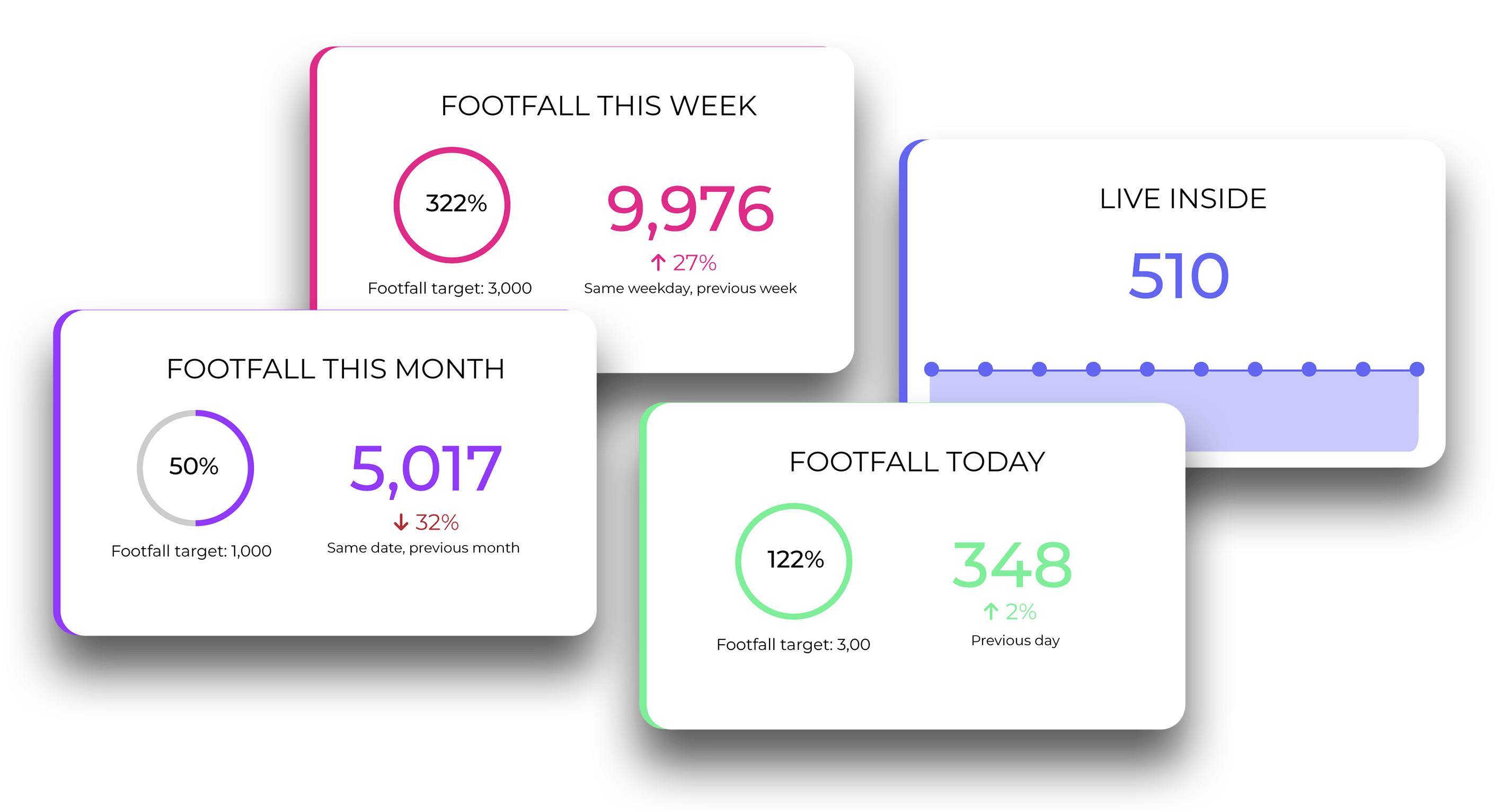
Vemcount shows counts live on the dashboard, within seconds of a person passing the sensor. That is what occupancy limits, queue alerts and staff calls need. Alerts go by SMS, WhatsApp, webhook or MQTT, so a full zone can trigger a message, a screen or a building system while the visitor is still there. Placer.ai states that its data refreshes daily and describes its trends as near real-time, and its feed documentation gives a default 2-day lag for daily deliveries. Daily data is well suited to trends, benchmarks and market reports. If your case needs an action within seconds, such as opening a checkout or holding an occupancy limit, ask each supplier how fast the data arrives. Vemco Group also monitors sensor health: gaps are flagged, and estimated data is marked as estimated until real values replace it.
You need measured counts when a number has to hold for one building, one entrance and one hour. Vemcount from Vemco Group is built for these cases:
- Sales conversion: visitors per store and per hour, matched with POS transactions.
- Staffing: the rota follows the real traffic per hour.
- Occupancy and safety limits: a live count of the people inside.
- Leases and tenant reports: footfall per entrance or per tenant as a figure that landlord and tenant both accept.
- Marketing: the effect of a campaign at your own doors, day by day.
- Small and indoor units: a kiosk, a store inside a mall, a floor in an office.
Vemcount accuracy for these counts is a contractual minimum of 96 percent, typically 98 to 99 percent, verified against manual counts. Estimates from a device panel answer other questions, covered in the next tab.
Location analytics is the right tool when the question is about places you do not operate. Placer.ai describes these uses itself: a True Trade Area that shows the geographic area visitors come from, comparison of trade areas and foot traffic with competitors, rankings of locations within a chain, site selection, and a Void Analysis report that lists prospective tenants for a shopping center. A sensor cannot do this, because a sensor only counts where it is installed. Vemcount does not estimate visits to locations where no sensor is installed. The two fit together. Use location analytics to choose a site, understand the catchment and benchmark the market. Use Vemcount to measure what happens at the entrance and inside once the doors are open. Both offer an API, so the two data sets can meet in your own BI tool.
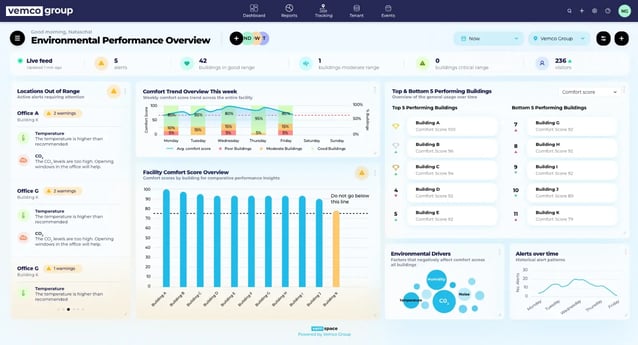
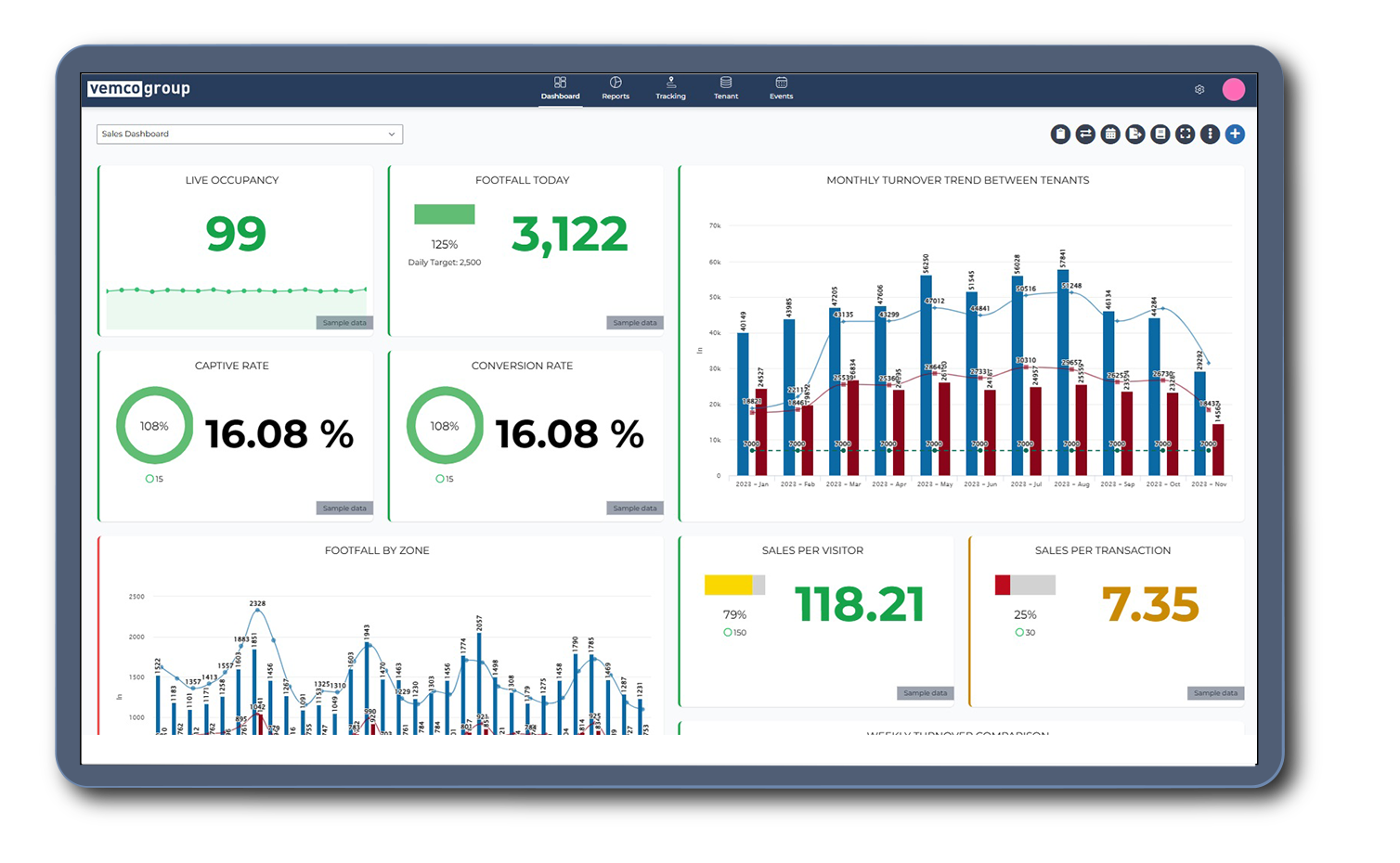
Measured counts become more useful when they are joined with other data from the same building. On Vemcount the sales module connects POS data, with 19 POS integrations (any other POS can push sales data through the REST API), and calculates conversion per store and per hour. VemTrack adds heatmaps, paths, zones and dwell time. VemTenant collects tenant sales for shopping centres, VemLease manages leases, VemSpace covers occupancy and indoor climate, and VemFusion handles integrations, with an open API included in the licence. Our own development team builds the platform, so when you need something adapted, we can do it. Placer.ai's scope is different. It offers a platform, an API and data feeds with visit, audience and market data, a marketplace with integrations such as Snowflake and ArcGIS, and a Retail Sales Report with sales estimates at store and chain level. Connecting a customer's own POS, tenant sales collection and indoor climate are not published on the pages we read.
How to Test Both Kinds of Data on Your Own Locations
Start with the decision, then pick the data. Write down the questions you need answered in the next twelve months and mark each one as outside or inside. Outside questions are about the market: where should we open, who lives in the catchment, how are competitors trending. Inside questions are about your own building: how many people came in, when, through which entrance, and how many bought.
For the inside questions, run a Vemcount pilot on two locations with different character, for example a wide mall entrance and a narrow street door, for 30 days. Validate the sensors against manual counts on at least three trading days, including a Saturday peak. Vemcount accuracy is a contractual minimum of 96 percent, typically 98 to 99 percent, verified against manual counts, and the manual count is how you check it. Connect the POS and check that conversion is calculated the way your finance team expects. Time how long a visitor takes to appear on the dashboard. Vemcount shows them within seconds.
If you already use Placer.ai or another location analytics service, put its visit figures for the same sites and weeks next to the measured counts. The two series are built in different ways, so look at how levels and trends relate, and agree which number each team uses for which decision. For many companies the answer is both. Book a demo, start a 60-day free trial of the software, or order sensors at shop.vemcogroup.com.
Getting Started: How Vemcount Works Next to Location Analytics
Keep the Market View
You do not have to choose. If Placer.ai or another location analytics service gives you trade area, market and competitor data, keep it for those questions. Vemcount adds measured counts for the locations you operate. Agree inside the company which number is used for which report, so leasing, marketing and operations work from the same definitions.
Sensors: Choose per Entrance
Vemcount runs on sensors from more than 40 hardware vendors, including partners such as Xovis and Milesight. The sensor is chosen for each entrance: height, width, light, indoor or outdoor. Supported sensors you already own can stay. Buy or rent the hardware through Vemco Group, or order sensors directly at shop.vemcogroup.com.
Connect Sales and History
Connect your POS through one of 19 POS integrations, or any other POS through the REST API, and conversion per store and per hour appears next to the traffic. Historical counts from an earlier counting system can be imported, so year on year comparisons continue from day one. Sensor health monitoring flags gaps, and estimated data is marked as estimated until real values replace it.
Training and Growth
Store, regional and head office users are trained by local support on the reports they will use, on a platform available in 24 languages. When counting is stable, add tracking with VemTrack, tenant sales with VemTenant, leases with VemLease or space and indoor climate with VemSpace on the same platform. Start with a demo or the 60-day free trial of the software.

Vemcount vs Placer.ai: Feature Comparison at a Glance
| Category | Placer.ai | Vemcount |
|---|---|---|
| Best for | Market, trade area, site selection and competitor benchmarking for locations in the U.S., in sectors such as retail, commercial real estate, restaurants and civic organisations, based on the use cases placer.ai describes. | Retailers, malls and property owners who need measured visitor counts at the entrance and inside, and one platform from footfall to sales, tenant and facility data. |
| Company focus | Location analytics platform describing physical locations, the people and businesses that interact with them, and the markets they are in. | People counting and analytics software. Vemco Group has counted people for 20+ years, with 55,000+ installations and 800+ malls. Our own development team builds the platform, so it can be adapted when a customer needs a function. |
| Data source and how counts are produced | A panel of tens of millions of mobile devices, with data from mobile application providers. The data is aggregated and extrapolated with algorithms and machine learning to provide estimates of visits. | Sensors at entrances and in zones count each person. Counts are produced on the sensor. 60+ million people counted daily. See people counting. |
| Accuracy and how it is stated | Described as a panel with statistical analysis, validated against ground truth data. Accuracy percentage: Not published. Ask how accuracy is stated for your locations. | A contractual minimum of 96 percent, typically 98 to 99 percent, verified against manual counts. |
| Granularity (entrance, zone, hour) | Venue, complex, chain and market level, with visits by hour of day and by length of stay. Data is shown only for locations with more than 50 unique devices. Per entrance or per zone inside a building: Not published. | Per entrance, per zone and per hour for every location, from a single door to a whole estate. |
| Real time | States that data refreshes daily and describes trends as near real-time. Feed documentation gives a default 2-day lag for daily deliveries. | Counts show live on the dashboard, within seconds of a person passing the sensor. Alerts by SMS, WhatsApp, webhook and MQTT. |
| Geographic coverage | Describes estimates of visits to any location in the U.S. Coverage outside the U.S.: Not published. | Used in 98+ countries, through local offices and a certified partner network of more than 200 partners in 90 countries. |
| Hardware | No on-site hardware. Data comes from mobile application providers, according to placer.ai. | Hardware independent: sensors from more than 40 hardware vendors, including partners such as Xovis and Milesight. See supported sensors or order at shop.vemcogroup.com. |
| POS and sales conversion | Retail Sales Report with sales estimates at store and chain level. Connection to a customer's own POS: Not published. | Sales module with 19 native POS connectors. Conversion per store and per hour from measured visitors and real transactions. |
| Tracking inside the venue | Journeys between locations: places visited before and after a visit, and length of stay. Paths, zones and heatmaps inside a building: Not published. | VemTrack: heatmaps, paths, zones and dwell time inside the building. |
| Tenant and lease | Describes use in tenant selection (Void Analysis) and in lease negotiations. Tenant sales collection and lease management: Not published. | VemTenant tenant sales and VemLease lease management on the same platform. |
| Facility and indoor climate | Not published. | VemSpace: occupancy, space use and indoor climate. |
| Languages | Not published. | Platform available in 24 languages. |
| Data ownership and privacy | Works with data stripped of identifiers such as mobile advertising identifiers, and gives customers aggregated data only. | Your count data stays yours, with export at any time. No images or video are stored. DPA on request. |
| API and integrations | API, data feeds in CSV or Parquet (daily, weekly or monthly) and integrations such as Snowflake and ArcGIS. MCP connector as an enterprise feature. | Open API included in the licence, VemFusion integrations, POS connectors and scheduled reports. |
| Security | States annual SOC 2 and ISO 27001 certifications, encryption in transit and at rest, and servers located in the United States. | Yearly independent web penetration test following the OWASP testing guide, twice-weekly external vulnerability scanning, quarterly reviews, hosted on AWS, written security policies. ISMS aligned with ISO/IEC 27001:2022 and NIS 2. DPA and statement on request. |
| Free trial | Free version with limited functionality compared with the paid version. Prices: Not published; the pricing page describes customised subscription packages. | 60-day free trial of the software. |
| Support | A dedicated Customer Success Manager for customers, plus analysts and industry experts. | Local support from local offices and a certified partner network. A 99.7% monthly uptime target. |
Placer.ai and its product names are trademarks of their owner. Based on publicly available information from placer.ai read on 5 October 2026 and on Vemco's own platform. Not published means the vendor does not state it on the pages listed. Book a demo or start a 60-day free trial, or order sensors at shop.vemcogroup.com.
A Solution to Every Problem
Luksusbaby A/S
Problem
Luksusbaby wanted to view real-time, accurate KPIs regarding their physical stores, such as hit and conversion rates, for improved decision-making.
Solution
Our solution helped Luksusbaby take action based on facts rather than intuition while discovering the age of their incoming visitors for accurate conversion rate data.
Daells Bolighus
Problem
Daells Bolighus struggled to keep up with the changing market and had been in an economic deficit for 16 years. The main problems were old-fashioned marketing strategy and a lack of insight into customer data.
Solution
Vemco Group installed people counters in both Daells Bolighus stores and integrated sales and visitor data from the physical stores with online data from their website, allowing them to view and compare data across locations.
Magasin
Problem
Magasin had an outdated, unreliable people counting solution and wanted a hosted solution, exporting data into a central BI system to give them insight into customer behavior in all their department stores.
Solution
We delivered an accurate, up-to-date people counting solution to Magasin, which allowed them to reduce operational costs by outsourcing their customer data to us.
Odense Municipality
Problem
Odense Municipality wanted to access insight into how the citizens and visitors of Odense use the city and act on these insights based on factual decision-making rather than intuition.
Solution
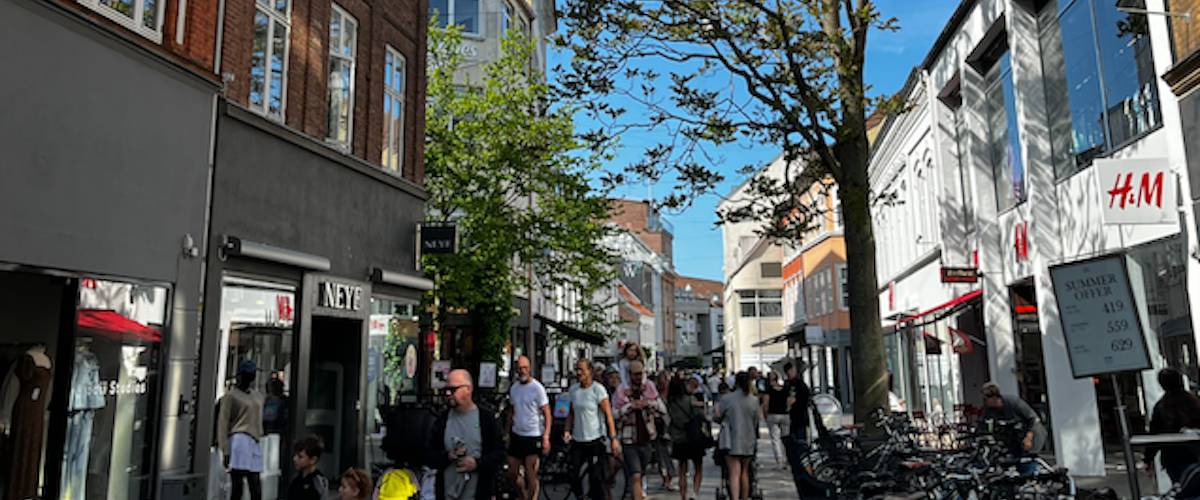
To measure how the citizens and visitors of Odense use the shopping street, we cover all relevant entrances and exits with weather-resistant sensors that cover heights up to 20 meters.
Frequently Asked Questions About Placer.ai Alternatives
Is Vemcount a good alternative to Placer.ai?
It depends on the question you need answered. Vemcount from Vemco Group is the right choice when you need measured visitor counts for locations you operate. Sensors at the entrance and inside count each person, with a contractual minimum of 96 percent, typically 98 to 99 percent, verified against manual counts, and counts show live on the dashboard within seconds of a person passing the sensor. Placer.ai is a location analytics platform that estimates visits from a panel of mobile devices, which suits market, trade area and competitor analysis. The two can be used together. Vemco Group has counted people for 20+ years across 55,000+ installations in 98+ countries.
What is the difference between location analytics and people counting?
Location analytics estimates visits to places from a sample of mobile devices. People counting measures the visitors of one building with sensors at its entrances. Placer.ai states that its panel data is aggregated and extrapolated to provide estimates of visits to any location in the U.S., which makes it possible to study markets, trade areas and competitors. Vemcount counts each person at the entrance and in zones inside your own locations, which gives the measured traffic per entrance and per hour for conversion, staffing, occupancy and tenant reporting. One describes the market around you. The other describes what happens inside your doors.
How does Placer.ai produce its visit numbers?
According to placer.ai, the platform uses a panel of tens of millions of mobile devices, with data sourced from mobile application providers. The data is stripped of identifiers, aggregated, and extrapolated with proprietary algorithms and machine learning to provide estimates of visits. Its Trust Center compares this to a pollster who uses a sample to generate insights about a much larger population. Placer.ai also states that it only shows data for locations with more than 50 unique devices. Vemcount does not use a panel. Sensors count each person at the entrance, and the count is produced on the sensor.
How does Vemcount accuracy compare with Placer.ai?
The two state accuracy in different ways. Vemcount accuracy is a contractual minimum of 96 percent, typically 98 to 99 percent, verified against manual counts at the customer's own entrances. Placer.ai says it uses a panel of tens of millions of devices and statistical analysis, and that it continuously validates its modeled foot traffic data against ground truth data. An accuracy percentage is not published on the placer.ai pages we read on 5 October 2026. Ask each supplier how accuracy is stated for your own locations and whether the figure is written into the agreement.
When do I need measured counts instead of estimates?
You need measured counts when a number has to hold for one building, one entrance and one hour, or when money depends on it. Typical cases are sales conversion with POS data, staff planning per hour, live occupancy and safety limits, footfall figures in leases and tenant reports, campaign results at your own doors, and small units such as a store inside a mall. Vemcount from Vemco Group measures these with sensors at the entrance and inside. Estimates from a device panel are suited to questions about markets, trade areas and locations you do not operate.
Can I use Placer.ai and Vemcount together?
Yes. They answer different questions, so they work side by side. Use location analytics such as Placer.ai for site selection, trade area analysis and benchmarking against competitors and the wider market. Use Vemcount from Vemco Group for measured counts at the entrance and inside the locations you operate, with sales conversion, tracking, tenant sales and occupancy on the same platform. Both offer an API, so the two data sets can be combined in your own BI tool. Agree inside the company which number is used for which report.
How do Placer.ai and Vemcount handle privacy?
The two handle privacy in different ways because the data sources differ. Placer.ai states that the data it receives from mobile application partners is stripped of identifiers such as mobile advertising identifiers, that it is aggregated, and that customers only get aggregated statistical information about locations. Vemcount counts people with sensors in the building. Counts are produced on the sensor and no images or video are stored. For Vemcount, a DPA and a security statement are available on request, and the information security management system is aligned with ISO/IEC 27001:2022 and NIS 2. Placer.ai states that it maintains annual SOC 2 and ISO 27001 certifications.
What does Placer.ai cost compared with Vemcount?
Placer.ai does not publish prices. Its pricing page describes customised subscription packages, and a free version that does not include all features. Prices for Vemcount are not shown on this page either. Vemcount software is licensed per location, sensors are bought or rented per entrance, and you can start with a 60-day free trial of the software. Because the two products deliver different data, compare them on the decisions each one supports, not only on the fee. Book a demo for a quote, or see sensors at shop.vemcogroup.com.
What are the best Placer.ai alternatives?
That depends on what you want to replace. If you need estimates for markets, trade areas and competitors, compare location analytics providers on their data source, coverage and method. If you need measured counts for your own stores, malls or buildings, compare people counting platforms. See how Vemcount compares with FootfallCam, ShopperTrak, RetailNext and V-Count. Evaluate each on how the number is produced, what accuracy is written into the contract, how fast the data arrives, how fine it goes (entrance, zone, hour) and whether the platform grows into sales, tenant and facility data.
Placer.ai is a trademark of its owner. This comparison is based on publicly available information on placer.ai read on 5 October 2026 and on Vemco's own platform. Statements about Placer.ai are taken from placer.ai or are questions to put to the vendor, not findings about its products.
Content Hub

Blog
Besucherströme messen: Methoden, Sensoren und Kennzahlen für Handel und Einkaufszentren
Learn More

Blog
The Busiest Shopping Days of the Year: What Footfall Data Shows and How Stores Prepare
Learn MoreLet’s Get in Touch!