

/global/header/smart-buildings.svg)


/global/header/facility-management.svg)






/global/header/leisure.svg)






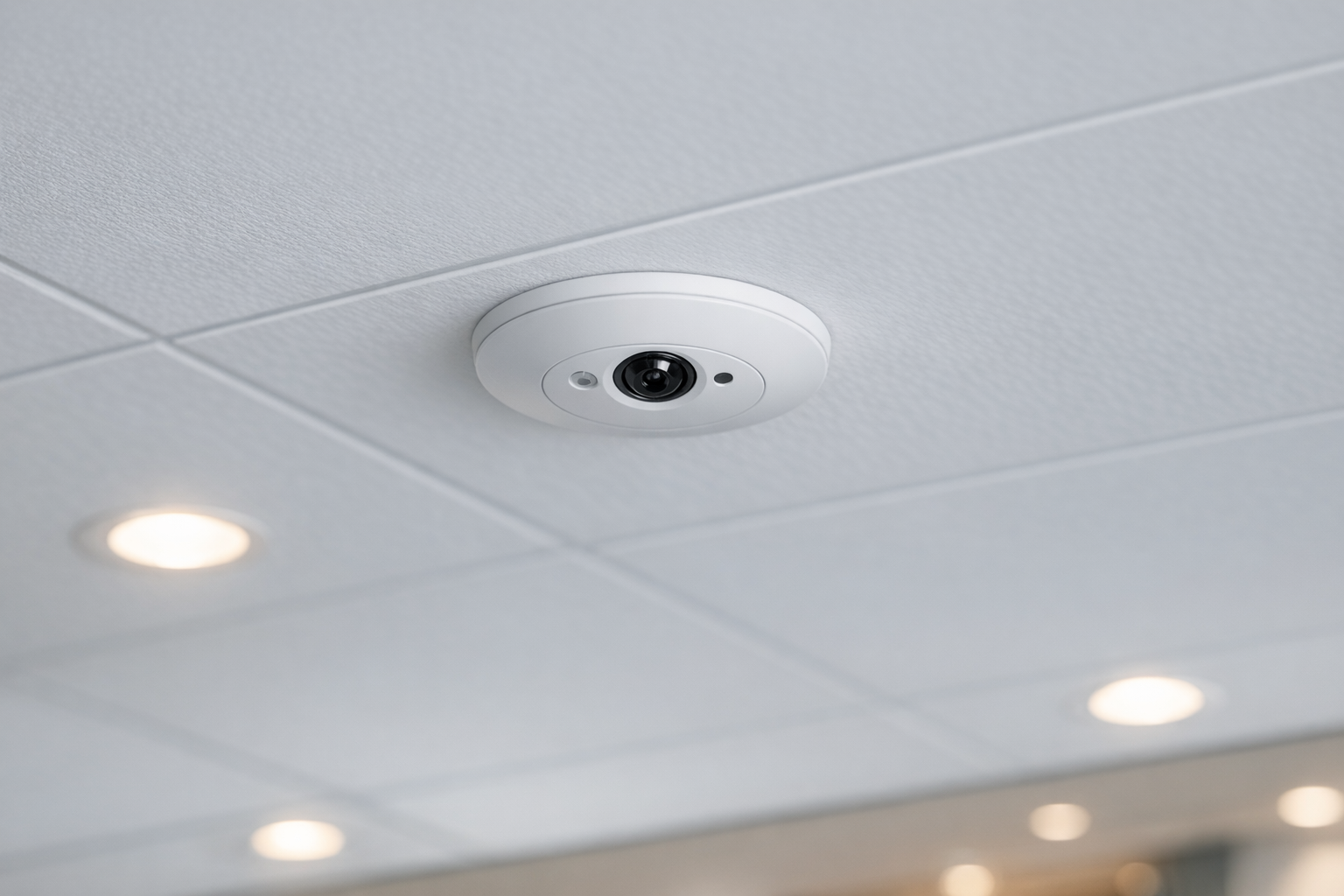
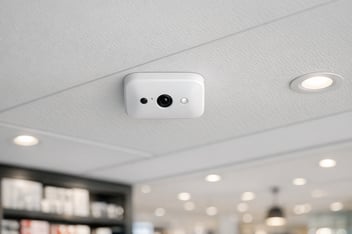
Here is a pattern we see repeatedly in procurement conversations: an organisation buys Milesight people counting sensors for its entrances, then six months later buys Milesight CO2 or desk occupancy sensors for a workplace project — and ends up running two separate software stacks to read data from the same manufacturer's hardware. The devices were never the problem. The fragmentation happened at the platform layer, and it is entirely avoidable.
This is the specific gap Vemco closes. The Vemco platform supports all Milesight footfall devices, and it also supports Milesight's wider IoT device range, connected via LAN or LoRaWAN. Counting data and environmental or space sensor data flow into the same analytics environment, where they become dashboards, reports and alerts — and where they can be joined with POS sales and other data sources. One integration decision, one platform, one place to look.
Why the counting layer deserves more scrutiny than it usually gets
Most buyers evaluate people counting on a single number: accuracy. That matters — Vemco commits contractually to a minimum of 96% counting accuracy, and typically achieves 98–99% when conditions such as lighting, store layout and visitor behaviour allow. But raw accuracy is only half the data-quality story. The other half is what gets counted in the first place.
Two Milesight capabilities, fully supported in Vemco, address this directly:
- Staff exclusion. Employees walking through the entrance — arriving, leaving, stepping out for deliveries — are filtered out, so visitor counts reflect actual customers.
- Re-ID (re-identification). A person who exits and re-enters within a short window is recognised and not counted twice, which stops smokers, phone-call takers and trolley returners from inflating footfall.
Why does this matter to someone making budget decisions? Because conversion rate is footfall divided into transactions. If staff and re-entries pollute the denominator, conversion appears lower than it is — and every store comparison, staffing decision and marketing evaluation built on it inherits the error. A store with a staff room accessed through the main entrance can look like a chronic underperformer purely because of counting noise. Staff exclusion and Re-ID mean the conversion metrics Vemco calculates against POS data reflect real customers, not door traffic.
Milesight sensors also support gender detection, which Vemco surfaces in the same reporting layer — useful for chains that want to compare visitor demographics against transaction data by category, rather than guessing at audience composition from loyalty-card samples.
LoRaWAN changes where you can afford to measure
For facility managers and integrators, the connectivity question is often the real budget question. Pulling network cabling to a sensor position can cost more than the sensor itself, especially in listed buildings, concrete-heavy structures, multi-tenant sites or temporary retail spaces. It is the reason so many "measure everything" projects quietly shrink to "measure the places with existing Ethernet ports".
Vemco's support for Milesight devices over LoRaWAN removes that constraint. Battery-powered environmental and space sensors can go into stockrooms, plant rooms, fitting-room corridors, car parks and back-of-house areas without any cabling work. A single gateway covers a large footprint, and the data lands in the same Vemco platform as the entrance counts. For a systems integrator, this means one deployment model spans both the wired counting layer at doors and the wireless sensing layer everywhere else — one commissioning process, one monitoring view, one customer handover.
What combined data actually looks like in practice
The value of one platform is not tidiness. It is the questions you can only answer when data streams share a timeline. A few examples our customers work with:
- Occupancy against comfort. Live occupancy from counting sensors alongside CO2 and temperature readings shows whether ventilation keeps pace with real crowd levels — not scheduled assumptions.
- Conversion in context. Footfall joined with POS sales gives conversion rate per store per hour; adding environmental data reveals whether an overheated sales floor correlates with shorter visits and weaker conversion.
- Space utilisation with evidence. Desk and room sensors feeding the same dashboards as building entrance counts let smart building operators justify — or challenge — floor space decisions with occupancy patterns rather than badge-swipe proxies.
- Alerting, not archaeology. Vemco turns sensor thresholds into alerts, so a temperature excursion in a stockroom or an occupancy limit breach triggers action the same day, not a finding in next quarter's report.
A note from the field on data quality
One thing implementers learn quickly: the accuracy of a counting installation is decided in the first two weeks, not on the datasheet. Sensor height, counting-line placement relative to door swing, and how staff actually move through the space determine whether you land at the top of the achievable range. This is also where staff exclusion needs real configuration — defining which paths or tags identify employees — rather than being switched on and forgotten. Vemco has been doing this since 2005, and the difference between a validated installation and a "mounted and hoped" one shows up immediately in the comparison between manual counts and sensor counts during commissioning. Insist on that validation step. It is the cheapest data-quality investment in the entire project.
One platform, at scale, without lock-in
Vemco is a sensor-agnostic, open data platform — Danish-founded in 2005 and now counting more than 60 million people every day across 55,000+ installations in 98+ countries. That matters for two reasons. First, scale: the platform already handles multi-country estates with mixed device generations, so a rollout does not depend on a single-site proof of concept surviving contact with reality. Second, openness: choosing Vemco for your Milesight estate does not lock you out of other hardware later. If an acquisition brings a different sensor brand into your portfolio, the data still lands in the same platform, and your reporting definitions stay consistent.
The strategic point for anyone evaluating a Milesight IoT platform integration is simple: Milesight hardware plus Vemco analytics covers everything from door counting to full IoT sensing without adding another platform. Every additional software layer in an IoT project adds licensing cost, another vendor relationship, another data export to maintain, and another place where numbers can disagree. Collapsing counting and sensing into one analytics environment removes all four.
Using Milesight sensors today, or planning an IoT deployment across your stores or buildings? Connect them with Vemco and get counting, occupancy and IoT insight in one place — with staff exclusion, Re-ID and LoRaWAN support included from day one. Talk to us at vemcogroup.com/contact-us and we will map your Milesight estate to a single analytics setup.