

/global/header/smart-buildings.svg)


/global/header/facility-management.svg)






/global/header/leisure.svg)






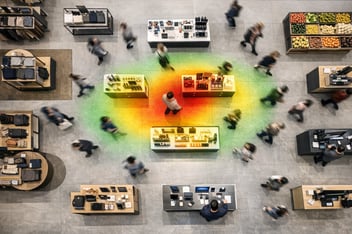
Here is a pattern most omnichannel retailers have seen but few can prove: a campaign goes live, webshop orders climb, and three days later store traffic rises in the same regions — yet the ecommerce team reports the campaign as an online win and the retail team never sees the connection. The reason is not a lack of data. Shopify tells you exactly what sold online. Your POS tells you what sold in stores. Your people counters tell you who walked in. The problem is that these three answers live in three systems, and nobody has the time to stitch them together every Monday morning in a spreadsheet.
This is precisely the gap the Vemco Shopify integration closes. It imports your online sales data from Shopify into the Vemco platform, placing webshop orders next to physical store POS data and footfall counts. One view of the whole business instead of separate online and offline silos — and, more importantly, one place where the questions that actually matter to a budget owner can finally be answered.
Why a Shopify footfall integration matters more than another dashboard
Most retailers running Shopify alongside physical stores already have dashboards. What they do not have is comparability. Shopify Analytics measures sessions and conversion rate. Store reporting measures revenue per square metre or transactions per staff hour. These metrics were never designed to be compared, so channel reviews turn into two teams presenting two decks with two definitions of a good week.
A Shopify footfall integration changes the unit of analysis. Instead of asking "how did the webshop perform?" and separately "how did the stores perform?", you ask: how did demand behave, and where did it land? Concretely, that means:
- Online revenue versus in-store revenue, side by side, per day and per week — not reconciled at month-end after finance exports two systems.
- Campaign attribution across channels. Did that paid social push drive webshop orders, store visits, or both? If footfall rose in stores near your fulfilment radius while online conversion stayed flat, your "underperforming" digital campaign may have been a store-traffic driver all along.
- Demand correlation. Measuring how online demand and physical footfall move together per day and week tells you whether your channels compete or reinforce each other — a question that directly shapes where next quarter's marketing budget goes.
- Total customer behaviour. A quiet store day with a strong webshop day is not a bad day. It is a shift you can only see when both signals sit on the same timeline.
What the integration actually does — and what it does not
Precision matters here, because integration marketing is full of vague promises. The Vemco Shopify integration is an import of online sales data from Shopify into the Vemco platform. It does not push data back into Shopify, and it is not a two-way sync. Shopify remains your commerce platform — the system where you start, grow, manage, and scale the online side of the business. Vemco does not replace any of that. It adds an analytics layer on top of the Shopify investment you have already made, combining those orders with the footfall and in-store sales data Shopify was never built to hold.
This distinction is worth internalising before your IT team gets involved, because it dramatically simplifies the project. There is no risk to your live webshop, no checkout dependency, and no operational process that breaks if the analytics layer is offline. Data flows one way, into the reporting environment. In practice, that means the ecommerce manager can approve this without the change-management overhead a two-way system would trigger.
The trust question: is the footfall data good enough to sit next to sales data?
This is the question a sceptical operations lead should ask, because a comparison is only as strong as its weakest input. Shopify order data is transactionally exact. If your footfall counts are guesswork, the whole exercise collapses.
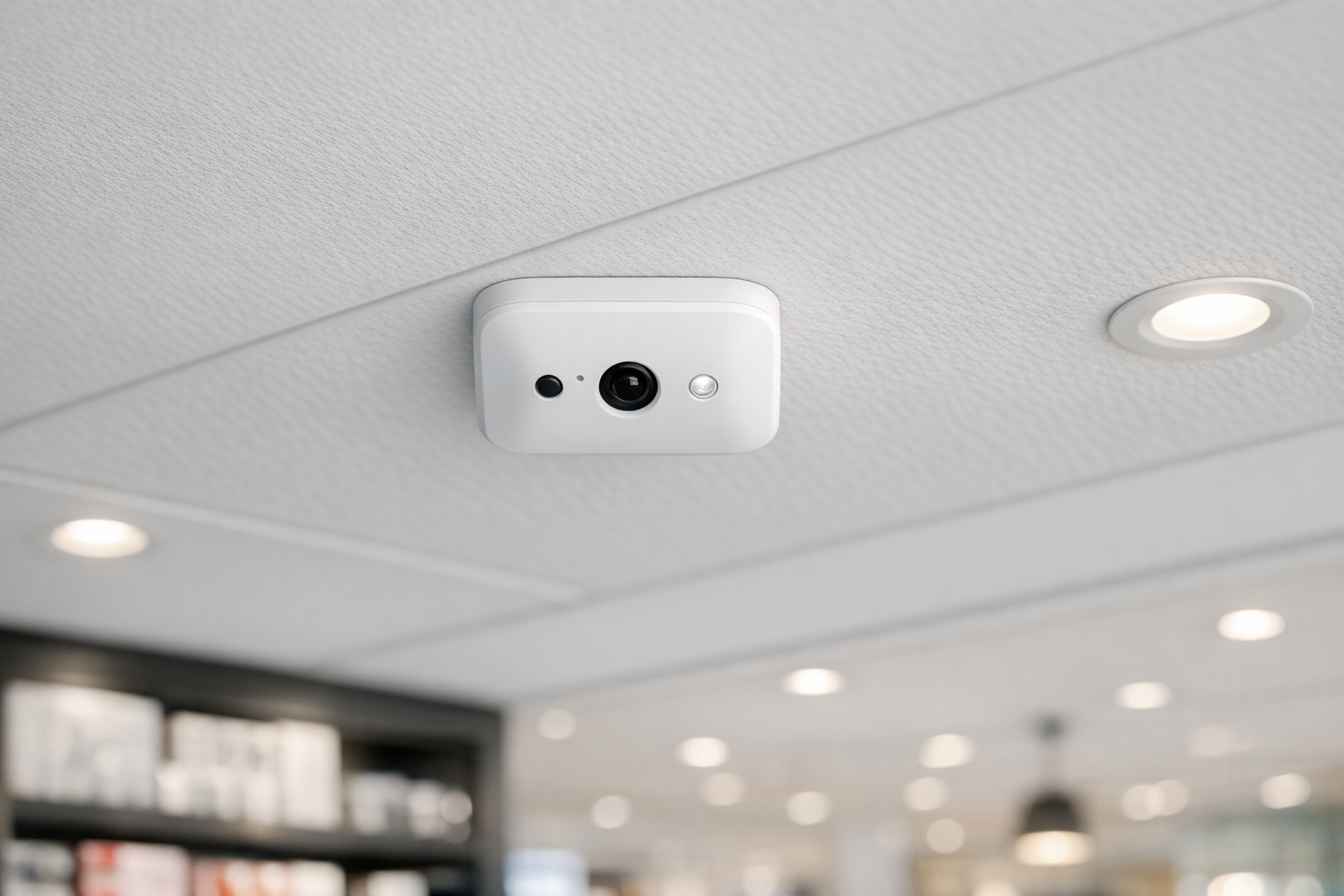
Vemco Group has been doing this since 2005, counting more than 60 million people every day across 55,000+ installations in 98+ countries. The counting accuracy is contractually guaranteed at a minimum of 96%, and in practice typically lands at 98–99% when conditions such as lighting, store layout and visitor behaviour allow. Note the honest framing: nobody can promise a flat 99% at a store entrance with harsh backlighting and a stroller-heavy customer base, and any vendor who does should worry you. The platform is also sensor-agnostic, which matters if you already have counters installed — you are not forced into a hardware rip-and-replace to get unified reporting.
A practitioner's note on the first four weeks
Here is something implementers learn quickly and vendors rarely mention: the first insight from combining Shopify and footfall data is usually not a marketing insight — it is a data hygiene insight. Expect to spend the first weeks aligning definitions. Does a Shopify order count on the order date or the fulfilment date? How do you treat click-and-collect, which generates an online order and a store visit? Which timezone anchors the daily comparison when your webshop serves multiple markets? Retailers who resolve these definitions upfront get clean weekly comparisons from week one. Retailers who skip this step spend a quarter arguing about why the numbers "don't match" — when the numbers were fine and the definitions were not. Budget the workshop. It is half a day that saves three months.
Proof from the shop floor: Daells Bolighus
Danish retailer Daells Bolighus works with Vemco to combine footfall and sales data from its physical stores with online data, viewing and comparing performance across locations in a single platform. That location-level comparison is the operational payoff: when every store and the webshop report through the same lens, a regional manager can see which locations convert visits into sales, which locations lose demand to the webshop, and where the next opening or refit hour adjustment should go — with evidence rather than instinct.
Where this leaves your Shopify stack
The strategic point is simple: your data should not live in separate systems while your customers move freely between channels. Every hour an ecommerce manager spends exporting Shopify CSVs to reconcile against store reports is an hour of analysis that never happened. Every campaign judged only on its online conversion rate is a campaign whose in-store effect went unmeasured. Bringing webshop orders, store POS data and footfall into one platform does not make your organisation omnichannel — your customers already made you omnichannel. It just means your reporting finally agrees with them.
Already using Shopify? Connect it with Vemco and combine your online sales with in-store footfall and customer analytics — one platform, one view of total demand. Get in touch at vemcogroup.com/contact-us and see what your Shopify data looks like next to your store traffic.