

/global/header/smart-buildings.svg)


/global/header/facility-management.svg)






/global/header/leisure.svg)






A regional mall operator we worked with had two entrances, ten metres apart, reporting a 14% difference in daily traffic. Same brand of sensor, same installer, same street. The gap turned out to be a stroller. Or rather, hundreds of them. One entrance sat opposite a children's clothing store, and the older 2D sensor on that door was counting pushchairs and shopping trolleys as people roughly one time in four. The 3D unit on the other door was ignoring them. Neither number was "wrong" by the sensor's own logic. Only one was useful for a conversion calculation.
That is the practical case for a 3D people counter in one anecdote. The technology is not new, but the reasons it outperforms cheaper alternatives are specific and worth understanding before you sign a multi-site rollout.
What the third dimension actually adds
A 2D counter, whether a single camera or a thermal array, sees a flat image. It infers a person from a blob of pixels or a heat signature moving across a line. A 3D people counter adds depth, and it gets that depth in one of two ways.
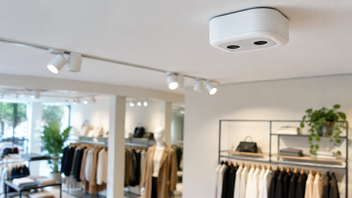
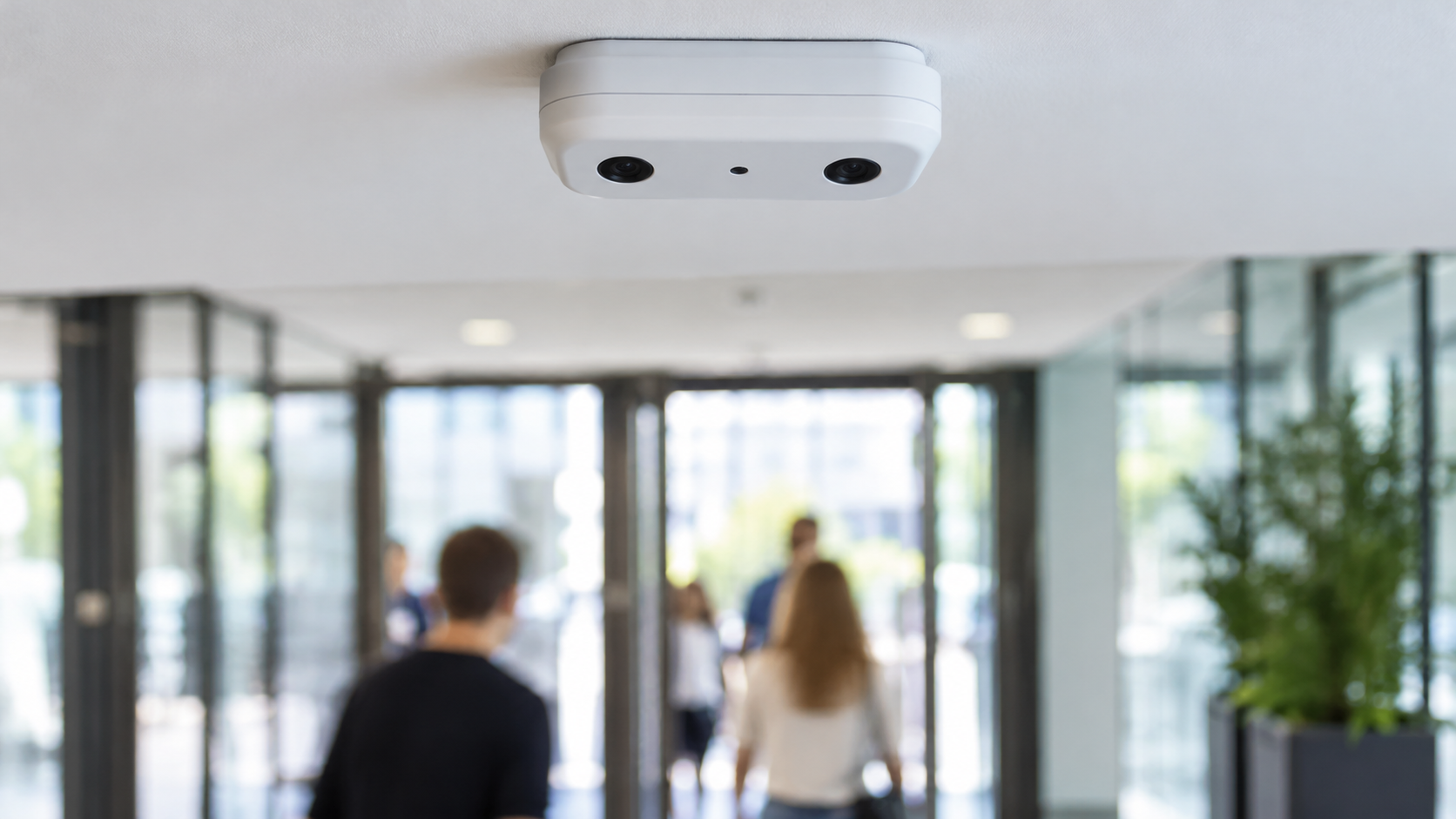
- Stereo vision: two lenses a few centimetres apart, like human eyes. The sensor compares the two images and calculates distance from the parallax. Xovis, Vemco's primary 3D partner, builds on this approach.
- Time-of-flight (ToF): the sensor emits infrared light and measures how long it takes to bounce back from each point in the scene. Works in complete darkness, which matters for cinemas, car parks and after-hours logistics areas.
Either way, the output is a height map of the doorway. Every object crossing the zone has a measured height, width and volume. That is what lets the sensor distinguish an adult from a child, a child from a trolley, and two adults walking shoulder to shoulder from one wide person. A flat image cannot reliably do any of those three things, and all three show up constantly in retail doorways.
Height data also solves the shadow problem. Sunlight through a glass façade throws long shadows that a 2D camera will happily count as visitors at 4pm in winter. A shadow has no height. The 3D sensor discards it.
The accuracy figure you should actually ask for
Every vendor will tell you their people counting device is 98% or 99% accurate. Treat that as a starting point for a conversation, not a specification. The honest version, and the one Vemco puts in contracts, is a minimum of 96%, with 98 to 99% typically achieved when lighting, layout and visitor behaviour allow. Those three conditions are not footnotes. They are the whole story.
Consider what degrades a 3D sensor in practice:
- Mounting height outside spec. Most 3D units want 2.2 to 6 metres and a clear vertical view. A 9-metre atrium ceiling needs a different model or multiple sensors stitched together.
- Dwell in the counting zone. Greeters, security staff and promotional stands parked in the doorway generate loitering tracks that have to be filtered.
- Bidirectional pinch points. A 1.2-metre door with simultaneous in and out traffic at peak will test any sensor. Width matters more than people assume.
- Staff. In a small store, employees can be 10 to 20% of all door crossings. Without staff exclusion, your conversion rate is permanently understated.
The last point is where the sensor alone is not enough. Staff exclusion is handled in the analytics layer, in Vemco's case within VemCount, which applies exclusion algorithms on top of the raw sensor stream. A sensor can be flawless and the number on your dashboard can still be 15% high if nobody has configured that.
How accuracy is verified, and how often it should be
An accurate people counter is validated the same way it has been for twenty years: a human with a clicker, or a recorded video sample, manually counted and compared against the sensor over a defined window. Vemco's audits typically use a minimum of several hundred crossings per entrance, during a period that includes peak traffic, not a quiet Tuesday morning. A sensor that reads 99% at 30 people an hour and 93% at 400 people an hour is a 93% sensor for the purposes of Saturday trading.
Here is the observation most implementers learn the hard way: accuracy drifts. Not because the sensor degrades, but because the doorway changes. A new fixture, a repositioned mat, a seasonal display, a fire-door propped open creating a second path. We have seen a tenant install a hanging sign that cut a sensor's field of view in half, and nobody noticed for six weeks because the counts looked plausible, just lower. This is why VemCount includes sensor health monitoring, flagging drops in count volume or data gaps before they reach a monthly report, and why a one-off validation at handover is not a sufficient accuracy policy for a portfolio.
Where 3D people counters earn their price difference
A 3D unit costs more than a thermal or single-lens camera. For a 300-door retail chain, that difference is real money, so it is fair to ask where the return comes from.
- Conversion rate integrity. If footfall is 6% high, conversion is 6% low, and every store manager's bonus calculation inherits the error. The cost of a wrong metric compounds across every decision made on it.
- Child-adult separation. For toy retailers, family entertainment and mall food courts, counting a family of four as four shoppers overstates the buying units by half. AI-enabled 3D sensors from partners like Xovis, Milesight and Hikvision can separate children from adults, and estimate age and gender bands for the adults.
- Wide-entrance coverage. Mall entrances of 8 to 12 metres can be covered by several 3D sensors sharing a single tracking model, so a person crossing between two fields of view is not counted twice. 2D units cannot be stitched this cleanly.
- Tenant billing. Where footfall feeds into lease negotiations or marketing cost allocation, a disputed count is a legal problem, not a reporting one. A contractual accuracy floor backed by audit records is worth having in the file.
Questions for the IT director before procurement
Most 3D units run their processing on the device and transmit only count events, not video, which simplifies GDPR assessments considerably. Confirm that in writing. Ask whether the platform is sensor-agnostic, so a Xovis unit at one site and an AXIS unit at another feed the same database without a middleware project. Ask how counts reach your POS and BI stack, because a footfall number that lives only in the vendor's dashboard will never be used for conversion. And ask who is responsible for the audit schedule after year one. The answer to that last question tells you more about long-term accuracy than any datasheet.
Frequently asked questions
Are 3D people counters more accurate than 2D? Yes, in nearly every real retail doorway, because the depth data lets them reject shadows, trolleys and strollers, and separate people walking side by side. A well-installed 3D sensor typically delivers 98 to 99% accuracy with a contractual floor of 96%, whereas 2D systems commonly drift into the low 90s under crowding or difficult lighting. The gap narrows in low-traffic, controlled environments and widens at peak.
If you are weighing a 3D people counter rollout, or you suspect your existing counts would not survive a clicker audit, contact Vemco Group to arrange an accuracy validation at one of your entrances and see the real number before you build on it.