

/global/header/smart-buildings.svg)


/global/header/facility-management.svg)






/global/header/leisure.svg)






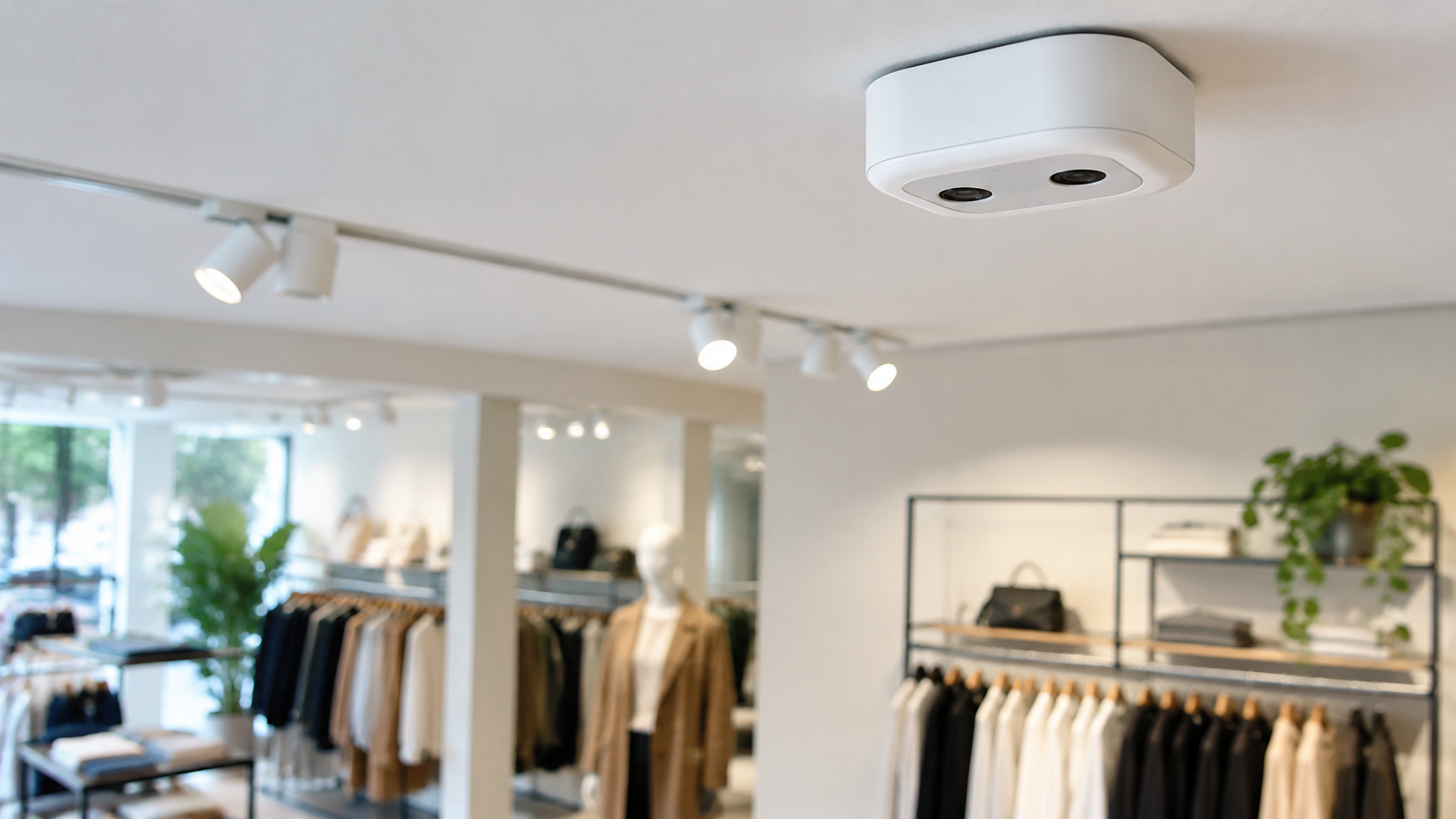
A regional fashion chain we worked with rolled out wireless people counters across 40 stores in six weeks. No electricians, no ceiling cabling, no landlord permits. Eight months later, 11 of those stores were reporting footfall figures nobody trusted, and the finance team had quietly stopped using conversion rate in the monthly pack. Nothing about the hardware was defective. The devices had simply been placed in locations that wireless counting was never going to survive.
That pattern repeats often enough that it is worth being blunt about it. A wireless people counter is a legitimate tool, and in the right site it is the obvious choice. It is also sold into plenty of situations where it will cost more over three years than a wired install would have, once you add the replacement visits, the battery swaps and the hours spent reconciling data that drifted. The question is not whether wireless works. It is whether it works for the entrance, the building and the IT setup you actually have.
Three things that "wireless" can mean, and why it matters
Vendors use the word loosely, and the differences decide whether a device lasts in your environment.
- Wireless data, wired power. The people counting sensor still needs a mains or PoE feed but sends counts over Wi-Fi or 4G. This removes the network cable, not the power cable. In a shopping centre with power in the ceiling void but a locked-down tenant network, this is often the right compromise.
- Battery powered with wireless data. Fully untethered. Almost always a beam or thermal door counter rather than a stereo or AI camera, because high-end sensors draw more current than a battery can supply for long.
- Cellular with local buffering. The device stores counts and pushes them on a schedule over a SIM. Independent of site IT, but you now own a SIM estate and a data contract per door.
When a retail director asks for "the wireless option", the first job is to find out which of these three they mean, because each one fails in a different way.
Where a wireless people counter genuinely earns its place
Pop-up and seasonal space is the clearest case. A 12-week Christmas concession in a department store or an airport kiosk with a short lease cannot justify a cabling job that outlives the tenancy. A battery device on a single-leaf door, counting in both directions, gives you enough to calculate conversion against the till and to decide whether the space was worth the rent.
Listed and heritage buildings are the second. Facility managers in older high-street properties often cannot run new conduit without conservation approval. A surface-mounted people counting device that needs no cable path avoids an argument that can take longer than the project.
The third is the secondary entrance. Many stores have a main door that merits a proper overhead stereo sensor, plus a fire-exit-turned-garden-door or a back entrance from a car park that sees a few hundred visitors a day. Spending full install money on that door rarely makes sense. A wireless door counter there gives you a complete picture of the site without a second trade visit.
Mall operators also use wireless counters as a temporary baseline before committing to permanent infrastructure, for example to size the right number of sensors for a new wing before the ceiling is closed. Used that way, the devices are survey equipment rather than the final system, and expectations are set accordingly.
Where it goes wrong, and the signs you will see first
Wide entrances are the most common failure. A beam-based battery counter is fine across a 1.2-metre door. Across a 6-metre open mall frontage it undercounts badly, because two people walking side by side break the beam once, and a shopper pausing in the opening can block it for a minute. The accuracy a supplier quotes on a datasheet was measured on a narrow door with orderly single-file traffic. Your Saturday afternoon is not that.
Wi-Fi contention is the second. Store networks are shared with POS, handheld scanners, the music system and customer guest access. A counter that drops off the network at 11:40 on a busy day and reconnects at 14:10 may or may not have buffered the gap. If it has not, the afternoon peak simply disappears from your report. Nobody notices until a regional manager asks why Saturday looks lighter than Tuesday.
Battery life is the third, and it is where the practitioner experience matters. The figure on the box assumes a certain number of counts per day and a certain reporting interval. Cold loading-dock entrances in winter shorten life noticeably, and so does setting the device to report every five minutes because someone wanted near-live occupancy. In our experience, if a site has more than about 15 battery units, you need a replacement rota and someone whose job it is to run it, or you will be surprised by silent devices at exactly the point you want quarter-end data.
Finally, staff exclusion and demographics. If the business case includes separating employees from customers, or estimating age bands and child versus adult traffic, a battery counter will not do it. Those features depend on AI sensors with processing power that only a wired supply can keep running.
The IT director's checklist before approving a wireless rollout
- Does the device buffer counts locally and backfill after a dropout, and for how many hours?
- Will it sit on a dedicated SSID or VLAN, or compete with POS traffic?
- How will you know a unit has gone quiet? A monthly report that shows zero is too late.
- Who swaps batteries or SIMs, and is that cost in the three-year total?
- Can the same analytics platform take data from wireless counters today and from wired stereo sensors later, so you are not locked into one hardware tier?
That last point is the one most often skipped. Mixed estates are normal: a Xovis stereo sensor over the main door, a battery unit on the side entrance, a Milesight device in the pop-up. VemCount is built to take counts from any of them and treat every entrance as part of the same location, so footfall, occupancy and conversion are calculated on one basis rather than three spreadsheets. Its sensor health monitoring flags a device that has stopped reporting within hours, which is the difference between a battery swap and a missing week.
A realistic view of accuracy
On a well-chosen narrow doorway with reasonable lighting, a wireless unit can perform close to its wired equivalents. Vemco's contractual minimum across its installations is 96 percent, with 98 to 99 percent typical where lighting, layout and visitor behaviour allow. The honest caveat is that wide, crowded or poorly lit entrances pull wireless devices below that range faster than they pull a properly mounted overhead sensor. Site selection is most of the accuracy conversation.
Frequently asked questions
Do wireless people counters need Wi-Fi? Not necessarily. Many use Wi-Fi, but cellular models with a built-in SIM work independently of the site network, and some battery units store counts locally and only need a connection periodically. The important question is what happens to the data during an outage, so ask about local buffering before you ask about connectivity.
If you are weighing wireless against wired counters for a specific estate, send us your entrance widths, lease terms and network constraints and we will tell you honestly which doors suit which hardware. Contact Vemco Group to talk it through.