


/global/header/smart-buildings.svg)


/global/header/facility-management.svg)






/global/header/leisure.svg)






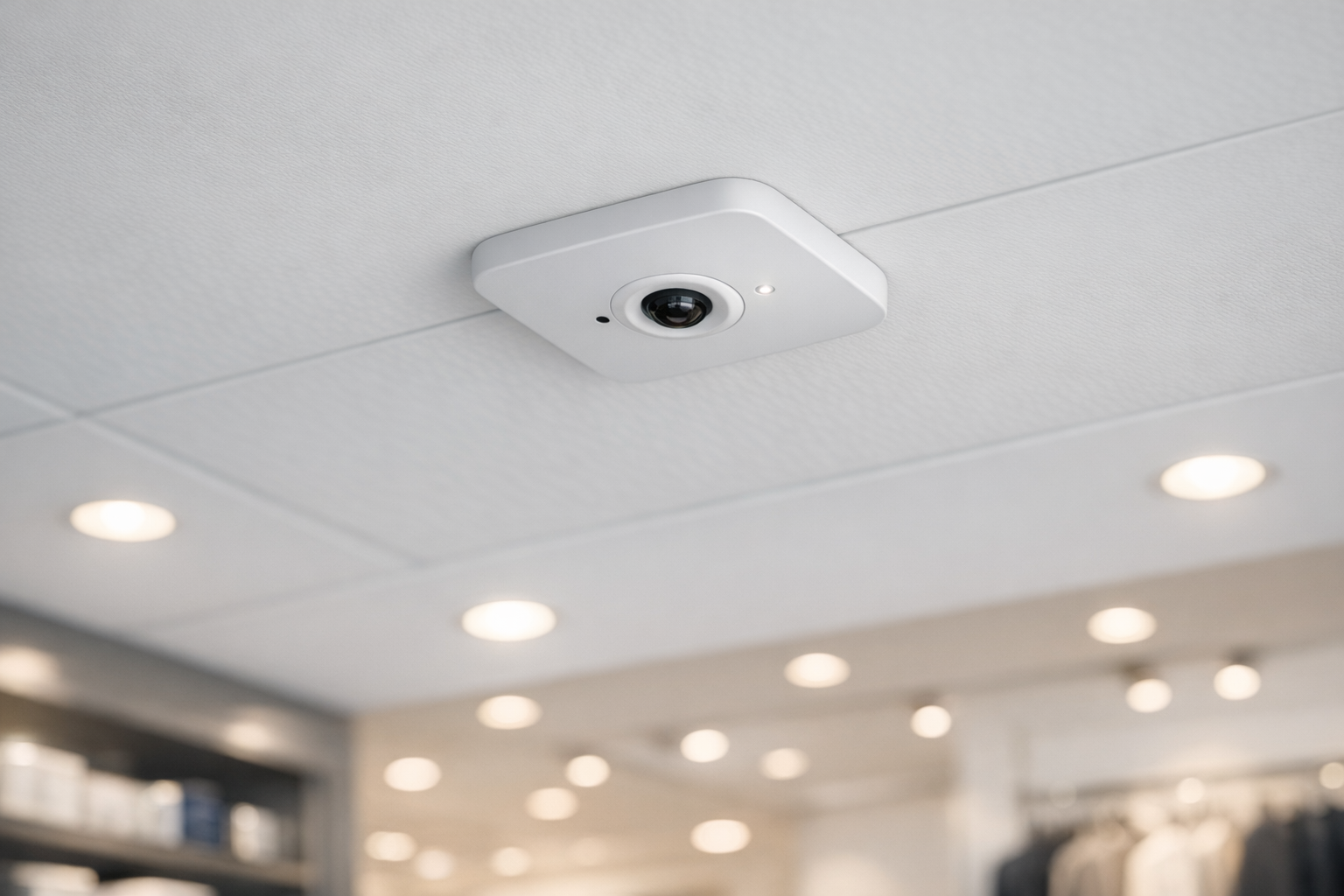
A store that grew revenue 12% last quarter might be underperforming. If traffic grew 20% in the same period, that store converted a smaller share of its visitors than before — and nobody looking only at Sitoo sales reports would ever know. This is the blind spot the Sitoo Vemco integration exists to close: revenue tells you what happened at the till, but only footfall tells you what happened before it.
Vemco Group and Sitoo have been integration partners since 2021, and today more than 50 mutual customers run both platforms together. For fashion and lifestyle retailers already invested in Sitoo — the Swedish cloud-native Unified Commerce Platform anchored by its POS — the question is rarely whether the sales data is good. It is. The question is what that data means without a denominator.
Why POS data alone answers the wrong question
Every Sitoo store manager can pull revenue, transaction count and basket value by store, day and hour. What none of those figures reveal is opportunity. A Saturday with 340 transactions looks strong in isolation. If 2,100 people walked through the door that day, the store converted roughly 16% of its visitors — and the interesting management conversation is about the other 84%, not the ones who bought.
This is why conversion rate, not revenue, is the metric that separates a merchandising problem from a marketing problem. High traffic with low conversion usually points to in-store issues: staffing gaps at peak hours, fitting-room queues, weak product placement. Low traffic with high conversion points outward: the store serves its visitors well but not enough people arrive. Two different budgets, two different owners, one number to tell them apart. Without a footfall feed, most retailers guess.
What the integration actually does
The connection between Sitoo and Vemco is two-way and automatic. Sales transactions transfer from Sitoo into Vemco in real time, shortly after each transaction completes at the POS. There is no nightly batch, no CSV export, and no analyst spending Monday morning stitching last week's sales file to last week's counter data. In the other direction, Vemco exports footfall data into Sitoo, so traffic context is available where store teams already work.
Inside Vemco's dashboards, footfall, transactions and revenue combine into the metrics operations teams actually manage against:
- Conversion rate — transactions divided by visitors, per store and per hour
- Revenue per visitor — the single best comparator across stores of different sizes and locations
- Average transaction value — alongside traffic, so you can see whether promotions attract buyers or browsers
- Sales versus traffic — overlaid by hour, day or week to expose staffing mismatches
- Growth attribution — whether a revenue increase came from more visitors or better conversion of the same visitors
That last point deserves emphasis for anyone allocating budget. If revenue grew because footfall grew, your marketing and location spend is working and the store team's contribution is flat. If revenue grew on flat traffic, the store team improved conversion or basket size and deserves the credit. Retailers who cannot make this distinction routinely reward the wrong lever — and repeat investments that were never the cause of growth.
Real-time matters more than it sounds
A common objection from IT teams: "We already report conversion weekly — why does real time matter?" Because a weekly conversion report is an autopsy. A live one is a diagnosis. When a store manager can see at 13:00 that traffic is running 30% above forecast but conversion is sagging, the response is operational and immediate: pull a colleague from stockroom duty to the floor, open a second till, staff the fitting rooms. Seven days later, the same insight is only good for a meeting.
Swedish retailer SmartaSaker illustrates the pattern well. After installing Vemco people counters in its Stockholm store and integrating footfall with Sitoo sales data, the team gained real-time visibility into conversion rates — turning what had been end-of-period reporting into a live signal for data-driven decisions on staffing and store operations.
A note on data quality, from someone who has deployed this
One thing implementers learn quickly: conversion rate is only as trustworthy as the counter behind it. If a sensor overcounts by miscounting staff, strollers or people lingering in the entrance zone, your conversion rate is silently understated and store teams stop trusting the dashboard — usually within weeks. Vemco contracts to a minimum of 96% counting accuracy, and in practice achieves 98–99% where conditions such as lighting, store layout and visitor behaviour allow. Be wary of any vendor quoting a flat guaranteed figure without those caveats; entrance geometry alone can make or break a deployment, which is why sensor placement should be validated with a manual count audit during commissioning, not assumed from a floor plan.
Vemco's platform is also sensor-agnostic and built on open data principles — relevant if your estate already has counters from a previous project, or if different store formats need different hardware. The platform counts more than 60 million people every day across 55,000+ installations in 98+ countries, so the Sitoo connection sits on infrastructure that is already handling retail traffic data at scale, not a bespoke connector maintained for a handful of accounts.
One source of truth, not another silo
The strategic argument is simple: your data should not live in separate systems. Most retailers evaluating this integration already own both halves of the picture — Sitoo captures every transaction, and traffic is measurable at every entrance. Keeping them apart means every conversion analysis is a manual project, done occasionally, by someone in head office, on data that is already stale. Connecting them means the analysis happens continuously, automatically, and is visible to the people who can act on it that same hour.
For retailers who chose Sitoo for its cloud-native architecture and API-first design, this is also the low-friction path: Vemco adds value on top of the existing Sitoo investment rather than replacing anything. Founded in Denmark in 2005, Vemco has spent two decades on exactly one problem — making physical retail measurable — and the Sitoo partnership brings that measurement into the platform your stores already run on.
Already using Sitoo? Connect it with Vemco and combine your existing POS data with footfall and customer analytics — one view of conversion, revenue per visitor and what is actually driving growth in each store. Talk to us about a Sitoo Vemco integration for your estate at vemcogroup.com/contact-us.