

/global/header/smart-buildings.svg)


/global/header/facility-management.svg)






/global/header/leisure.svg)






Three quotes land in your inbox for counting twelve stores. One is a single line. One lists sensors but not cabling. The third is roughly three times the first and includes a monthly fee nobody mentioned on the call. This is the normal experience of asking for a footfall counter price: the number depends on what the vendor chose to include, and the only way to compare offers is to rebuild each one into the same cost structure yourself.
This article does that rebuild. It covers the three layers every quote should contain, the factors that move the people counter cost up or down per entrance, the pricing models you will encounter, and a payback calculation you can copy into a spreadsheet with your own numbers.
What a footfall counter price is made of
Strip any quote back and you will find three cost layers plus one that is almost never written down:
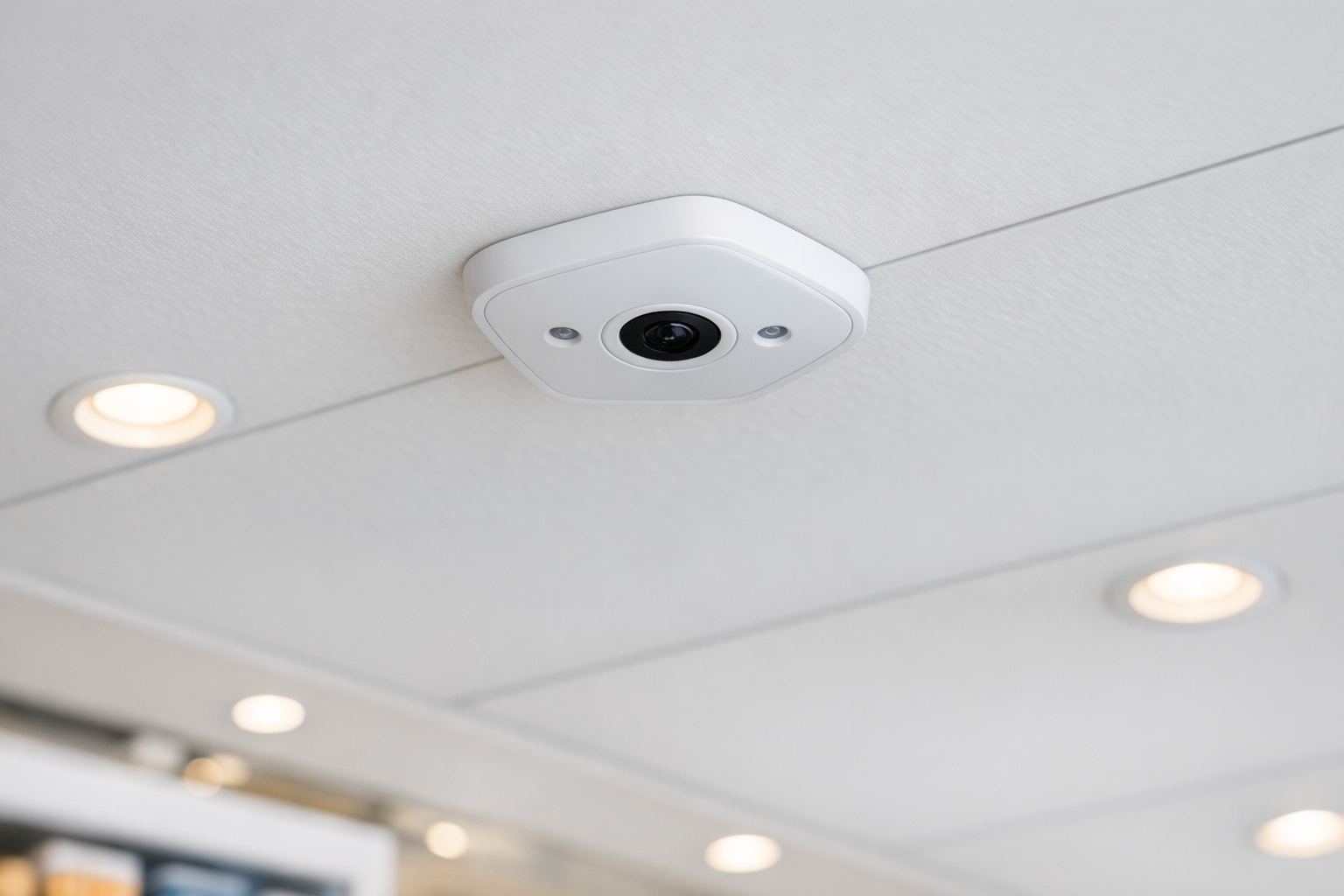
- Sensors. A one-time hardware cost per device. Simple infrared beam counters sit at the low end; 3D stereo and AI sensors capable of separating children from adults or excluding staff sit higher. A wide entrance may need more than one device.
- Installation. Mounting at height, cabling to power and network, configuration and an accuracy validation walk-through. This line varies more between sites than the hardware does.
- Software subscription. A recurring fee for the platform that turns raw counts into reports, alerts and comparisons, usually billed per sensor, per entrance or per site. Integration into your ERP or BI stack may be quoted separately.
- Internal time. Someone has to review the data and change a rota, a layout or a rent. This is the cost most often forgotten and the one that determines whether the rest pays off.
Ask every vendor to split their quote into these lines. A bundled figure cannot be compared, and it hides which layer is driving the total.
Cost drivers per entrance
Two entrances in the same building can carry very different costs. The variables that matter most:
- Entrance width. Each sensor covers a fixed field of view that depends on mounting height. Wide atrium openings need several devices working as one; a standard shop door needs one.
- Ceiling height and access. High ceilings widen coverage but may require lifts, longer cable runs and out-of-hours work, all of which land on the installation line.
- Lighting and behaviour. Harsh backlighting from a glass frontage or a doorway where people cluster and reverse pushes you towards more capable sensors and more tuning time. Vemco Group works to a contractual minimum of 96% accuracy and typically reaches 98 to 99% when conditions allow; the difficult entrances are the ones that sit at the lower end until the install is corrected.
- Staff traffic. In a small store, employees walking in and out can inflate counts by double digits. Staff-exclusion algorithms remove them, which may change the sensor class you need.
- Throughput and complexity. Airport security lines and transport hubs need high-capacity 3D AI sensors such as Xovis. A back door with light traffic does not.
- Power and network. Existing PoE and switch capacity keep installation cheap; running new cable to a remote entrance does not.
This is why a sensor-agnostic platform changes the budget conversation. Because Vemco works with Milesight, Hikvision, AXIS and Xovis, each entrance can get the cheapest hardware that will hit the accuracy target at that specific doorway, rather than every door being fitted with the device needed for the hardest one.
Pricing models you will be offered
Most vendors use one of three structures. Capital plus subscription: you buy and install the hardware, then pay a recurring software fee. Fully bundled subscription: hardware, installation and software rolled into one monthly or annual charge, which smooths cash flow but usually costs more over several years. Software-only: you already own compatible sensors and pay only for the platform. Hosting affects the fee too. Hosted cloud gets most organisations running quickly; private cloud suits stricter data rules and tends to carry a premium. Whatever the model, insist on the per-entrance breakdown so you can see what adding a thirteenth store would cost. If you are still deciding which counting technology fits your buildings at all, the enterprise guide to people counting software covers that ground; this article assumes you are past that stage and pricing a shortlist.
How to calculate payback
Payback in months equals upfront cost divided by monthly net gain, where net gain is the value you create minus the monthly subscription. The figures below are illustrative placeholders, not Vemco prices or market rates; replace every one with the numbers from your own quotes and trading data.
- Assumed upfront cost: two entrances at 1,200 per entrance for hardware and installation = 2,400.
- Assumed subscription: 50 per entrance per month = 100 per month.
- Assumed trading data: 20,000 visitors a month, 20% conversion, average transaction value of 35.
- Assumed conversion gain: a quarter of a percentage point from better peak coverage = 50 extra transactions = 1,750 a month.
- Assumed labour saving: 8 overstaffed hours a week removed at 14 per hour = roughly 485 a month.
Monthly gain is 2,235. Subtract the 100 subscription and net gain is 2,135. Payback is 2,400 divided by 2,135, or just over one month. Now stress-test it: set the conversion gain to zero and only the labour saving remains. Net gain falls to 385 and payback stretches to about six months. That sensitivity is the real output of the exercise. If the case only works with an optimistic conversion lift, you know where the risk sits before you sign.
Shopping centres run the same arithmetic with different inputs. The gain side is rent defended or raised on verified per-unit traffic through VemTenant and VemLease, and disputes with tenants settled in minutes rather than weeks. Universities and libraries put energy, cleaning and avoided construction on the gain side using VemSpace occupancy data. The formula does not change; the line items do.
Where quotes quietly go wrong
Three things to check before accepting any footfall counter price. First, whether accuracy is contractual or aspirational; a cheap sensor at 90% accuracy produces a conversion rate you cannot act on, which makes its price irrelevant. Second, whether integration into your existing BI is included, because counts that live in a separate dashboard nobody opens generate no return at all. Third, whether the quote covers validation after installation. Vemco has counted since 2005 and counts more than 60 million people a day across more than 55,000 installations in 98-plus countries, and the pattern across those sites is consistent: the installs that pay back inside a quarter are the ones where the numbers were verified and someone owned the review cadence from week one.
Frequently asked questions
Why does the people counter cost vary so much between vendors? Quotes bundle different things. One may cover sensors only, another sensors plus installation, another everything including subscription and integration. Rebuild each quote into hardware, installation, subscription and internal time before comparing totals.
Is the cheapest sensor ever the right choice? Often, yes, for low-traffic back doors or simple entrances with good lighting. The mistake is fitting the same cheap device to a wide, backlit main entrance where it will miss the accuracy target. Match the sensor to the doorway, not to the budget line.
How should I treat the subscription in the payback calculation? Subtract it from the monthly gain before dividing upfront cost by the result. It is an ongoing cost, so it belongs on the gain side of the equation as a deduction, not in the upfront figure.
Want a cost breakdown for your own entrances? Send us your building type, number and width of entrances, ceiling heights and current trading or occupancy data, and our team will map the hardware, installation and subscription lines and the payback you can expect before you commit budget. Talk to Vemco Group here.