

/global/header/smart-buildings.svg)


/global/header/facility-management.svg)






/global/header/leisure.svg)







Two stores in the same chain report a 14% conversion rate for the same week. One is a flagship with a double-width glass entrance, the other a mid-size unit with a single door off a car park. The commercial team praises both. Then a regional manager visits the flagship on a Saturday and notices the sensor above the main doors is also counting the staff who cross in and out to the stockroom, the children holding a parent's hand who register as one person, and the shoppers who step in, turn around, and leave because the store is busy. The 14% was never a real number. It was two different measurement systems producing the same output by coincidence.
This is the uncomfortable truth about foot traffic data: the figure on the dashboard is only as trustworthy as the method that produced it, and most retail teams never ask which method that was. Before you set targets, compare locations or justify a staffing budget on footfall, it is worth knowing exactly what is being counted, by what, and with what margin of error.
The five places foot traffic data actually comes from
Vendors tend to talk about "footfall" as a single thing. It is not. In practice retailers encounter five quite different sources, and they do not measure the same event.
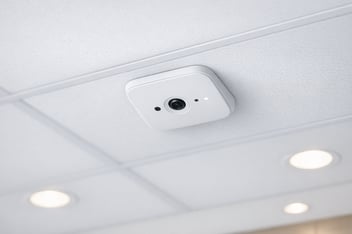
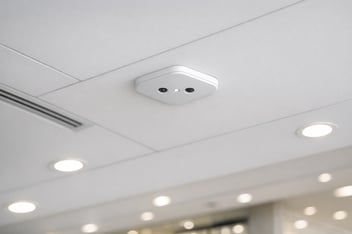
- Overhead 3D sensors at the entrance. Stereo-vision or time-of-flight cameras mounted above the door, counting bodies crossing a virtual line in each direction. This is the most precise option available and the standard for conversion reporting, because it measures the one event that matters commercially: a person physically entering your store.
- Horizontal beam counters. An infrared beam across the doorway broken by passing bodies. Cheap and still common in older estates. They cannot tell direction reliably, undercount groups walking side by side, and overcount anyone carrying a bag at beam height. Divide-by-two assumptions are usual, which tells you everything about the accuracy.
- Wi-Fi and Bluetooth sensing. Detects signals from phones in range. Useful for dwell and passer-by ratios, but randomised MAC addresses on modern handsets, phones in bags, people without phones and signal bleed from the pavement mean the count is a proxy, not a tally.
- Mobile location panels. Aggregated GPS data from app users, sold by data brokers and often used for site selection. Sample sizes per store per day can be in the tens, then extrapolated. Good for comparing trade areas, poor for knowing how many people walked through a specific door on Tuesday.
- Landlord or mall-provided numbers. Counts at mall entrances distributed to tenants. These describe centre traffic, not your traffic, and the share you receive is often an allocation formula rather than a measurement.
The practical consequence: if your conversion rate uses source one in some stores and source two or five in others, you are not comparing stores. You are comparing counting methods.
What "accurate" means for a foot traffic counter
Accuracy claims should come with conditions attached, and an honest supplier will state them. For modern overhead sensors, a contractual minimum of 96% is realistic, with 98 to 99% typically achieved when lighting, store layout and visitor behaviour allow. Note the word "allow". A sensor above a dark vestibule facing low winter sun through glass, or positioned where a promotional table forces shoppers to walk around the counting zone, will not deliver the upper end regardless of the brochure.
The more important distinction is between random error and systematic error. A sensor that is wrong by 2% in a different direction every day is fine for trend analysis; the noise averages out across a month. A sensor that is wrong by 8% in the same direction every day because of a mounting fault produces beautifully smooth, consistently false footfall data. The second kind is far more dangerous, because nothing on the dashboard looks wrong.
Here is the observation most implementers learn the hard way: the biggest source of systematic error in retail is not the hardware, it is staff. In a store with a single customer entrance, employees arriving, leaving for breaks, collecting deliveries and walking out to tidy the frontage can add 5 to 15% to the daily count. A store that opens with 40 visitors in the first hour may have had 25 shoppers and 15 staff movements. Any serious deployment either excludes staff via the sensor's zoning and badge-based filtering, or applies a measured staff factor by store, not a chain-wide guess. If your current setup does none of this, your conversion rates are understated and your quietest hours are overstated.
Where counts drift after installation
Validation on day one is standard practice: someone stands at the door with a clicker or our free online people counter for an hour and the result is compared with the sensor. The problem is day 200. Stores change. A visual merchandiser moves a mannequin under the sensor, a security gate is replaced, a door is propped open in summer so shoppers pause in the threshold, a ceiling tile is lifted and the sensor is knocked three degrees. None of these generate an alert in a basic system. The count simply becomes less true.
This is why the data platform matters as much as the sensor. A foot traffic analytics layer that only aggregates numbers will happily report a store that has flatlined at zero because a network switch was powered down, or a store suddenly up 30% because a second door was opened and not configured. VemCount, for example, runs sensor health monitoring across every entrance and location so that offline devices, unusual in/out imbalances and suspicious zero periods are flagged before they reach a weekly report. The value is not the alert itself, it is that store managers stop being the ones who discover the problem by noticing their numbers look odd in a Monday review.
A practical checklist for operations teams reviewing their current setup:
- Re-validate with a manual count at least twice a year per store, and always after any refit or fixture move near the entrance.
- Check the in/out balance. Over a full day, entries and exits should be within a few percent. A persistent gap means a counting line is misplaced.
- Confirm every entrance is covered, including fire exits used as shortcuts and connecting doors to adjoining units.
- Document the staff-exclusion method per store, because it changes with the layout.
- Hold the same accuracy standard across the estate before using footfall data to rank stores.
Why reliable retail footfall changes the decisions, not just the reports
The point of getting the count right is not tidiness. When Luksusbaby used VemCount for real-time conversion rates alongside visitor demographics, the usefulness depended entirely on trusting the denominator. A conversion figure updating through the day only helps a floor manager redeploy staff if the visitor count it is built on is clean. With an unreliable foot traffic counter, a drop in conversion might be a staffing problem or might be a sensor miscounting a delivery crew, and the manager cannot tell which.
The same logic applies to the budget conversations executives care about. Lease negotiations benchmarked on landlord numbers, marketing attribution based on mobile panels, and labour models built on beam counters each introduce an error band that may be wider than the effect you are trying to measure. Knowing the source and its reliability lets you decide which decisions the data can carry and which it cannot.
Accuracy is also where people counting vendors differ most, so ask every vendor which minimum they will put in the contract. Our comparisons put Vemcount side by side with V-Count, ShopperTrak, RetailNext and FootfallCam on accuracy, sensor choice and how missing data is shown, and the people counting software comparison overview lists the questions to ask before a pilot.
Frequently asked questions
How accurate is foot traffic data? It depends heavily on the source: modern overhead 3D sensors can be contractually guaranteed at a minimum of 96% and typically reach 98 to 99% when lighting, store layout and visitor behaviour allow, while beam counters, Wi-Fi sensing and mobile location panels are considerably less precise and better suited to trends than exact counts. The figure also decays over time if sensors are not re-validated and monitored, so accuracy should be treated as something you maintain rather than something you buy once.
If you are unsure which of your stores are counting shoppers and which are counting doors opening, that is a question worth answering before the next budget cycle. Talk to Vemco Group about auditing your current foot traffic data sources, validating accuracy store by store, and putting sensor health monitoring in place so the numbers you plan on are the numbers that actually happened.