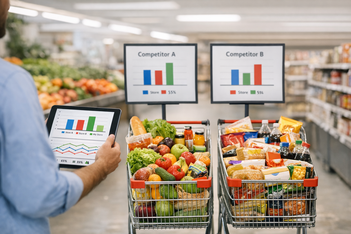









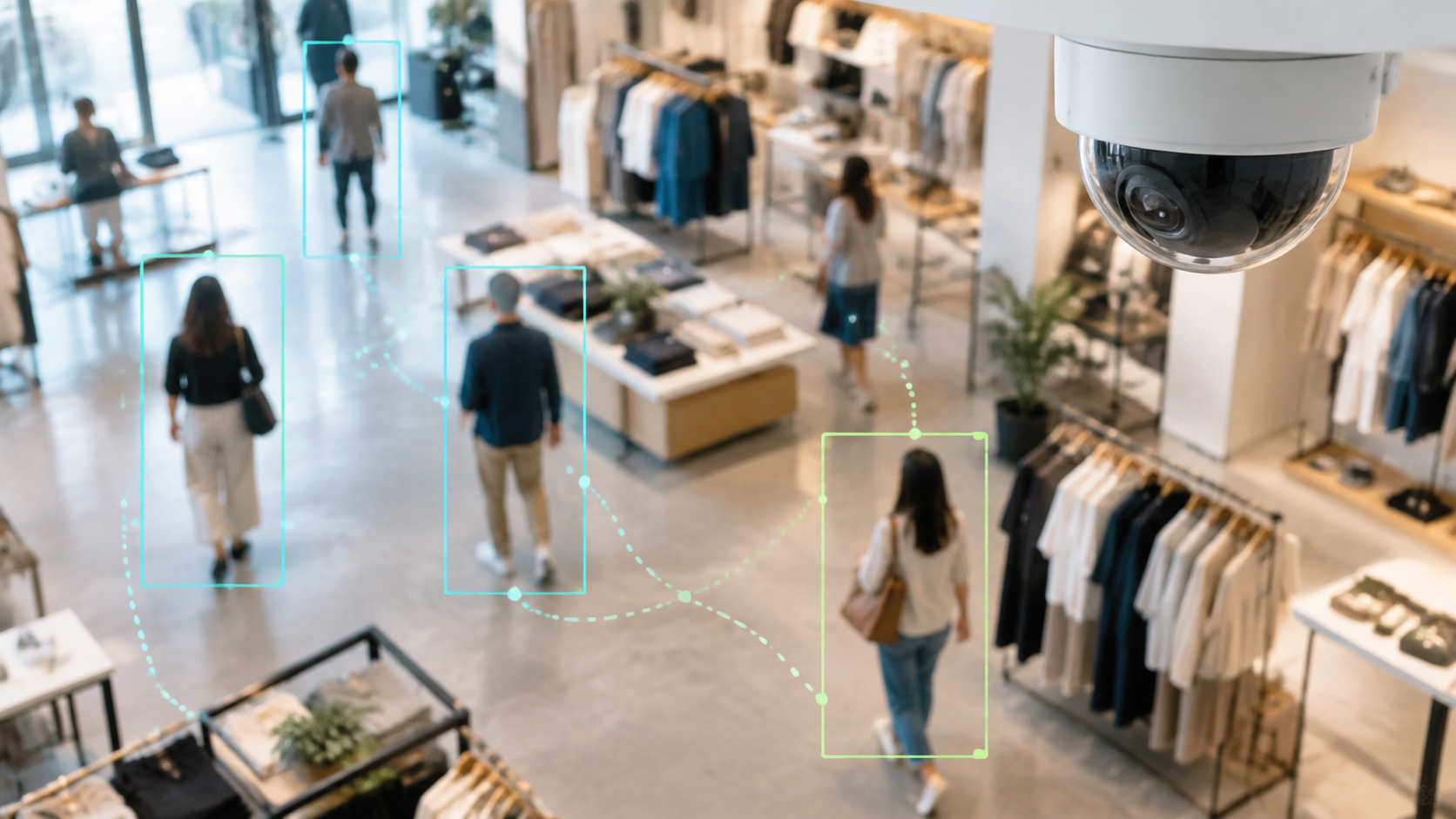
A store director in a fashion chain recently asked a vendor to show "how many shoppers picked up a product, looked at the price and put it back." The demo looked convincing on a slide. On the shop floor, with a low ceiling, a mirrored wall and a mannequin blocking half the field of view, the number was closer to a guess. That gap between what a sales deck promises and what a camera can actually deliver is the single biggest source of disappointment in computer vision retail metrics projects, and it is almost entirely avoidable if you know where the line sits before you sign.
The metrics computer vision measures with confidence
Some measurements are mature enough that you can build operational decisions and contracts around them. These are the ones to anchor a business case on.
- Footfall per entrance, per hour. Overhead 3D stereo sensors and AI cameras count people crossing a defined line in both directions. This is the oldest and most reliable metric in the category. In Vemcount deployments the contractual minimum is 96 percent accuracy, and sites typically reach 98 to 99 percent when lighting, entrance width and visitor behaviour cooperate. Note the word typically: a glass entrance with afternoon sun glare or a trolley-heavy supermarket door will sit at the lower end until the sensor is positioned and tuned properly.
- Zone footfall. How many people entered the denim wall, the electronics corner or the pharmacy counter area. Requires sensor coverage of the zone boundary, not just the front door.
- Live occupancy. Entries minus exits across every door, including staff and goods-in doors if you want the number to stay honest through the day.
- Dwell time. Average time spent in a zone or in front of a fixture, measured as a distribution rather than a single average. The distribution matters: ten shoppers spending eight seconds and two spending four minutes tell different stories about a display.
- Heat maps and paths. Where traffic concentrates and which aisles are dead. Useful for planogram and fixture decisions, provided you overlay the heat map on an up-to-date floor plan.
- Queue length and wait time. Number of people in a defined checkout region and how long they stay there. One of the fastest metrics to turn into a staffing action.
Metrics that are estimates, not counts
Demographics sit in a different category and should be treated that way in your reporting. An AI camera can estimate age band and gender from a front-facing view. The output is a statistical distribution for a time period, not a label attached to a person, and Vemcount stores no persistent identifier and makes no face recognition claims. For a store director that means demographic data answers "did the Saturday crowd skew younger after the campaign launched?" and does not answer "did the same customer return on Tuesday?" If a vendor tells you otherwise, ask them exactly what is stored, for how long, and show the answer to your data protection officer before anything else.
Engagement metrics such as "picked up product" or "read the label" also belong here. They can work on a single, well-lit, purpose-built fixture with a dedicated camera. They rarely survive a full-store rollout across varied ceiling heights and lighting. Budget for them as pilots, not as a KPI you report to the board.
What computer vision in retail cannot see without other systems
This is where most expectation problems start. A camera sees bodies moving through space. It does not see money, intent or identity.
- Conversion rate. Transactions divided by visitors. The numerator comes from your POS, the denominator from the people counting camera. The value is in the join, which is why Vemcount integrates POS data rather than trying to infer purchases from video.
- Sales per visitor and average basket. Same dependency. No camera reads a receipt.
- Returning versus new customers. Requires a loyalty scheme, app or opt-in identifier. Vision analytics done in a privacy-respecting way deliberately cannot do this.
- Staff versus shoppers. Some sensors support exclusion zones or staff tagging, but out of the box a body is a body. Decide early whether staff crossing the entrance inflate your footfall and configure accordingly.
- Why a shopper left. Dwell time tells you how long someone stood in front of a shelf. It does not tell you whether the price, the size range or a slow assistant sent them away.
Sensor choice shapes the metric list
Retail video analytics is not one technology. A 3D stereo sensor from Xovis mounted directly above an entrance is excellent at bidirectional counting and height-based filtering, and it produces no identifiable image, which simplifies privacy reviews. An AI camera from Milesight gives a wider field of view and supports zone, heat map and demographic analytics from one device, but it is a camera, so mounting angle and lighting matter more. LiDAR handles large, bright atrium spaces where stereo depth struggles. Thermal works where privacy rules forbid any optical image. WiFi sensing gives coarse presence and repeat-visit trends across a mall concourse but is not a counting method you should contract accuracy on. Because Vemcount is sensor agnostic, the practical approach is to match sensor type to each location rather than forcing one device across a whole estate.
A practitioner note on validation
Anyone who has commissioned more than a handful of stores knows the accuracy figure on a spec sheet means nothing until it has been validated on site. The method that works: a manual count of at least 500 entries and exits per entrance, during a busy period, compared against the sensor log for the same interval. Do it before go-live and again after any fixture change near the door, because a new promotional table placed inside the counting zone can quietly shift results by several points. Keep the validation sheets; they are what you will reach for when regional management questions a number six months later.
Where the computer vision retail business value actually lands
The return on computer vision store analytics rarely comes from the most exotic metric. It comes from hourly footfall matched to the rota, queue alerts that trigger a second till, dwell data that justifies moving a high-margin category to a hot zone, and conversion by hour that exposes the gap between a busy store and a selling store. These are mundane numbers measured well, joined to POS and acted on weekly. That is the pattern across the 800+ malls and many thousands of stores running Vemcount today, and it is the same pattern a five-store chain should expect.
Frequently asked questions
What can computer vision measure in a store? Reliably: footfall by entrance, zone and hour, live occupancy, dwell time, heat maps, queue length and wait time. As estimates: age band and gender distributions. Anything involving purchases, identity or motive needs another data source.
Does computer vision in retail identify individual shoppers? Not in a properly configured analytics deployment. Sensors count and classify bodies in motion, and platforms such as Vemcount keep no persistent identifier and make no face recognition claims. Demographic output is aggregated by period, not linked to a person.
How accurate are computer vision people counters? The contractual minimum for Vemcount installations is 96 percent, and most sites reach 98 to 99 percent once lighting, layout and visitor behaviour allow. Always validate on site with a manual count rather than relying on a spec sheet figure.
What is the difference between a 3D sensor and an AI camera? A 3D stereo sensor uses depth to track shapes from directly overhead and produces no identifiable image, which makes it the default for precise entrance counting. An AI camera captures a wider optical view and can add zone, heat map and demographic analytics, at the cost of greater sensitivity to mounting angle and lighting.
Which retail metrics still need POS data? Conversion rate, sales per visitor, average transaction value, items per basket and any revenue-weighted view of zones or hours. Vision supplies the visitor side of the ratio; the till supplies the money side, and the platform joins them.
If you are weighing up which metrics your stores can actually measure, and which sensor types suit each location, talk to the Vemco Group team at vemcogroup.com/contact-us for a site-by-site assessment before you commit budget to a full rollout.