


/global/header/smart-buildings.svg)


/global/header/facility-management.svg)






/global/header/leisure.svg)






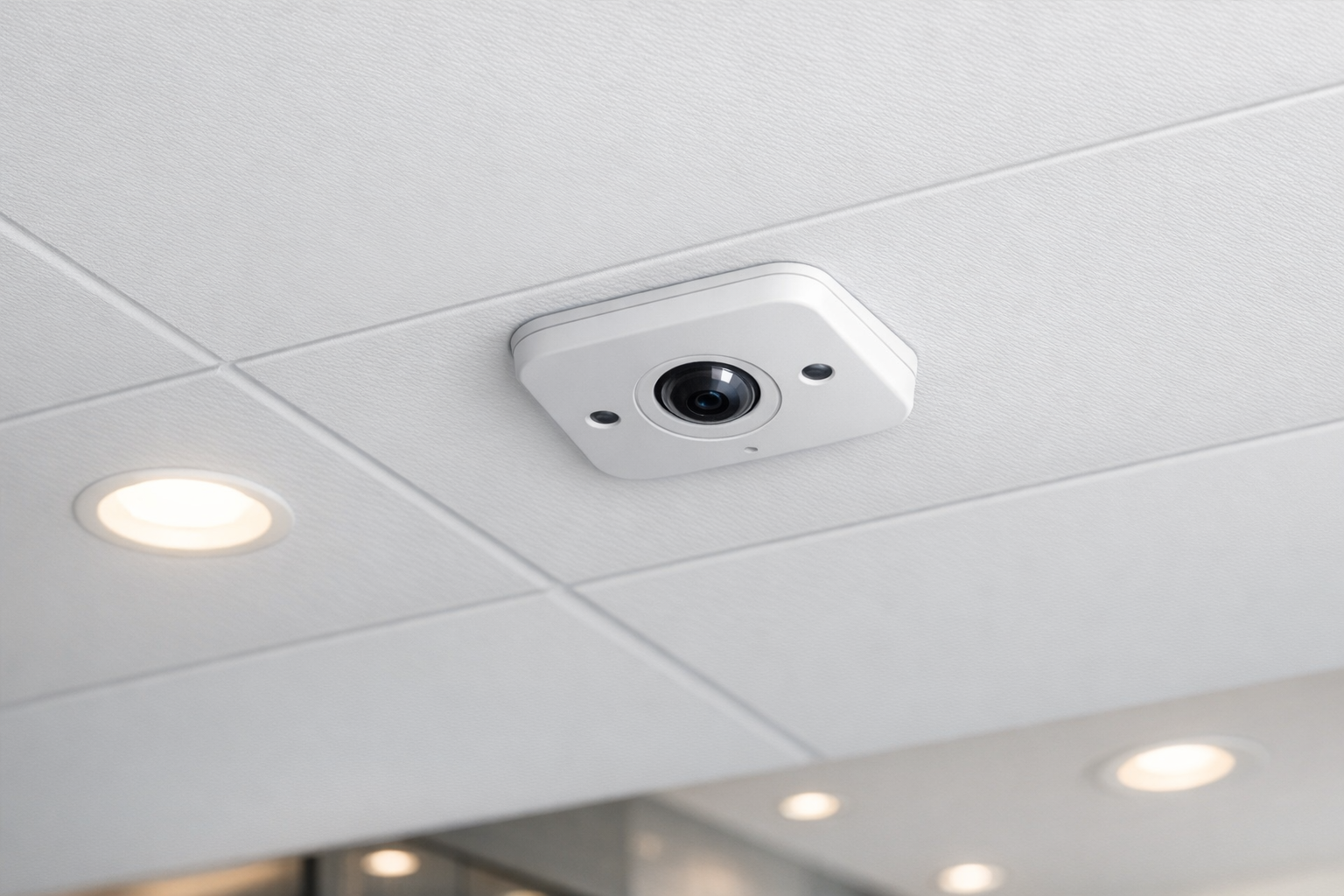
Vemco Group is an official Xovis Gold Partner. Xovis sensor data feeds directly into VemCount, Vemco Group's people counting and analytics platform, where footfall and occupancy counts become dashboards, reports and alerts and can be combined with POS sales and other data. The question for any Xovis integration is what the analytics layer does with the counts.
Why Xovis hardware deserves more than raw counts
Xovis is a Swiss manufacturer of people counting sensors built for challenging applications and locations — everything from a straightforward single-entrance boutique to multi-sensor arrays covering wide airport concourses, atriums with glass floors, and mall entrances with heavy trolley and stroller traffic. That range matters. Most people counting failures we get called in to fix are not sensor failures at all; they are deployments where the hardware was fine but the software downstream could not stitch zones, handle multi-entrance deduplication, or distinguish staff from visitors in the reporting layer.
This is where the Vemco and Xovis relationship is deliberately structured. Vemco Group is an official Xovis Gold Partner, and the data direction is simple: Xovis sensor data flows directly into the Vemco platform. Footfall and occupancy arrive as clean, validated counts, and from there they become dashboards, reports and alerts — not another raw data feed your IT team has to babysit.
What the integration actually delivers
Counts on their own answer one question: how many. Counts combined with other data answer the questions your budget owners actually ask. Inside Vemco, Xovis counting data can be combined with POS sales, IoT feeds and other data sources, which is where the operational payoff sits:
- Conversion rates per store, per hour. Footfall against transactions tells a store manager whether a slow Tuesday was a traffic problem or a sales-floor problem. Those require completely different responses, and without the join you are guessing.
- Live occupancy with alerts. For smart building operators and airports, occupancy thresholds trigger alerts for cleaning schedules, HVAC adjustment, queue intervention or safety-limit compliance — no one watching a screen required.
- Staff planning against real demand curves. Malls and airports rarely have flat traffic. Matching rosters to measured arrival patterns is one of the fastest ROI cases in this category, and it only works if the counts are trustworthy at 15-minute granularity.
- Tenant and lease reporting. Mall operators using Xovis at common areas and tenant entrances can standardise footfall reporting across the whole asset instead of reconciling five different tenant-supplied figures.
Accuracy, stated honestly
Accuracy claims in this industry are a mess. You will find vendors quoting flat 99% figures with no conditions attached, which any implementer knows is marketing rather than measurement. Vemco commits to a contractual minimum of 96% counting accuracy. In practice, deployments typically reach 98–99% — when conditions allow. Lighting, ceiling height, store layout and visitor behaviour all affect the outcome, and anyone who tells you otherwise has not spent time validating counts against ground-truth video. The difference between a contractual floor and a marketing ceiling is exactly the difference between a number you can put in a lease agreement or a board report, and one you cannot.
One practitioner note worth passing on: the single most common cause of accuracy degradation after go-live is not the sensor and not the software — it is the environment changing underneath them. A new promotional display parked under a sensor, a seasonal gate added at an entrance, a mirror installed in a fitting-room corridor. Good deployments include periodic validation, and good analytics platforms make anomalies visible fast, because a count that drops 12% overnight is almost never a real traffic change. Build that check into your operating routine from day one.
The Hella Aglaia angle — including public transport APC
If your estate includes Hella Aglaia counters, note that Xovis has acquired Hella Aglaia's people counting business, bringing those counters under the Xovis umbrella — including automatic passenger counting (APC) for public transportation. Vemco supports these too. For systems integrators, this simplifies a previously fragmented picture: a client with legacy Hella hardware in some sites and Xovis in others can now consolidate onto a single analytics layer rather than running parallel reporting stacks. For transport operators, it means bus and rail APC data can sit in the same platform as terminal and station footfall, which is where passenger-flow analysis starts getting genuinely useful.
Why the partnership works, in Xovis's own words
Anne Wyder, VP Channel Sales at Xovis, has said publicly that solving end-customer challenges requires close collaboration with partners able to realise a broad range of use cases — and that Vemco Group has proven time and again it has the technical and market expertise to make the most of the data provided by Xovis sensors. Endorsements from a sensor manufacturer about a software partner are rare and worth reading carefully: hardware vendors see every integration attempt, good and bad, and they know which partners generate support tickets and which generate reference customers.
The scale behind that endorsement is concrete. Vemco Group, founded more than 20 years ago in Denmark, runs a sensor-agnostic, open data analytics platform that counts more than 60 million people every day across 55,000+ installations in 98+ countries. Sensor-agnostic matters even for a committed Xovis estate: mixed hardware is the norm in any organisation with more than a handful of sites, and a platform that only speaks one sensor's language becomes a constraint the moment you acquire a portfolio or inherit legacy installations.
A practical evaluation checklist
If you are budgeting a Xovis integration this year, pressure-test any analytics vendor on these points:
- Do they take Xovis data natively, or through a middleware layer someone has to maintain?
- Is accuracy contractually committed, or just quoted?
- Can counting data be joined with POS, IoT and other sources for conversion and building analytics — or does it live in isolation?
- Does the roadmap cover the full Xovis portfolio, including former Hella Aglaia counters and APC for transport?
The strategic logic is straightforward: premium sensors deserve software that makes the most of the data. You have already made — or are about to make — the hardware decision. The return on that decision is determined almost entirely by what happens to the counts after they leave the ceiling.
Already using Xovis sensors, or planning a deployment? Connect them with Vemco and turn accurate counts into conversion, occupancy and operational insight. Talk to our team about your specific sites and use cases at vemcogroup.com/contact-us.