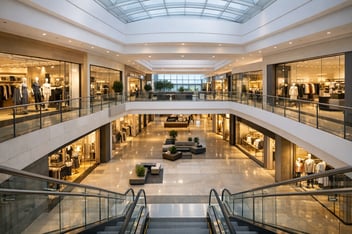











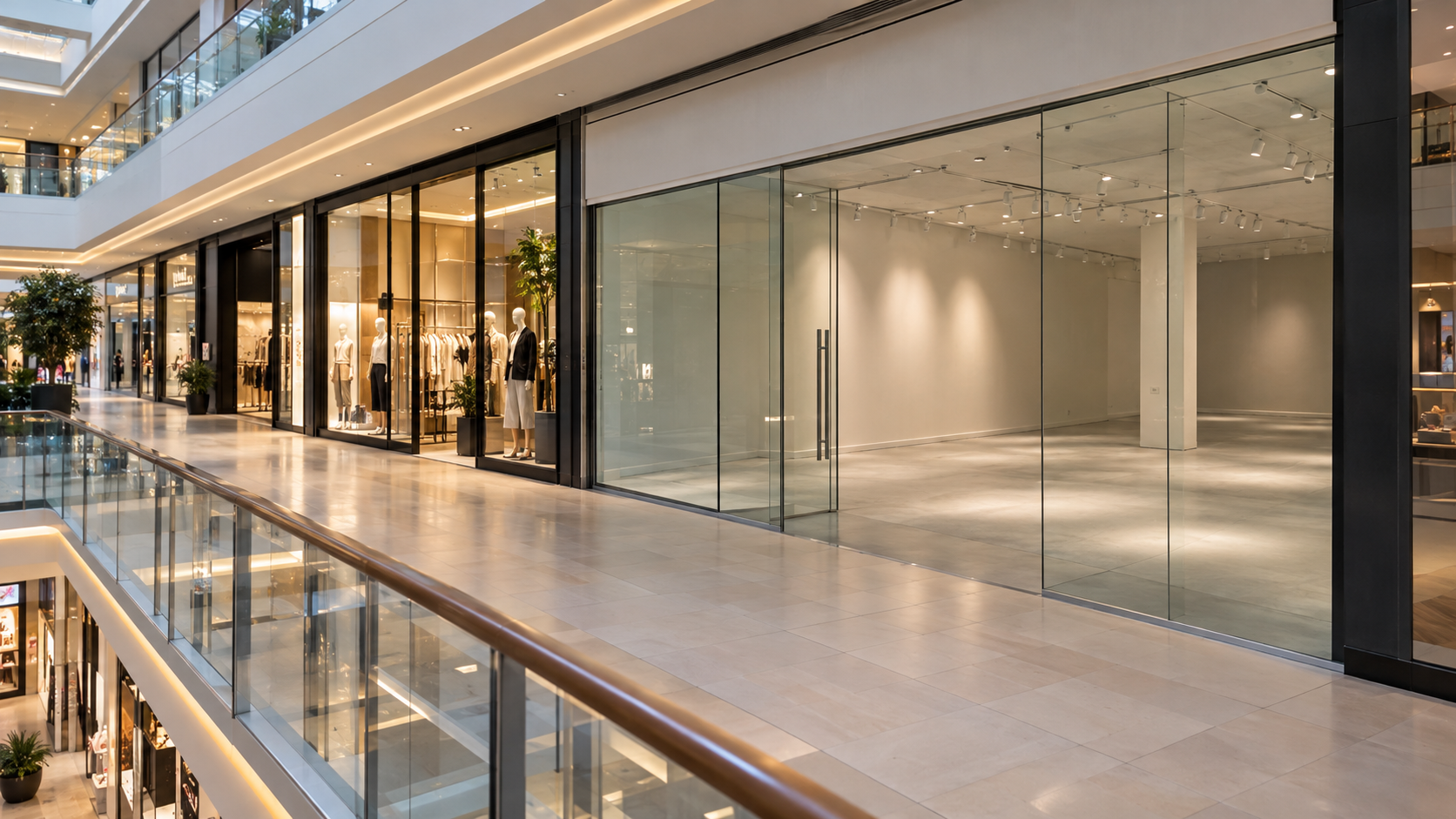
When a unit goes dark, the rent roll records one number: the rent that is no longer coming in. That number is accurate, and it is also the smallest part of the problem. The larger part of a shopping centre vacancy sits in the units on either side, where tenants are already noticing fewer people at the door and have not yet connected it to the closed shopfront next to them.
That is the gap this article is about. Not whether void costs matter, because every asset manager knows they do, but where to look for them. The answer is simple and slightly uncomfortable: the numbers that reveal the real cost of a vacant retail unit belong to its neighbours, not to the empty unit itself.
Why one line in the rent roll understates the loss
A dark frontage changes how people walk. In a busy junction, shoppers read the environment as they move through it. A lit, trading unit slows them down; a closed one does not. When they stop slowing down, they stop turning in to the units on either side. The neighbouring tenants feel the drop in store entries within weeks, long before anyone on the management team has drawn a line between their softer figures and the vacancy beside them.
At the far end of a side corridor the same dark frontage may do nothing of the sort. The shoppers who reach that corridor were going there anyway, and the units around the vacancy keep trading as before. In that position the empty unit in a shopping centre costs exactly what the rent roll says it costs: its own rent, and nothing more.
So two vacancies with identical rent can have very different real costs. The rent roll cannot tell them apart. The neighbours can.
Three numbers that tell the real story
You do not need a new measurement programme to see the effect. You need three numbers that most centres already hold, read against a new question.
- Footfall past the doors of the neighbouring units. This shows whether the flow itself has changed at that point in the centre.
- Store entries into those units. This shows whether the people who still pass are turning in at the same rate, which is where a dark frontage usually bites first.
- Sales in those units, from turnover reporting. This confirms whether the lost entries are translating into lost trade and, eventually, into pressure on the tenant's own lease.
Footfall analytics at the frontage level and people counting at the store door already produce the first two of these. The vacancy simply gives them something new to answer. Where counting accuracy comes into the conversation, treat it honestly: a contractual minimum of 96 percent, typically 98 to 99 percent when lighting, layout and visitor behaviour allow, is good enough to see a shift in store entries beside a closed unit. It is not a flat guarantee, and it does not need to be.
An illustrative example: two units, one rent, two very different problems
Take a mid-sized shopping centre, purely as an illustration and not as a study or a customer case. Two mid-sized units go dark at the same time, on the same rent. Unit A sits by the escalator junction. Unit B sits at the end of a side corridor.
Ten weeks after Unit A closed, store entries in the units either side of it are down 12 percent. Footfall past their doors has softened and sales are following. Around Unit B, nothing has moved. The neighbours are trading as they were before.
The rent roll says these two vacancies cost the same. The neighbours say one of them is urgent. Unit A justifies a rent-free period, a fit-out contribution or a temporary pop-up now, because every week it stays dark costs the centre more than its own rent. A pop-up there does not need to be profitable on its own terms; it can pay for itself on what it restores in the neighbouring units. Unit B can wait for the right tenant without that pressure, and the incentive budget should reflect that.
A vacancy is not priced by its rent. It is priced by its neighbours.
What to do the week a unit closes
The method is deliberately plain, because it has to survive a busy property team and a leasing manager with twenty other units to fill.
- Step 1: save the baseline. The week a unit closes, pull the eight weeks before the closure for the neighbouring units: footfall past their doors, store entries and sales. This is the comparison everything else depends on.
- Step 2: follow the same three numbers every week. Not monthly, and not only when a tenant complains. A weekly read catches the drift early enough to act on it.
- Step 3: set urgency and budget by the neighbours. Decide the leasing priority and the incentive package, whether rent-free, fit-out contribution or pop-up, by what the surrounding units are losing, not by the rent of the empty one.
One practical point that implementers learn quickly: the comparison only works if the counting zones are defined at the door of each neighbouring unit, not as one wide corridor zone that lumps three frontages together. If the hardware is positioned so that a pass-by and an entry look the same, the drop in store entries disappears into the corridor total and the vacancy looks harmless when it is not. Check the zone definitions before the unit closes, not after.
What this changes in shopping centre leasing
Most leasing conversations about a vacant retail unit begin with the unit's rent and end with how much of it the owner is prepared to give away. Reading the neighbours flips that. The question becomes how much the centre is already losing around the void, and how much of that a new tenant, or even a short-term pop-up, would bring back. That is a different negotiation, with a different budget behind it.
It also changes the conversation with existing tenants. A tenant whose store entries have fallen since the next-door unit closed is far easier to retain when the centre can show it has seen the same numbers and is acting on them. Tenant performance data stops being something the centre collects and becomes something it uses on the tenant's behalf.
None of this requires new counters. They are already at those doors, measuring footfall and store entries every day. Vemco Group provides footfall and retail analytics for shopping centres and retailers, and the most useful shift is often not more data but a sharper question put to the data a centre already has.
Frequently asked questions
What does a vacant unit really cost a shopping centre? Its own lost rent plus whatever the neighbouring units lose in footfall, store entries and sales while it stays dark. In a busy junction that second part can be the larger one; at the end of a quiet corridor it may be close to nothing.
How do you measure the effect of an empty unit on neighbouring tenants? Save eight weeks of pre-closure data for the neighbouring units and compare it week by week against the vacancy period. The counters at those doors already produce the footfall and store entry figures; sales come from turnover reporting.
Which numbers should you track while a unit is vacant? Three: footfall past the doors of the neighbouring units, store entries into those units, and their sales. Together they show whether flow has changed, whether people are still turning in, and whether trade is suffering.
How should the incentive budget for re-letting a vacant unit be set? By what the neighbours are losing, not by the empty unit's rent. A vacancy that is pulling down the units beside it justifies a rent-free period, a fit-out contribution or a pop-up now; one with no measurable effect on its neighbours can wait for the right tenant.
If you have a unit standing empty today, the numbers to price it are already being collected at the doors on either side. Book a demo to see how the numbers around a vacant unit can be read unit by unit.