


/global/header/smart-buildings.svg)


/global/header/facility-management.svg)






/global/header/leisure.svg)






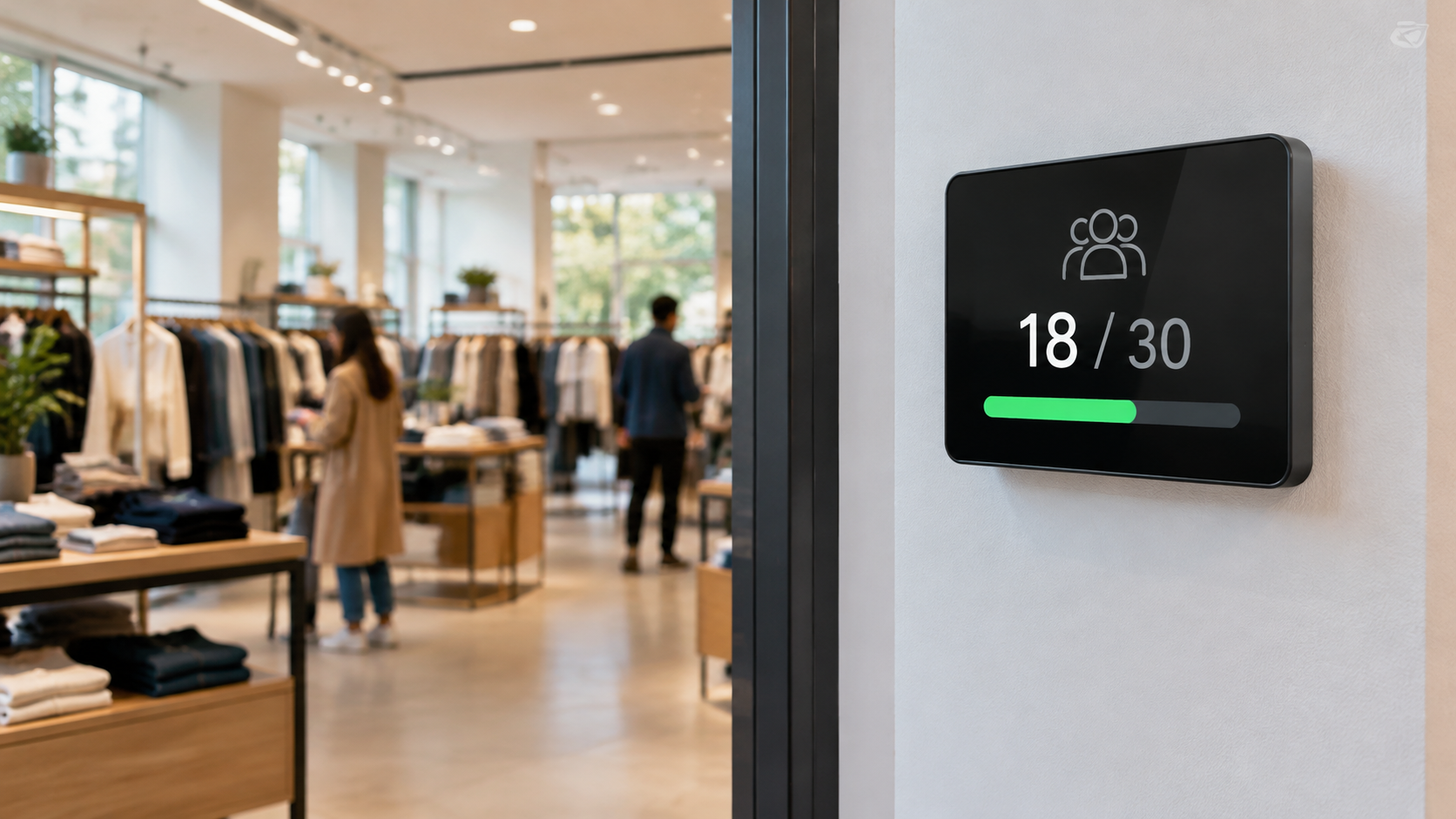
The fire certificate for your main hall says 450 people. The last time anyone verified how many were actually inside, a steward with a hand clicker lost count during the interval and started again from a guess. That gap, between the number on the certificate and the number on the floor, is exactly what an occupancy counter exists to close. Not once a year for an audit, but every second the doors are open.
Where the live number carries real consequences
Retail chains adopted live capacity counting at scale in 2020 and most never switched it off, because the running total turned out to be useful for staffing and queue control long after the legal limits disappeared. For the buildings this article is written for, the pressure is different and more permanent.
- Licensed venues and event halls carry a legal maximum that an inspector can test on the night. A ticket scan tells you how many came in; it says nothing about how many have left.
- University libraries and study floors hit the wall in exam weeks. Students walk between buildings looking for a seat. A live count on a screen or an app stops that circuit before it starts.
- Canteens, pools and leisure centres have limits set by water safety, kitchen throughput or seating, and all three change by time of day.
- Museums, civic buildings and council chambers need to show a regulator, an insurer or a council committee that capacity was managed, not estimated.
In each case the question is the same: how many people are in this space right now, and who gets told when that number approaches the limit?
What a capacity counter actually computes
A visitor counter at a single door produces a footfall figure: how many people entered over a period. A capacity counter does something stricter. It takes every entry and every exit across every opening into the zone, keeps a net total, and compares that total against a limit you have set. The arithmetic is trivial. The engineering is in making sure nothing is missed.
Three things decide whether the live figure can be trusted. First, coverage: a zone with four public doors, a staff entrance and a loading bay needs sensors on all six, or the count will leak. Second, direction: the sensor must distinguish in from out when both flows cross in the same doorway, which is exactly what happens when a lecture ends and the next cohort pushes in. Third, exclusion: cleaners, security staff and caterers walk through doorways dozens of times a shift. AI-based sensors with staff exclusion remove those crossings so the count reflects the public, not the payroll.
On accuracy, be careful with what you are promised. The contractual minimum Vemco works to is 96%, and installations typically run at 98 to 99% where lighting, layout and visitor behaviour allow. Nobody can honestly guarantee a flat 99% at a revolving door under a glass atrium at sunset. Ask any supplier what their figure is a minimum of, and under what conditions, before you sign.
The drift problem nobody mentions in the brochure
Here is the observation every implementer learns within the first month. Even at 98% accuracy, a net count drifts over a long day. Two percent of 5,000 door crossings is 100 uncounted or double-counted movements, and because errors on entries and exits do not cancel neatly, the live total can slowly float away from reality. A building that opens at 07:00 and closes at 23:00 will show a plausible but wrong figure by the evening if nothing corrects it.
The fix is procedural rather than technical. Reset the zone to zero at a known empty point every day, usually first thing. For venues with multiple sessions, reset between performances when the hall is cleared. Put a propped-open fire door on the facilities checklist, because a wedged door at the back of a sports hall is the single most common cause of a count that looks fine at noon and absurd at six. Real time occupancy monitoring works when the people managing the building treat the count as an operational instrument, not a dashboard they glance at on Fridays.
What happens when the number hits the limit
A count on its own changes nothing. The value is in what you connect to it. Vemco's occupancy platform lets you define a limit per zone and triggers an alert when the live figure reaches it, and the destinations of that alert are where the design decisions sit.
- People: an SMS or app notification to the duty manager at 90% of limit, and to the whole steward team at 100%.
- Screens: a traffic-light display at the entrance so visitors self-regulate, which removes most of the confrontation at the door.
- Systems: through VemFusion, the occupancy figure feeds the building management system and access control. A pool zone at limit can hold the turnstile; a library floor can switch its wayfinding sign to point students to the next building.
The same VemFusion link that pauses a turnstile also lets HVAC respond to how many people are actually in a hall rather than to a timetable written in August. That is where facility managers usually find the budget case: the counter bought for compliance starts paying for itself through ventilation that follows real demand instead of running at design load for an empty room.
Room, floor or building: pick the zone before the sensor
A common mistake is to buy sensors for the front door and then try to answer questions about the second floor. Decide first which boundaries matter. A theatre needs the auditorium and the bar as separate zones because they have separate limits. A university might need building-level capacity for safety, floor-level for the library, and room-level for bookable seminar spaces that are reserved but sit empty. VemSpace covers that range, measuring utilisation at desk, room, floor and building level with the same live occupancy and limit alerts, so a zone you set up for a capacity count this year can be reused for a space rationalisation review next year without new hardware.
For a public institution, that reuse is the argument that gets the purchase through committee. The counter is bought once; the compliance case, the energy case and the estates planning case all draw on it.
Questions to put to any supplier
- What is the contractual minimum accuracy, and what site conditions affect it?
- How are staff and contractors excluded from the public count?
- Can a zone be reset manually by a steward, and is the reset logged?
- Which BMS and access control systems have been integrated before, and can we speak to that site?
- Does the alert history export in a form an inspector or insurer will accept?
Frequently asked questions
How does an occupancy counter work? Sensors at every opening into a zone detect each person crossing and record the direction of travel, and the system keeps a net total of entries minus exits as the live occupancy figure. AI-based sensors can recognise and exclude staff so the count reflects visitors only. When the total reaches a limit you have defined, the platform sends alerts to people, displays or connected building systems.
If you manage a hall, library, pool, campus or civic building with a limit you are currently policing by hand, talk to Vemco about a live capacity setup for your specific zones and door layout. Contact us at vemcogroup.com/contact-us and bring your floor plan and your certificate figures; that is enough to scope the sensors, the reset routine and the alert chain in a first conversation.