

/global/header/smart-buildings.svg)


/global/header/facility-management.svg)






/global/header/leisure.svg)






The rooftop lounge cost more than the lobby refit, the fitness room is being expanded for the second time, and when the asset manager asks how many residents actually use either on a Tuesday evening, the honest answer is a guess based on who the concierge remembers seeing. That gap is where most questions about a smart community platform start. Teams are not short of resident apps, access-control logs or survey tools. They are short of a reliable count of bodies in spaces, by hour, that they can put in front of an owner before the next capital request.
The questions below are the ones leasing, community and property teams ask once they have moved past the brochure stage and are deciding what to budget for.
What does a smart community platform actually measure?
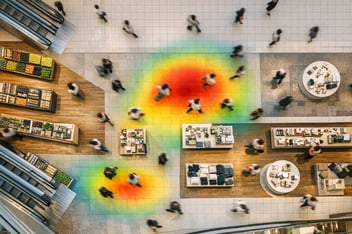
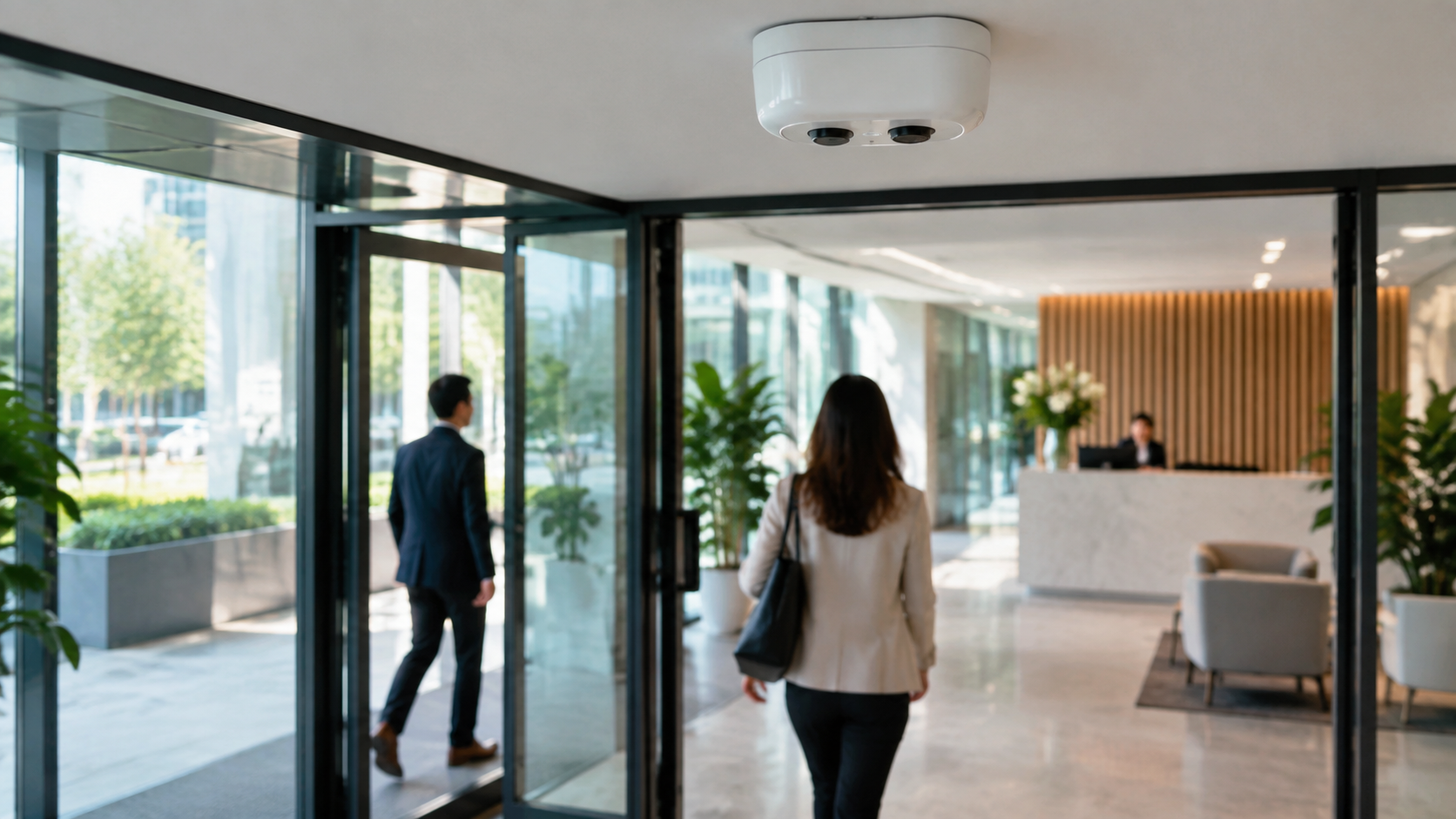
The measuring part is people counting: how many people enter and leave defined spaces and how long they stay. A people counting sensor mounted above an amenity entrance records entries and exits; the software turns that into occupancy curves, peak hours, average dwell time and week-on-week trends. In a mixed-use scheme the same system covers the retail podium, so a foot traffic counter at the ground-floor café tells you whether the residential population above is feeding the commercial tenants below.
Access-control data is not a substitute. Fobs record who was authorised to enter, not who came in behind them, and they tell you nothing about exits or dwell. Overhead sensors count everyone, including guests, contractors and the resident who held the door for three neighbours.
Which spaces should a property instrument first?
Start where money is already being argued about. In practice that means three or four locations per building:
- The fitness room, because equipment replacement and extension requests are recurring and expensive.
- Coworking or lounge space, because it competes with the case for converting the floor area to another revenue-generating use.
- The main lobby or leasing office, where a door counter gives leasing teams a true prospect walk-in figure instead of a tally sheet.
- Any commercial unit with a turnover rent clause, where the landlord needs an independent count rather than the tenant's own number.
A pool, a package room or a dog wash can follow once the first set of data has changed a decision. Buying thirty sensors on day one is an easy way to end up with a dashboard nobody opens.
How accurate does the counting need to be for community decisions?
More accurate than most teams assume, because residential volumes are low. A retail store with 4,000 daily visitors can absorb a few percent of error without changing a conclusion. A coworking lounge with 60 visits a day cannot; miscount ten people and your utilisation figure is off by a sixth. Vemco Group contracts to a minimum of 96% counting accuracy, and under good conditions of lighting, layout and visitor behaviour the figures typically land at 98 to 99%. That spread matters: a narrow corridor with a glass wall behind it and strong afternoon sun is harder than a wide, evenly lit entrance, and a competent installer will say so before the sensor goes up.
Staff exclusion is the other half of an accurate visitor counting system in a residential setting. Cleaners, maintenance contractors and the community team move through amenity spaces constantly. Without an algorithm that removes them, your 8am fitness-room peak is partly the cleaning rota.
Why not use the Wi-Fi or the resident app?
The short answer is that neither of them counts the room. Wi-Fi and Bluetooth presence counting, which works tolerably in a shopping centre, is close to useless in a residence because residents' phones are connected to the building network around the clock from their own flats. The signal cannot tell a resident in the lounge from a resident two floors up on the sofa. App check-ins have the opposite problem: only the engaged minority bother, so the data flatters the people who were already going to turn up. Overhead sensors at the threshold are the only method that counts the room rather than the device.
How do leasing teams use the data?
Two ways that show up in budgets. First, conversion: a people counter at the leasing office door, matched against tours booked and leases signed, gives a real walk-in-to-lease ratio that marketing spend can be judged against. Second, evidence on tours. "Our coworking space averages 70% occupancy between 9 and 4 on weekdays" is a sentence a prospect believes; "it's very popular" is not. Where a scheme includes ground-floor commercial space, VemLease ties the footfall record to lease administration, renewal tracking and vacancy management, so a retail tenant's renewal conversation starts from a shared count of how many people passed their door, not from two competing anecdotes.
What about resident privacy?
Sensors used for this purpose do not identify individuals. They detect shapes crossing a line from above and produce a number; there is no face, no name, no device identifier. That distinction is the starting point for a GDPR assessment and makes it easier for a community manager to share amenity usage trends with residents. AI sensors can additionally estimate age bands and separate children from adults, which is useful for deciding whether a family lounge is being used as intended, and still does not store anything attributable to a person.
Does it work with the systems the property already runs?
It should, and it is worth insisting on. Good people counting software is sensor-agnostic, so a property with existing AXIS or Hikvision cameras may be able to use them for counting rather than buying new hardware, and the counts should flow out through an API into the BI tool, the ERP or the property-management system the owner already reports from. Counting data that only lives in its own dashboard becomes one more login the team stops using.
Frequently asked questions
How much do people counting sensors cost? The cost depends on the number of entrances, the sensor type, the mounting height and whether you need age estimation or basic in/out counts, so a four-space residential building is a different project from a retail podium with twelve entrances. Software and installation are part of the total, not only the device itself. Ask vendors to quote per door, including calibration and a stated accuracy guarantee, so that offers can be compared like for like.
How to measure foot traffic in a store? Mount a sensor above each public entrance so it looks straight down at the threshold, calibrate it to exclude staff and delivery doors, and let the people counting system log entries and exits by the hour. Match those counts against transactions from the POS to get conversion, which is the figure that tells a retail tenant, and the landlord, whether the problem is too few visitors or too few sales per visitor. In a mixed-use scheme the same footfall counter data feeds turnover-rent reconciliation and renewal talks.
If you are deciding which amenity spaces, lobbies or commercial units to count first, or need an occupancy figure in hand before the next capital or leasing review, talk to Vemco Group about people counting scoped for your property at vemcogroup.com/contact-us.