

/global/header/smart-buildings.svg)


/global/header/facility-management.svg)






/global/header/leisure.svg)






It is 14:10 on a Saturday and the north wing of a shopping centre is at 1,840 people against a fire-safety ceiling of 2,000. The security lead has roughly eight minutes to decide whether to hold the escalator queue at the car park entrance. Yesterday's footfall report cannot help with that. A number that is at most a few seconds old can. That gap between "what happened" and "what is happening" is the whole reason real time people counting exists, and it is also the source of most of the confusion buyers run into when they start comparing systems. The questions below are the ones that come up in nearly every scoping call.
What does "real time" actually mean in a people counter?
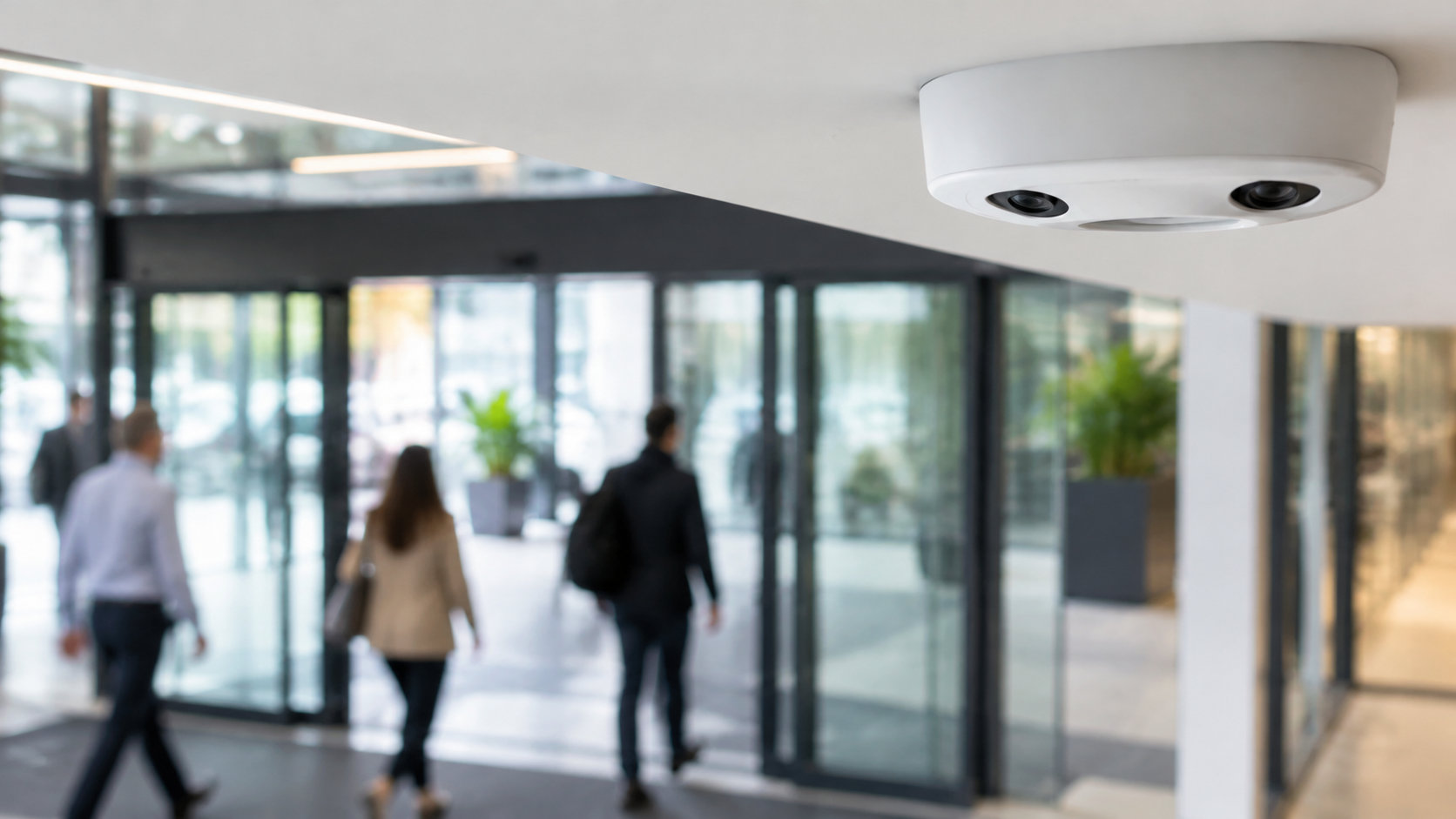
Vendors use the phrase loosely, so pin it down in the specification. There are three distinct latencies in play: how often the people counting sensor evaluates a frame (typically many times per second), how often it pushes a count to the platform (anything from one second to fifteen minutes depending on configuration), and how often the dashboard or API refreshes. A system that batches uploads every fifteen minutes is perfectly good for staffing decisions and conversion analysis. It is useless for occupancy control. Ask for the push interval in writing, and ask what happens to counts during a network outage. A proper people counting system buffers locally on the sensor and back-fills the gap, so the daily total stays correct even if the live view went dark for twenty minutes.
Which decisions genuinely need live data?
Fewer than most buyers assume, which is worth knowing before you pay for sub-second infrastructure across every door. The cases where seconds matter:
- Occupancy limits in shopping centres, event halls and large-format stores, where a regulator or insurer defines the ceiling.
- Queue and lane management at airport security, where a live count of people between the queue entry and the scanners tells the duty manager whether to open lane six now or in ten minutes.
- Study-space availability in university libraries, where students check a screen or an app to see which floor has free seats before they walk across campus.
- Cleaning and restocking triggers in washrooms, food courts and fitting rooms, where a threshold count rather than a fixed schedule dispatches staff.
Everything else, from labour scheduling to tenant rent negotiations, runs comfortably on data that is minutes or hours old. The practical approach is to run live push on the handful of entrances that feed an occupancy or queue decision and let the rest of the estate report at a slower cadence. The same people counting software handles both; it is a configuration choice, not a product choice.
How accurate is a live count, and what breaks it?
Modern 3D stereo and time-of-flight sensors mounted overhead are contractually guaranteed at a minimum of 96% accuracy in Vemco's installations, and in practice land at 98 to 99% when lighting, door geometry and visitor behaviour allow. That last clause is not a hedge; it is the operational reality. A revolving door with a wide approach, strong directional light at dusk, or a crowd that bunches shoulder-to-shoulder at opening time will each pull a sensor toward the lower end of the range. Staff are the other silent distortion: a shop assistant who crosses the threshold forty times a shift to fetch stock adds eighty movements to a day's count. Staff-exclusion algorithms remove those movements, and for live occupancy you should insist on it, because the occupancy figure is only as good as the entries minus exits it is built from.
The thing implementers learn in the first month
Occupancy drift. A footfall counter that is 98% accurate on entries and 98% accurate on exits is still slowly accumulating a residual, because every missed exit stays "inside the building" on the dashboard. Over a long trading day at a busy centre this can leave the live figure dozens of people high by evening, and nobody notices until the night security guard sees 140 people in an empty mall. Experienced integrators handle this three ways: a scheduled reset to zero at close, a hard floor so the count can never go negative, and a daily audit comparing the sensor's entries-minus-exits to a manual sample at two or three doors. Build those into the commissioning checklist rather than discovering them in week three.
Which sensors and which software?
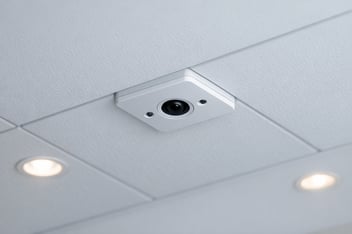
For live occupancy the sensor matters more than for historical reporting, because there is no chance to clean the data later. Overhead 3D sensors from Xovis are the usual choice for wide entrances and bidirectional flows; Vemco is a Xovis GOLD partner and has commissioned them across airports and centres where lane counts drive staffing. Milesight, Hikvision and AXIS devices cover narrower doors and sites that already run those camera estates. The point worth stressing is that the analytics layer should be sensor-agnostic. VemCount ingests all of these on one platform, which means an airport can run premium stereo sensors on security lanes and cheaper door counters on retail units without maintaining two dashboards. On the AI side, some sensors now estimate age band and gender and separate children from adults, which matters for occupancy because a buggy counted as two adults inflates the live figure, and for retailers who want to see how family traffic differs from weekday lunch traffic.
How does the live number reach the people who act on it?
A dashboard on the security desk is the obvious answer and the least useful one, because the person who needs to open a lane or hold a queue is rarely sitting in front of it. Threshold alerts by SMS or app notification, a traffic-light display at the entrance, and an API feed into the building management or workforce system are what actually change behaviour. Integration with POS and BI matters less for the live use case and far more for what you do afterwards: once the same platform holds live occupancy, hourly footfall and transactions, the conversion-by-hour view that drives next month's rota comes free.
What does it cost and where do budgets go wrong?
Hardware is rarely the problem. The budget lines that surprise people are cabling and PoE switches at entrances that were never designed for them, scaffold or lift hire for high atrium ceilings, and the commissioning time to calibrate each counting line and validate against manual counts. For a multi-entrance site the installation and validation effort can match the sensor cost. Plan for it, and plan for a licence model that scales by sensor rather than by site so that adding a new tenant entrance later is incremental rather than a renegotiation.
Frequently asked questions
How much do people counting sensors cost? A single overhead 3D people counting sensor typically runs from a few hundred to a little over a thousand euros depending on resolution, mounting height and whether it includes AI demographics, with simpler door counters at the lower end. Installation, PoE networking and commissioning often add a comparable amount per entrance, and software is usually licensed per sensor per year. Get the total cost per counted entrance over three years rather than the device price alone.
How to measure foot traffic in a store? Mount an overhead people counter above each customer entrance, define the counting line and direction, enable staff exclusion, and validate against a manual count of at least 200 movements before you trust the figure. Feed the counts into software that aligns them with POS transactions by hour so you can read conversion, not just volume. For a single-entrance store this is a half-day job; for a department store it is a project.
If you are specifying real time people counting for an occupancy, queue or availability use case and want to know which entrances need live push and which do not, talk to the Vemco team at vemcogroup.com/contact-us. Bring your floor plan and your decision list, and we will tell you where the sensors go and where they do not.