


/global/header/smart-buildings.svg)


/global/header/facility-management.svg)






/global/header/leisure.svg)






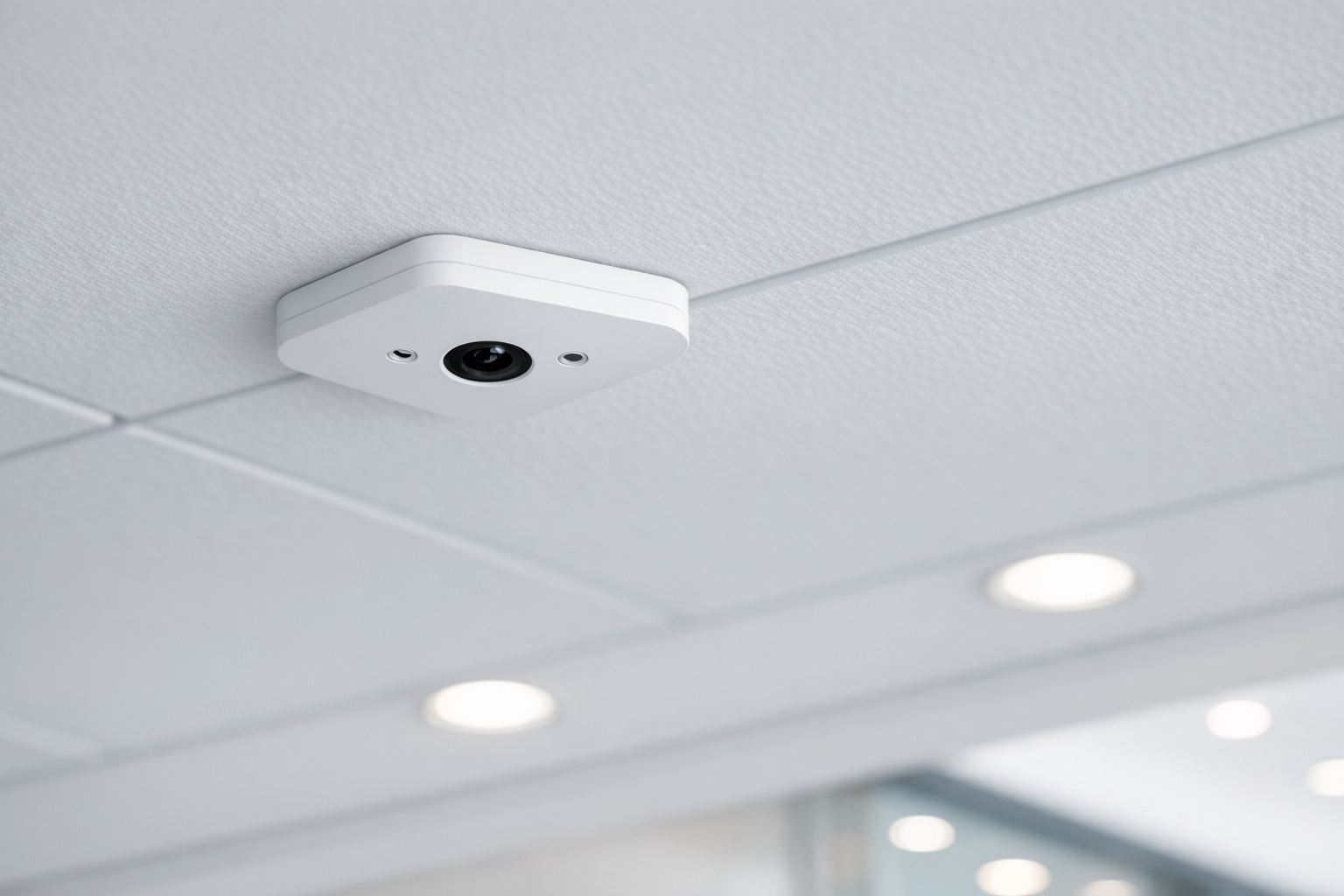
The most common mistake we see isn't buying the wrong sensor — it's comparing two locations that were never counting the same thing. One mall entrance excludes staff and delivery couriers; another doesn't. One counts every person, another only adults. Then someone builds a quarterly report on top of both, and a store manager gets a conversion target that was never real. Before you compare numbers, agree on what a "count" means. That single decision fixes more reporting disputes than any hardware upgrade.
Below are the questions we actually get asked by retailers, shopping centre operators, airport teams, university facilities staff, and library managers who have already read the introductory articles and want specifics.
How accurate is footfall analytics, really?
Accuracy depends on conditions you control and conditions you don't. At Vemco Group we work to a contractual minimum of 96%, and in practice most installations run at 98–99% when lighting, store layout, and visitor behaviour cooperate. Anyone promising a flat, guaranteed 99% regardless of site is selling you a number, not a system. Backlit doorways, glass reflections, tightly grouped visitors, and entrances doubling as fire exits all pull accuracy down until the mounting and sensor choice are corrected. Get the physical install right and the software does the rest.
Won't staff walking in and out ruin my numbers?
In a small store with three employees, staff movement can inflate footfall by double digits. Staff-exclusion algorithms remove employee traffic so your conversion rate reflects genuine shoppers. This matters most in the first and last hour of trading, when the shop is nearly empty and every staff trip to the stockroom would otherwise register as a "visitor." If your conversion rate looks suspiciously low at opening, staff counting is usually the culprit.
Do I have to buy your sensors?
No. The platform is device-independent and sensor-agnostic. We work with sensors from Xovis (3D AI), Milesight, Hikvision, and AXIS, so existing hardware often stays in place. That protects sites that already invested in cameras and want the analytics layer changed rather than the whole system ripped out. It also lets a shopping centre mix sensor types — a high-precision 3D unit at the main atrium, simpler counters on secondary corridors — inside one dataset.
Can it tell adults from children, or detect age and gender?
AI sensors can detect age and gender and separate children from adults. For a family-oriented mall or a toy retailer, distinguishing a group of four (two adults, two children) from four independent shoppers changes how you read dwell time and staffing needs. Universities and libraries use the same capability differently — they care less about demographics and more about clean occupancy and peak-hour patterns across reading rooms and study spaces.
Does this connect to the systems we already run?
Footfall in isolation is a curiosity. Footfall next to sales, staffing, and tenant data is a decision. The platform integrates with ERP and BI tools, and can be hosted or run in a private cloud depending on your data-governance rules. Airports and universities with strict internal policies usually choose private cloud; smaller retail groups tend to prefer hosted. The modules map to different jobs:
- VemCount — core people counting and conversion reporting
- VemTrack — movement and flow analysis inside a space
- VemTenant and VemLease — tenant-level performance and lease negotiation data for landlords
- VemSpace — occupancy and space utilisation
- VemFusion — combining data sources into one view
We're a landlord, not a retailer. What's in it for us?
Independent, verified traffic data changes lease conversations. When a tenant claims a unit "gets no traffic," you can show the actual passing footfall versus the store's capture rate — and separate a location problem from a merchandising problem. Tenant-level analytics also support turnover-based rents and help you price high-traffic units correctly. This is where footfall stops being a marketing report and becomes a financial instrument.
How much data are we actually talking about?
Across the network, the platform counts more than 60 million people a day across 55,000+ installations in 98+ countries. That scale matters for one practical reason: seasonal benchmarks and comparison patterns are already understood, so a new site isn't starting its interpretation from zero. Vemco Group has been building this since 2005 — twenty years in 2025 — with its R&D centre in Fredericia, Denmark.
What do people underestimate before they roll it out?
Governance, not technology. Once footfall data is trustworthy, everyone wants it framed to support their own case — the marketing team, store managers, the leasing department. A practitioner tip: lock down your definitions and reporting windows before the first dashboard goes live. Decide whether trading hours mean door-open hours or scheduled hours, whether returns traffic counts, and who owns the "official" number. Sites that skip this spend their first quarter arguing about whose figure is right instead of acting on it.
Is it privacy-compliant?
Counting and demographic detection work on anonymous data — the goal is a count and a category, not identifying an individual. For libraries and universities especially, that distinction is what makes deployment acceptable to their communities. Confirm your specific data-handling and retention rules during scoping, and match hosted versus private cloud to your policy rather than to convenience.
How fast do we see value?
The first useful insight usually appears within the first full trading week — staffing gaps against peak hours are almost always visible immediately. The deeper wins, like conversion by hour and tenant capture rates, need a few weeks of clean data to separate signal from noise. Resist the urge to act on day-three numbers.
If you're weighing footfall analytics for a store network, mall, airport terminal, campus, or library, the useful next step is a conversation about your specific site conditions — not another brochure. Talk to Vemco Group here to map the right sensors, modules, and accuracy expectations to your locations.