

/global/header/smart-buildings.svg)


/global/header/facility-management.svg)






/global/header/leisure.svg)






Most buyers researching AI people counting have already read the "what is footfall" explainers. What they actually need answered is harder: why did the trial sensor undercount by 12% near the glass entrance, does staff traffic really distort conversion rates that much (yes — often by 10–20% in smaller stores), and what happens to the data when the sensor vendor changes hands? Below are the questions we hear from retailers, shopping centres, airports, universities and libraries once they get past the brochure stage — answered the way an implementation team would answer them.
How accurate is AI people counting, honestly?
Be suspicious of any vendor quoting a flat "99% accuracy" with no conditions attached. Accuracy depends on lighting, ceiling height, entrance width, and visitor behaviour — a wide airport concourse with clusters of trolley-pushing travellers behaves nothing like a boutique doorway. At Vemco Group, the contractual minimum is 96%, and installations typically reach 98–99% when conditions allow. That distinction matters in negotiation: a contractual floor is something you can hold a supplier to; a marketing number is not. Ask for the accuracy clause in writing and ask how it is validated — a proper vendor will run manual count comparisons after installation, not just point at a spec sheet.
Does it count my staff, and does that matter?
It matters more than most buyers expect. If your store sees 300 visitors a day and staff cross the entrance line 40 times, your conversion rate is understated and your traffic-per-hour staffing model is quietly wrong. Modern staff-exclusion algorithms identify and remove employee movements from the count — typically via wearable tags or pattern recognition — so your KPIs reflect actual customers. In libraries and universities, the same logic applies to security rounds and cleaning staff who pass counting zones dozens of times per shift. If a vendor cannot explain their staff-exclusion method in one sentence, keep asking.
Am I locked into one sensor brand?
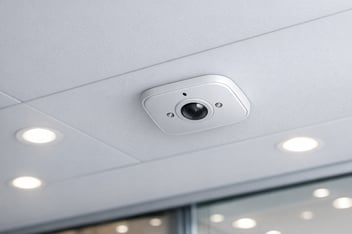
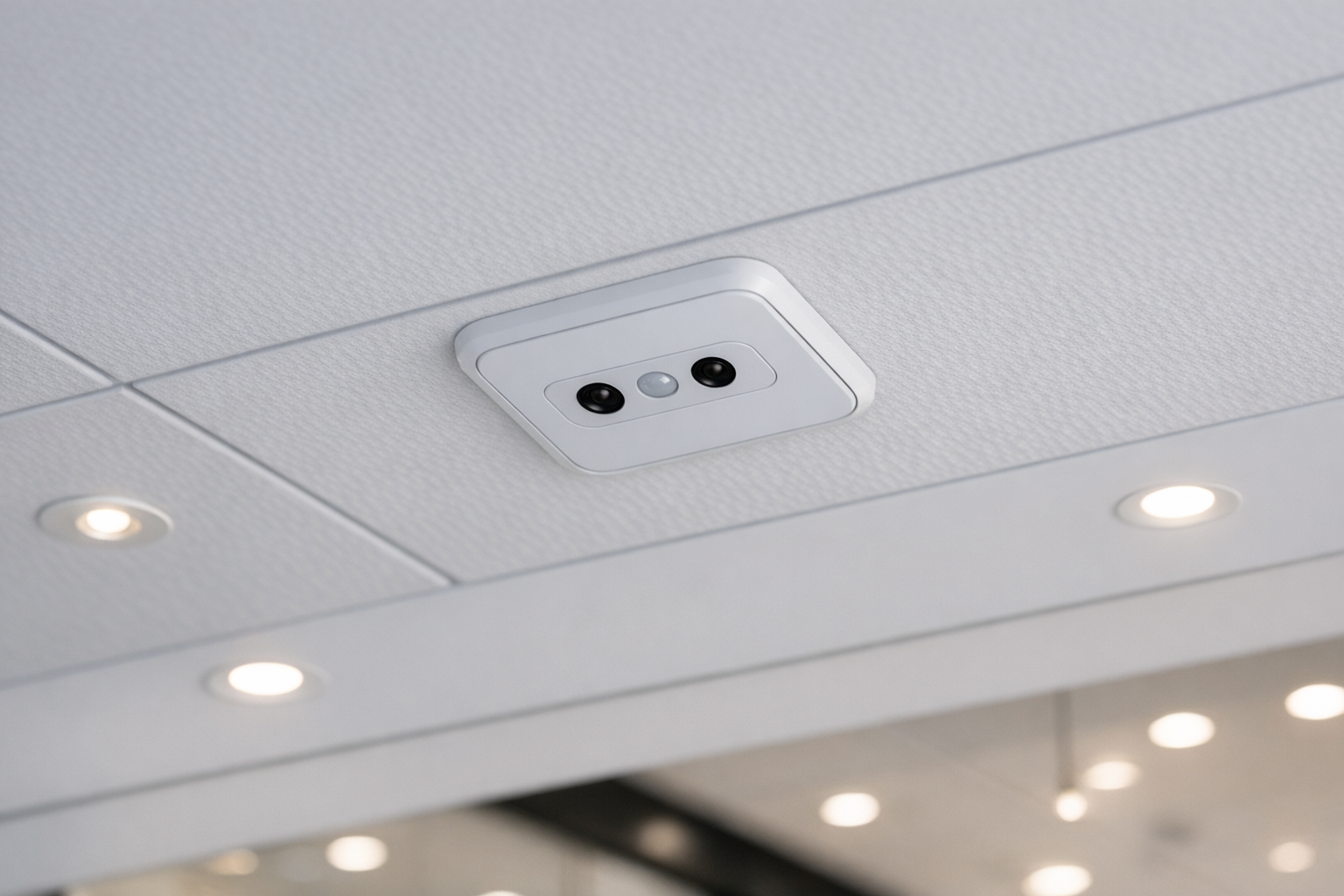
Only if you choose to be. This is arguably the single most expensive mistake in procurement. Some platforms only work with their own proprietary hardware, which means a future price increase, discontinued product line or accuracy problem leaves you replacing everything. A sensor-agnostic platform like Vemco's works across hardware from partners such as Xovis (3D AI sensors), Milesight, Hikvision and AXIS — so a shopping centre can run different sensor types at different entrance profiles and still see everything in one dashboard. It also means existing sensors from a previous project can often be reused rather than scrapped.
Is AI people counting GDPR-compliant?
Properly configured, yes. The distinction to understand is between counting and identifying. 3D and AI-based sensors process shapes, depth maps or anonymised detections — they do not store facial images or track named individuals. Demographic features such as age-band and gender estimation, or separating children from adults (useful for toy retailers and family entertainment centres), are performed as statistical classifications, not identity records. What you should still do: document the processing in your GDPR records, choose where data lives — hosted or private cloud — and confirm the vendor can show where servers are located. A Danish-headquartered provider operating under EU data rules simplifies that conversation considerably for European facility managers.
What ROI should each type of buyer expect?
- Retailers: conversion rate becomes measurable per hour, so staff scheduling shifts from gut feel to traffic curves. Most chains find their busiest sales hour is not their busiest traffic hour — that gap is unconverted demand.
- Shopping centres: verified footfall data strengthens leasing negotiations and lets you charge for what a location actually delivers. Zone-level counting shows which corridors underperform before a tenant complains.
- Airports: queue and occupancy data drives security lane staffing and concession rent models tied to passenger flow rather than flight schedules alone.
- Universities and libraries: occupancy trends justify opening hours, defend budgets with hard usage data, and inform space redesign — a library that can prove 40% of visits happen after 17:00 wins the argument about evening staffing.
- Facility managers: cleaning and HVAC schedules matched to real occupancy rather than fixed rotas, which is where the payback often appears fastest.
Can it integrate with the systems I already run?
It should, and this is where platforms separate from point solutions. Traffic data in isolation tells you people arrived; traffic joined with POS, ERP or BI data tells you what they did and what it was worth. Vemco's platform — built and refined since 2005 from its R&D centre in Fredericia, Denmark — integrates with ERP and BI tools and today counts more than 60 million people every day across 55,000+ installations in 98+ countries. That scale is relevant to you for one practical reason: edge cases (revolving doors, escalator landings, double-height atriums) have almost certainly been solved somewhere already.
What goes wrong in real installations?
A practitioner's observation: the most common accuracy killer is not the sensor — it is what happens under it after installation. A seasonal promotional stand placed inside the counting zone, a Christmas decoration hanging in the detection field, or a new automatic door that changes dwell behaviour at the threshold will all degrade counts silently. The fix is procedural, not technical: put counting zones on the same change-control list as fire exits, so marketing and operations know that entrance area is instrumented. The second most common issue is validating accuracy on a quiet Tuesday morning and never re-testing during peak Saturday flow, when group entries and pushchairs stress the detection logic most.
How long does deployment actually take?
For a single site with standard entrances, physical installation is usually measured in hours, calibration and validation in days. Multi-site rollouts are gated less by hardware and more by network access approvals, ceiling access logistics and internal IT security review — start those conversations early. Budget realistic time for the validation phase; skipping manual count verification to hit a go-live date is how organisations end up making decisions on data nobody trusts six months later.
Which questions should I put in my RFP?
- What is the contractual accuracy minimum, and how is it verified post-installation?
- Is the platform sensor-agnostic, or am I tied to one hardware line?
- How are staff excluded from counts, and can I audit it?
- Hosted or private cloud — and where does the data physically reside?
- Which ERP and BI integrations exist today, not on the roadmap?
Still have a question this FAQ did not cover — perhaps about your specific entrance layout, an existing sensor estate you want to keep, or how staff exclusion would work in your building? Vemco Group has been answering these questions since 2005, and the specifics of your site are usually more interesting than the general case. Get a direct answer from our team at vemcogroup.com/contact-us and tell us what your entrances look like — we will tell you honestly what accuracy to expect.