


/global/header/smart-buildings.svg)


/global/header/facility-management.svg)






/global/header/leisure.svg)






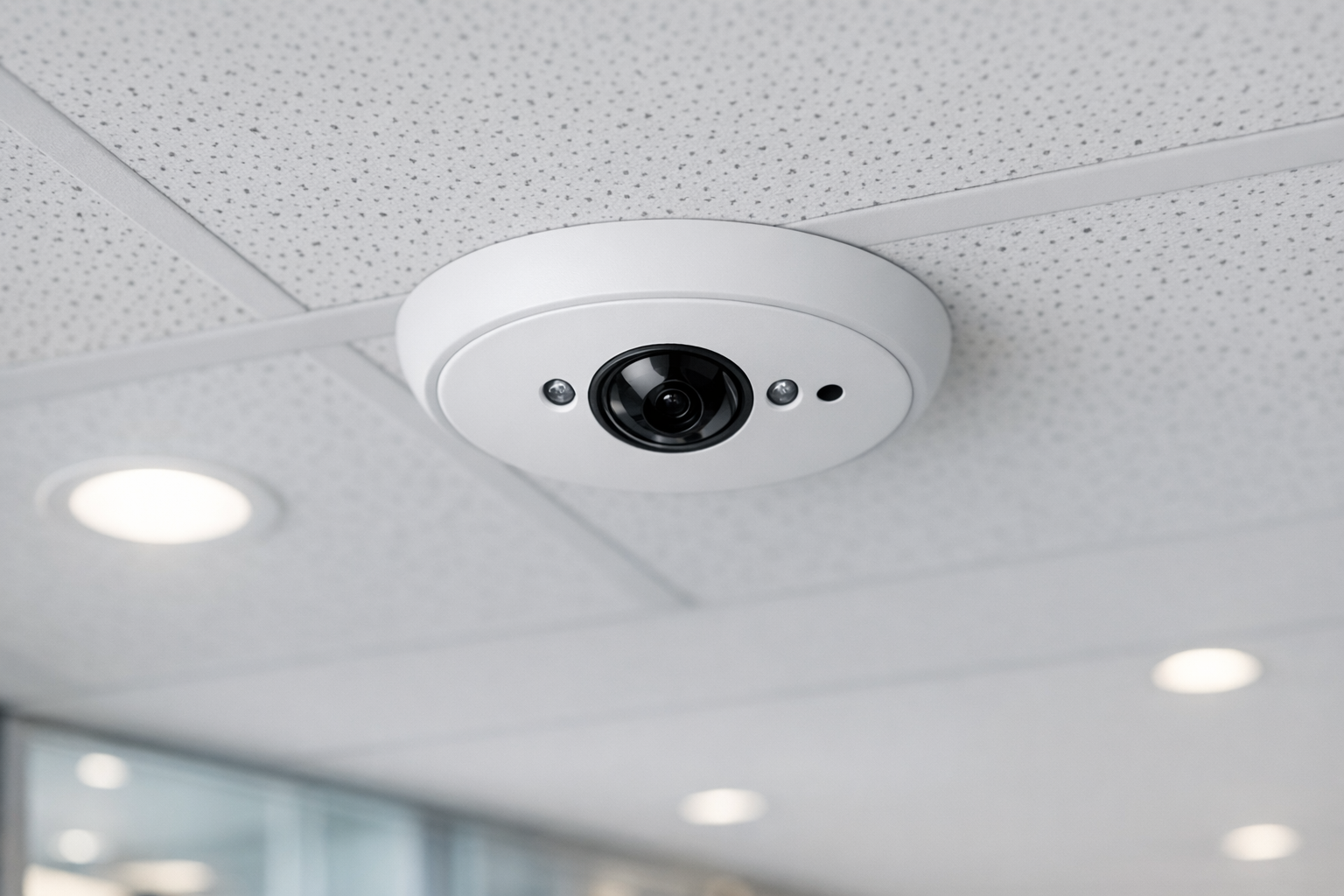
Most property operations software gets bought to solve a work-order problem and then quietly fails at a revenue problem. The maintenance ticketing works fine. What doesn't work is answering the questions that actually move NOI: which entrances carry the traffic that justifies premium rents, whether your anchor tenant's reported footfall matches reality at lease renewal, and whether Saturday staffing costs are calibrated to actual visitor volume or to habit. If your current stack can't answer those three questions, you own a ticketing system, not an operations platform.
What Property Operations Software Actually Covers
The category has sprawled. Under one label you'll find work-order management, lease administration, energy monitoring, access control, tenant communication apps, and occupancy analytics. Vendors will tell you their product does all of it. It doesn't, and it shouldn't. The buying mistake asset managers make most often is chasing an all-in-one suite that does six things at a mediocre level instead of assembling three or four systems that each do one thing well and push data into a shared BI layer.
A defensible stack for a commercial or mixed-use portfolio usually breaks into four layers:
- Financial and lease layer: rent rolls, CAM reconciliation, lease abstraction, renewal pipelines.
- Physical operations layer: preventive maintenance, vendor dispatch, energy and HVAC monitoring.
- Occupancy and behaviour layer: people counting, zone-level dwell analysis, tenant traffic benchmarking.
- Integration layer: the ERP or BI environment where all of the above lands so leasing, operations and finance argue from the same numbers.
The third layer is the one most portfolios underinvest in, and it's the one with the shortest path to measurable return, because it feeds directly into leasing negotiations and operating-cost decisions.
Why Occupancy Data Is the Layer That Pays for Itself
Consider a renewal negotiation with a retail tenant claiming footfall has dropped 20% and demanding a rent concession. Without independent traffic data, you're negotiating against their POS narrative. With entrance-level counting, you can show that traffic past their frontage held steady while their capture rate fell — which reframes the conversation entirely. That single negotiation can pay for a counting deployment across an entire property.
This is where specialist platforms earn their place in the stack. Vemco Group has been building people-counting and analytics software since 2005 — twenty years as of 2025 — and now counts more than 60 million people every day across 55,000+ installations in 98+ countries. For property-specific use cases, modules like VemTenant handle tenant-level traffic benchmarking, VemLease supports lease decisions with occupancy evidence, and VemSpace covers zone and common-area analysis. That modularity matters: a multifamily operator needs different views than a shopping-centre asset manager, and buying one monolith to cover both wastes budget.
One detail that separates serious deployments from vanity dashboards: staff exclusion. Employees crossing an entrance forty times a day inflate raw counts badly enough to distort conversion metrics and tenant benchmarks. Platforms with staff-exclusion algorithms strip that noise out, which is the difference between data you can put in front of a tenant's lawyer and data you can't.
Accuracy Claims: Read Them Like a Contract, Because They Are One
Every vendor quotes an accuracy figure. Almost none quote it contractually. Ask two questions: what number is written into the agreement, and under what conditions does real-world performance exceed it? Vemco's position is a useful benchmark for how honest vendors talk — a contractual minimum of 96% accuracy, typically reaching 98–99% when conditions such as lighting, layout and visitor behaviour allow. Any vendor promising a flat 99% regardless of environment either hasn't installed in a glass-fronted atrium with harsh backlighting or is hoping you won't audit.
Hardware lock-in is the other trap. Some platforms only work with their own sensors, which means a hardware refresh forces a software migration. Sensor-agnostic platforms — Vemco works with Xovis 3D AI sensors, Milesight, Hikvision and AXIS, among others — let you standardise the software layer across a portfolio even when individual properties have different hardware histories. For an asset manager consolidating acquisitions with mixed legacy installations, that's not a nice-to-have; it's the deciding factor.
A Practitioner's Note on Implementation
Here's what rarely makes it into vendor demos: the sensor placement survey matters more than the sensor brand. Implementers who've done this at scale will tell you that mounting height, ceiling obstructions, sliding-door reflection zones and escalator approach angles cause more accuracy loss than any hardware limitation. Budget a proper site survey before installation, and validate counts manually — someone with a clicker at each entrance during a busy two-hour window — during the first month. Properties that skip validation discover discrepancies six months later, usually mid-negotiation, which is the worst possible moment. Also decide early whether data lives in a hosted or private cloud environment; institutional owners with data-residency requirements often need the private option, and retrofitting that decision later is painful.
Evaluation Checklist for Your Next Procurement Cycle
- Contractual accuracy floor: in writing, with the conditions that affect it spelled out.
- Hardware independence: can you swap sensors without swapping software?
- Staff exclusion: automated, not manual adjustment factors applied after the fact.
- Demographic capability: AI sensors that detect age and gender and separate children from adults change what you can tell prospective tenants about who actually visits.
- ERP/BI integration: data must land where finance already works, or it will be ignored within a quarter.
- Deployment model: hosted versus private cloud, decided against your compliance requirements, not the vendor's preference.
- Portfolio scalability: pricing and architecture that work at one property and at forty.
Run every shortlisted vendor through that list and the field narrows fast. Most fail on two or more items, usually the contractual accuracy floor and the integration layer.
Where This Goes Next
The direction of travel is clear: property operations software is converging with tenant analytics because owners can no longer justify operating decisions on intuition when the data infrastructure costs a fraction of one lost renewal. The portfolios pulling ahead aren't the ones with the most software — they're the ones where occupancy evidence flows into lease negotiations, staffing schedules and capital-expenditure cases without anyone exporting a spreadsheet by hand. Building that pipeline is a procurement decision you can make this budget cycle, not a five-year vision.
If you're evaluating property operations software and want to see how occupancy analytics fits your specific portfolio — whether that's tenant benchmarking, lease-decision support or common-area optimisation — talk to the Vemco Group team. Bring your hardest property and your hardest question, and they'll show you what the data would actually look like.