

/global/header/smart-buildings.svg)


/global/header/facility-management.svg)






/global/header/leisure.svg)





Two stores in the same chain post identical weekly revenue. Most reporting dashboards would call that parity. A footfall counter tells a different story: one store converted 22% of 4,000 visitors, the other converted 11% of 8,000. Same revenue line, completely different problems — and completely different fixes. The first store may need more traffic; the second is bleeding sales at the shelf, the queue or the fitting room. Without footfall counting, that distinction is invisible, and budget gets spent on the wrong lever.
This article stays deliberately narrow: how a footfall counter feeds the conversion rate, and how that single ratio changes the decisions chain managers, store managers and commercial directors make every week. If you want the broader picture of traffic terminology and measurement methods, the pillar article What is Footfall covers it. Here, we go deep on one metric.
The mechanics: one sensor, one division, one honest number
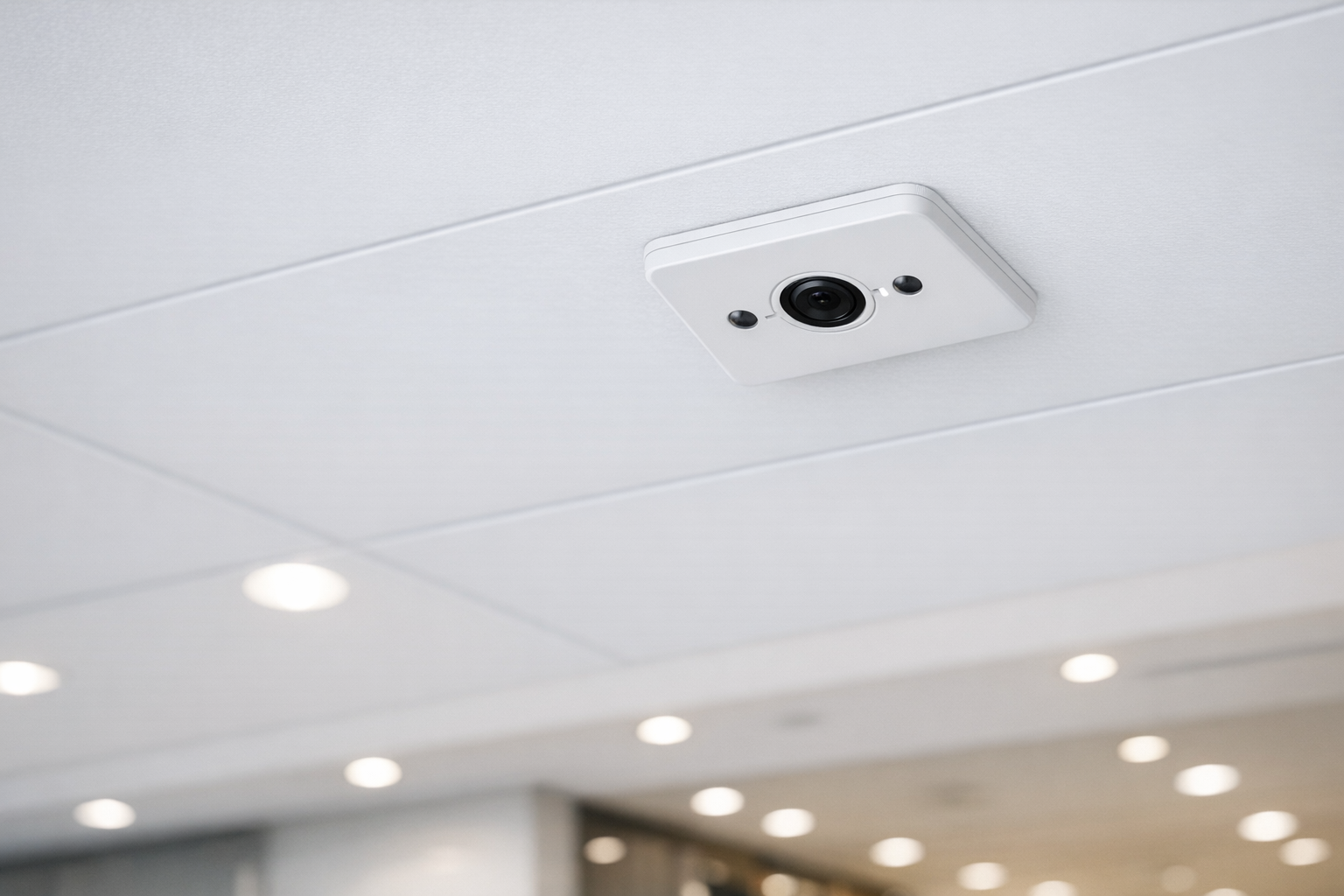
A footfall counter — sometimes called a people counter in technical documentation — sits above the entrance and counts every visitor who walks in. Divide POS transactions by that count and you have your conversion rate. The arithmetic is trivial. What matters is that both inputs are trustworthy, because a conversion rate built on soft data is worse than no conversion rate at all: it gives false confidence.
Two things break the number in practice. First, counting accuracy. Vemco Group works to a contractual minimum of 96% accuracy, typically reaching 98–99% when conditions such as lighting, store layout and visitor behaviour allow. That contractual floor matters more than the headline figure: it means the number is defensible when a store manager challenges it in a performance review, which they will. Second, staff passages. In a mid-sized store, employees crossing the entrance line — deliveries, smoke breaks, trolley runs — can inflate visitor counts by a noticeable margin and quietly deflate conversion. Filtering staff out of the count is not a nice-to-have; it is the difference between a metric people trust and one they argue about.
The diagnostic power: which lever is actually broken?
Revenue alone tells you something went wrong. Footfall plus conversion tells you where. The logic splits cleanly:
- Revenue falling, footfall stable: the problem is inside the store. Traffic is arriving as usual but fewer visitors are buying. Look at staffing levels against peak hours, queue lengths at the till, and stock availability on key lines. Marketing spend will not fix this — it will send more people into the same broken experience.
- Footfall falling, conversion stable: the store is doing its job with the visitors it gets. The problem sits upstream — campaign reach, local competition, the location itself, or a shift in the catchment area. Retraining the team or reworking the layout wastes effort here.
This split sounds obvious once stated, yet most chains still run the diagnosis backwards: revenue drops, head office demands action, and the store manager — lacking traffic data — defends themselves with anecdotes. A footfall counter replaces that argument with a five-minute look at two curves.
Store-versus-store comparison without the distortion
Ranking stores by revenue rewards location, not performance. A high-street flagship with heavy passing traffic will beat a retail-park unit on turnover every quarter, regardless of how well either team actually sells. Conversion rate strips out the location advantage and measures what the team does with the visitors they receive.
For commercial directors, this changes three concrete decisions. Bonus schemes can reward genuine sales performance rather than postcode luck. Best-practice identification becomes real: the store converting at 25% in a quiet location is the one whose routines you copy, not the flagship coasting on volume. And underperformance conversations become fairer — a manager converting well with declining traffic is fighting a different battle from one squandering strong footfall.
Rotas that follow the traffic curve, not the tradition
Hourly footfall counting exposes a pattern almost every implementer recognises: staffing schedules built on habit rather than data. A common example is the lunchtime mismatch — staff breaks scheduled between 12:00 and 14:00, precisely when the footfall curve peaks in city-centre locations. Conversion drops in that window not because the team sells badly, but because half of them are in the break room while the queue grows.
Here is the practitioner's observation that separates chains who get value from footfall counting from those who do not: the insight is rarely the hard part. Getting a store manager to restructure a rota that has run the same way for six years — that is the hard part. The chains that succeed give store managers direct access to their own hourly curves, rather than sending edicts from head office. When a manager sees their own Tuesday peak at 17:30 clash with a shift change at 17:00, they fix it themselves, and the fix sticks.
One platform, not two spreadsheets
Conversion rate only works as a management tool if it arrives without manual effort. When traffic data lives in one system and sales data in another, someone exports two files every Monday, merges them, and the whole exercise dies the week that person goes on holiday. Vemco combines footfall counting and sales data in one platform, so conversion is calculated continuously per store, per hour — ready for the Monday trading meeting without anyone touching a spreadsheet.
That automation also enforces consistency. Every store's conversion is calculated the same way, from the same filtered traffic counts, against the same transaction definitions. In multi-market chains, that consistency is what makes UK-versus-Germany or flagship-versus-outlet comparisons mean anything at all.
Where this leads next
Once footfall counting and conversion are embedded in weekly routines, two natural extensions follow: live occupancy, which tells you how many people are in the store right now, and dwell time, which shows how long visitors stay in specific zones. Both build on the same sensor foundation, and both deserve their own deep dive — but neither works without accurate entrance counting as the base.
If you are comparing stores on revenue alone, or debating whether a sales dip is a marketing problem or a store problem, a footfall counter answers the question in weeks, not quarters. Talk to Vemco Group about measuring conversion across your estate — with counting accuracy you can put in a contract, staff traffic filtered out, and sales data in the same view.