
In today’s highly competitive business environment, companies are under constant pressure to improve efficiency, understand customer behavior, and make faster decisions based on reliable data.
For businesses that operate physical spaces, one question remains especially important:
How are people interacting with the environment?
This is where footfall counting plays a central role.
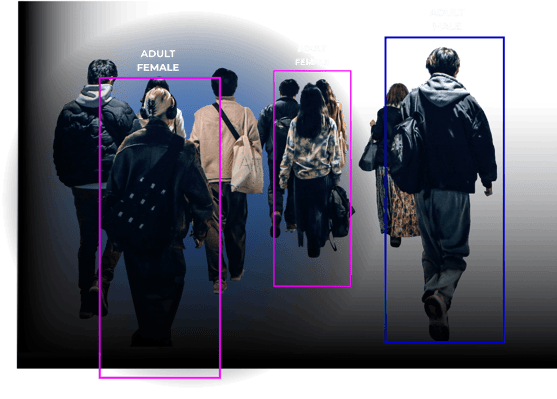
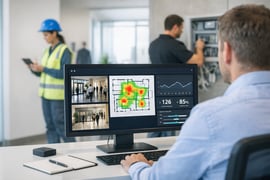
Footfall counting helps businesses measure visitor traffic, analyze movement patterns, and understand how customers use physical locations in real time. What may seem like a simple visitor count has developed into a valuable analytics tool that supports everything from staffing and marketing to customer experience and operational planning.
Across industries such as retail, transportation, hospitality, public institutions, and shopping malls, businesses are using footfall counting to gain clearer insights into visitor behavior and improve day-to-day decision-making.
In this article, we’ll look at what footfall counting is, how the technology works, and how businesses are using it to improve performance and customer experiences.
Get more visibility into visitor behavior with VemCount. Start your free demo today.
What Is Footfall Counting?
Footfall counting is the process of measuring how many people enter, exit, or move through a specific location.
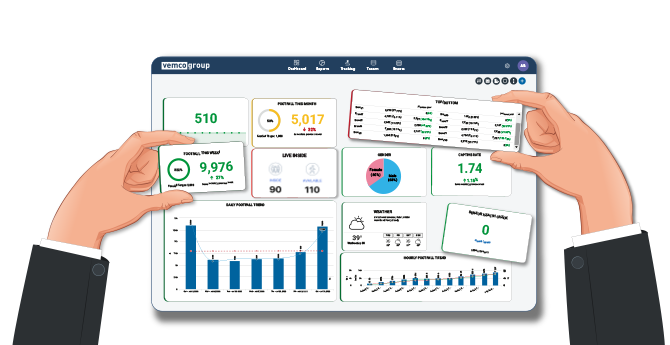
Modern footfall counting systems do much more than track visitor numbers. They also provide insights into:
- Customer movement patterns
- Occupancy levels
- Peak visiting hours
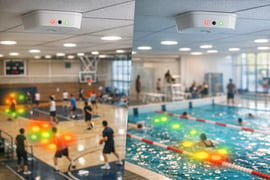
- Dwell time and zones
- Conversion opportunities
This information helps businesses better understand how their physical spaces are performing.
Why Footfall Counting Is Important
Without accurate visitor data, many operational decisions are based on assumptions.
Footfall counting provides measurable insights that help businesses understand:
- When locations are busiest
- Which entrances are most frequently used
- How customers move through spaces
- Whether campaigns increase visitor traffic
These insights support better planning and more informed decision-making.
How Footfall Counting Technology Works
Although footfall counting may appear straightforward, the technology behind it is highly advanced.
Modern systems use a combination of sensors, analytics software, and machine learning to track visitor activity accurately and in real time.
Technologies Used in Footfall Counting
Depending on the environment and business needs, systems may use:
- 3D sensors
- AI-powered video analytics
- Infrared technology
- Thermal detection
- Motion tracking systems
These technologies help distinguish people from surrounding movement and improve counting accuracy in busy environments.
More Than Visitor Numbers
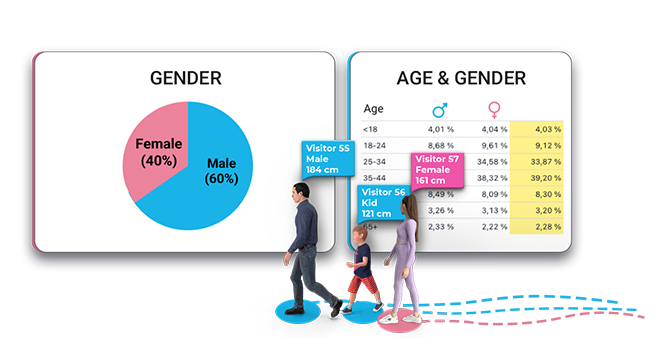
Today’s footfall counting systems can also provide insights into:
- Customer dwell times
- Queue lengths
- Traffic flow patterns
- Occupancy thresholds
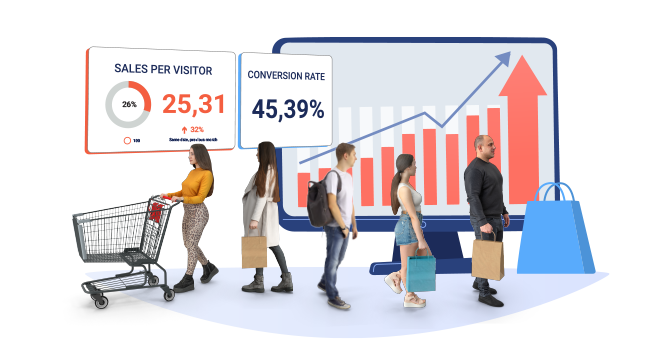
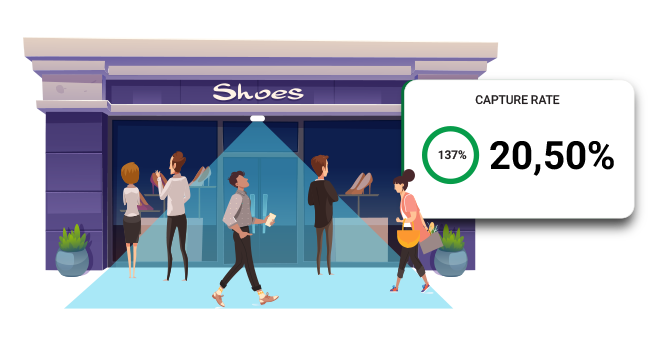
- Conversion rates when connected to POS systems
This gives businesses a much clearer understanding of customer behavior and operational performance.
Why Businesses Are Investing in Footfall Counting
Businesses across industries are placing greater importance on visitor analytics because customer behavior inside physical spaces has become increasingly difficult to predict. Online businesses have access to detailed customer data at every stage of the journey, while physical locations have traditionally relied on assumptions and manual observations. Footfall counting helps close that gap by giving organizations measurable insights into how visitors interact with real-world environments.
Instead of making decisions based on instinct, businesses can use actual traffic data to evaluate performance trends, identify busy periods, and understand how customer behavior changes over time. This allows managers to respond more quickly to operational challenges and improve planning across multiple departments.
For many businesses, footfall counting has become especially valuable for:
- Measuring campaign effectiveness
- Forecasting staffing requirements
- Comparing performance between locations
- Improving customer experiences
As competition increases across industries, businesses that understand visitor behavior more clearly are often in a stronger position to improve efficiency and customer satisfaction.
Footfall Counting in Retail
Retailers were among the first businesses to adopt footfall counting technology, and it continues to play a major role in how stores measure performance today. While sales figures remain important, they only tell part of the story. Footfall analytics provides insight into what happens before a purchase is made, helping retailers understand how visitors interact with the store environment itself.
For example, a location with strong visitor traffic but low sales may indicate problems with product placement, store layout, or promotional messaging. On the other hand, high conversion rates can reveal which merchandising strategies are working particularly well.
Retailers also use footfall data to improve operational planning. By understanding peak shopping periods and customer flow patterns, stores can schedule staff more effectively and reduce waiting times during busy hours. This contributes to a smoother customer experience while also helping businesses manage resources more efficiently.
Some of the most common retail use cases include:
- Measuring conversion rates
- Identifying peak traffic periods
- Improving workforce planning
- Evaluating marketing campaigns
When combined with POS data, footfall counting becomes an even stronger source of insight into customer behavior and store performance.
How Shopping Malls Use Footfall Counting
Shopping malls use footfall analytics to better understand customer flow across the property.
Visitor data helps mall operators identify:
- High-traffic areas
- Underperforming zones
- Popular entrances
- Customer movement between stores
These insights support better leasing decisions and improved tenant placement.
Supporting Tenant Performance
Footfall counting also helps mall operators understand how certain stores influence surrounding traffic.
Some retailers naturally attract visitors to nearby stores, while others may perform better in different locations within the mall.
Understanding these relationships helps create a stronger tenant mix and better customer journeys.
Footfall Counting in Airports and Transportation Hubs
Airports and transportation stations handle large volumes of people every day.
Managing movement efficiently is essential for safety and customer satisfaction.
Footfall counting helps transportation facilities:
- Monitor passenger traffic
- Improve queue management
- Allocate resources more effectively
- Reduce congestion during peak periods
Real-time occupancy insights also help operators respond more quickly to delays or unexpected crowding.
Improving Passenger Flow
Understanding movement patterns allows transportation hubs to improve:
- Security placement
- Boarding gate allocation
- Staffing levels
- Passenger routing
This contributes to smoother operations and better visitor experiences.
Footfall Counting in Public Spaces
Municipal authorities and public institutions increasingly use footfall counting to monitor how public spaces are used.
Visitor analytics can support:
- Crowd management
- Public safety
- Urban planning
- Event management
Supporting Occupancy Monitoring
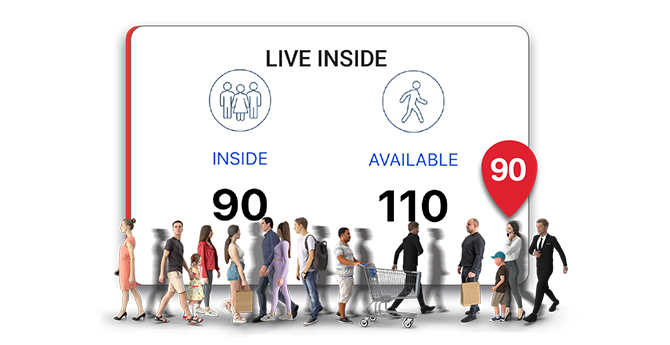
Footfall counting systems can also help authorities monitor occupancy levels in real time.
This is particularly useful in:
- Museums
- Libraries
- Public buildings
- Event venues
Real-time data allows organizations to respond quickly if spaces become overcrowded.
Turn visitor traffic into valuable business insights with VemCount. Start your free demo today.
The Business Benefits of Footfall Counting
Footfall counting provides value far beyond basic visitor tracking.
Businesses that use visitor analytics effectively can improve both operational performance and customer experiences.
Better Customer Experiences
Understanding how customers move through a space helps businesses improve layouts, reduce congestion, and create smoother visitor journeys.
More Efficient Resource Planning
Businesses can use footfall data to allocate resources more effectively, including:
- Staffing
- Security
- Cleaning schedules
- Customer support
Improved Marketing Insights
Footfall counting also helps businesses measure whether campaigns increase visitor traffic.
This makes it easier to evaluate marketing effectiveness and compare performance over time.
Increased Revenue Opportunities
By understanding visitor behavior more clearly, businesses can identify opportunities to improve:
- Conversion rates
- Store layouts
- Product placement
- Customer engagement
Over time, these improvements can contribute to stronger business performance.
Why Real-Time Analytics Matter
One of the most important developments in modern footfall counting is access to real-time analytics. Traditionally, businesses relied on historical reports that only provided visibility after operational issues had already occurred. Today, real-time data allows managers to react immediately to changing conditions.
For example, if occupancy levels suddenly increase or queues begin to grow, businesses can quickly allocate additional staff or open extra service points before customer experiences are negatively affected. This responsiveness is particularly valuable in busy environments such as retail stores, shopping malls, airports, and event venues.
Real-time analytics also improve visibility across multiple locations. Businesses can compare traffic patterns, identify unusual activity, and monitor operational performance as it happens rather than waiting for end-of-day reports.
This faster access to information helps organizations make decisions more confidently and respond more effectively to customer needs in real time.
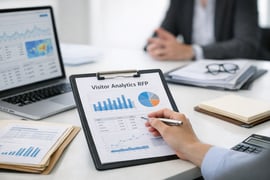
Choosing the Right Footfall Counting Solution
Not all footfall counting systems offer the same level of performance or flexibility.
Businesses should evaluate solutions based on:
- Accuracy
- Scalability
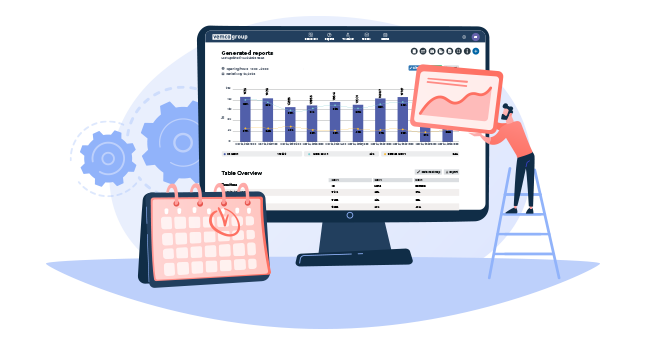
- Reporting capabilities
- Integration options
- Adaptability to different environments
The right system should support both short-term operational needs and long-term business goals.
Why Scalability Matters
As businesses grow, analytics needs often become more advanced.
A scalable solution allows organizations to:
- Add new locations
- Expand reporting features
- Integrate with additional systems over time
This helps ensure the technology continues to provide value as requirements change.
How VemCount Supports Businesses
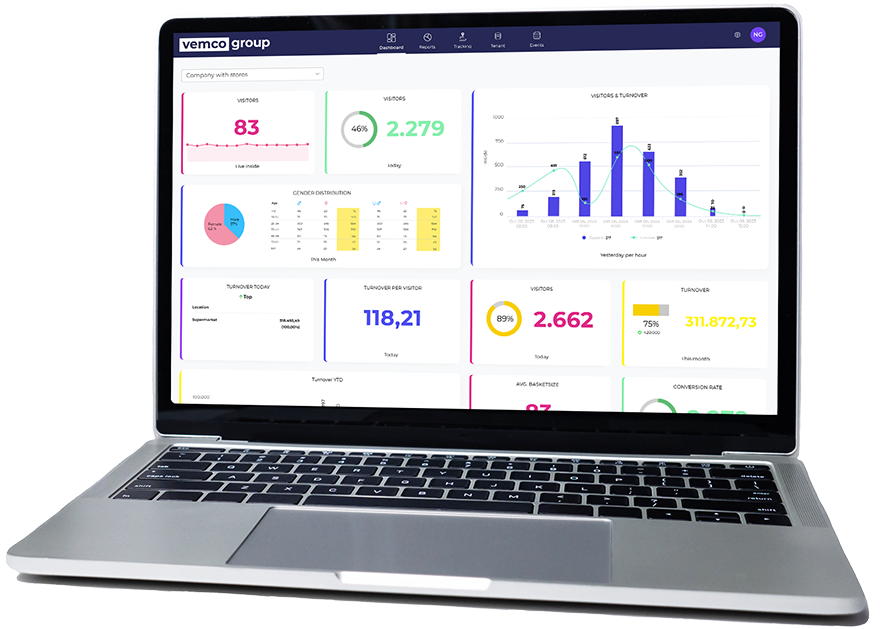
Vemco Group developed VemCount to help businesses better understand visitor behavior and improve operational decision-making.
VemCount combines advanced footfall counting technology with user-friendly analytics tools that provide clear and actionable reporting.
The platform helps businesses identify:
- Customer flow patterns
- Peak traffic periods
- High-performing locations
- Conversion opportunities
Turning Visitor Data Into Actionable Insights
With VemCount, organizations can make more informed decisions based on actual visitor behavior rather than assumptions.
This helps businesses improve:
- Customer experiences
- Staffing efficiency
- Operational planning
- Overall performance
By using real-time footfall analytics, businesses gain better visibility into how physical spaces are performing every day.
The Future of Footfall Counting
Footfall counting technology continues to develop as businesses place greater importance on data-driven decision-making. Modern systems are becoming more advanced, helping organizations not only measure visitor traffic but also better understand customer behavior and occupancy trends in real time.
Future developments are expected to focus on areas such as predictive analytics, improved occupancy monitoring, cloud-based reporting across multiple locations, and more detailed customer journey analysis. As businesses continue investing in visitor analytics, footfall counting will remain an important tool for improving operational performance and understanding how people interact with physical spaces.
Conclusion
Footfall counting has developed into an important analytics tool for businesses that want better visibility into customer behavior and operational performance.
By combining advanced sensors with real-time analytics, businesses can gain a clearer understanding of how people interact with physical spaces and use that information to support smarter decisions.
From retail stores and shopping malls to airports and public institutions, organizations across industries are using footfall counting to improve efficiency, customer experiences, and business performance.
Vemco Group helps businesses turn visitor data into meaningful insights through Vemcount, giving organizations the information they need to make more informed decisions in an increasingly data-driven world.
FAQ: Footfall Counting
What is footfall counting?
Footfall counting is the process of measuring how many people enter, exit, or move through a physical location.
How does footfall counting work?
Modern systems use technologies such as AI analytics, 3D sensors, infrared technology, and motion tracking to measure visitor movement accurately.
Which industries use footfall counting?
Retail, shopping malls, airports, transportation hubs, municipalities, and public venues commonly use footfall counting systems.
Why is footfall counting valuable?
It helps businesses improve operational planning, customer experiences, and decision-making through better visitor insights.
Can footfall counting systems integrate with POS systems?
Yes. Many systems integrate with POS data to help businesses measure conversion rates and customer behavior more accurately.