

/global/header/smart-buildings.svg)


/global/header/facility-management.svg)






/global/header/leisure.svg)






In modern retail, understanding who walks into your store is just as important as how many people visit. Customer demographics are no longer a “nice-to-have” - they are a fundamental driver of smarter decisions, better experiences, and higher revenue.
Yet many physical stores still rely on assumptions rather than data.
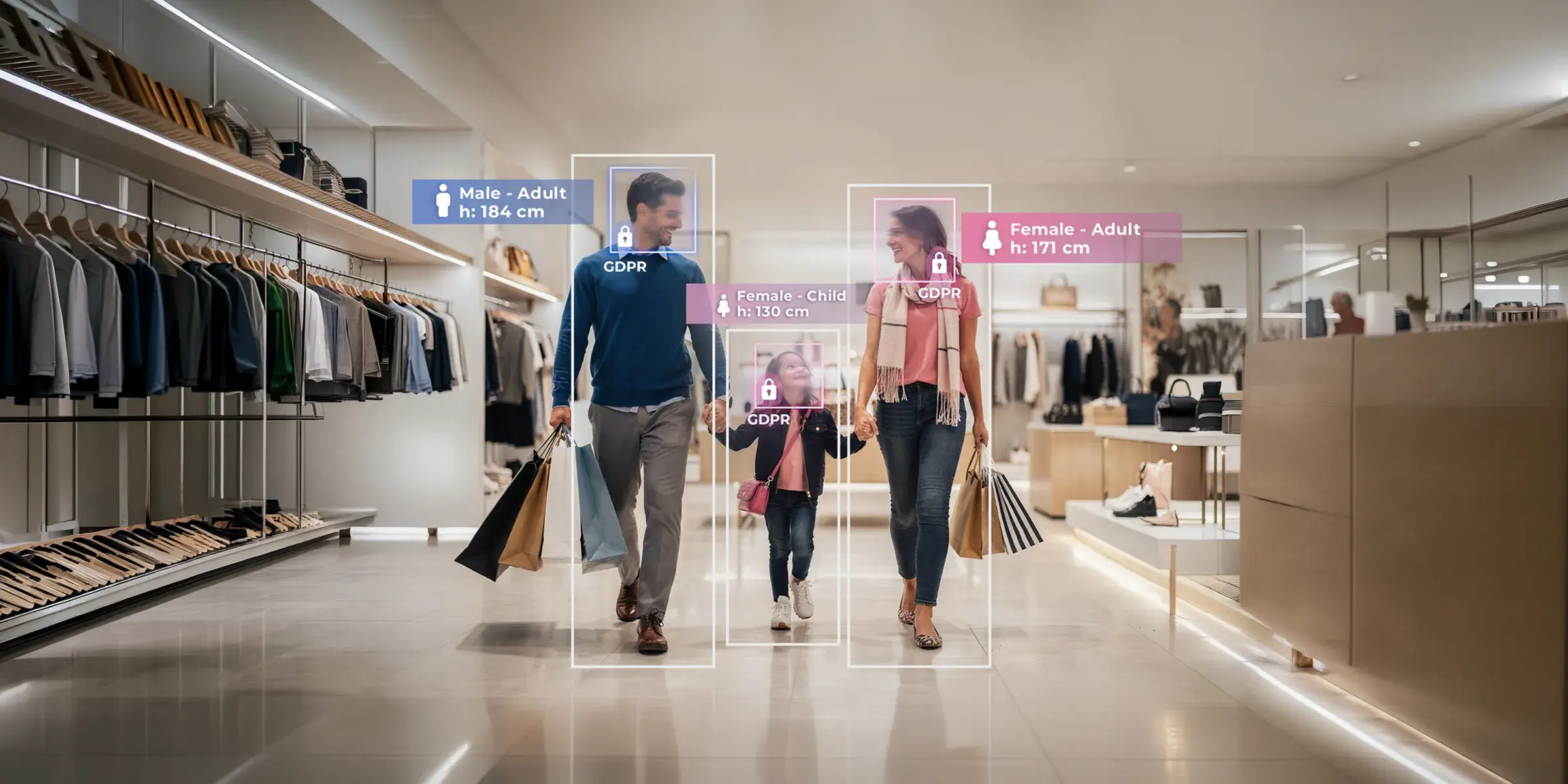
This is where customer demographics, powered by footfall and people counting technology, transform how retailers operate. By combining visitor traffic insights with demographic data like age and gender, retailers gain a complete picture of their audience in real time.
In this guide, we’ll explore what customer demographics are, how to collect them in physical retail environments, and how to use them to drive measurable growth.
Try Vemco Group free for 14 days - Generate professional footfall analytics reports in minutes.
What Are Customer Demographics?
Customer demographics refer to the measurable characteristics that define your audience. In retail, this typically includes:
- Age groups
- Gender distribution
- Income levels
- Education background
- Occupation
- Geographic location
These data points help retailers understand who their customers are—not just how many they are.
When combined with footfall data, customer demographics provide deeper insight into visitor behavior. For example, instead of simply knowing that 1,000 people entered your store, you can understand:
- Which age groups dominate peak hours
- Whether your campaigns attract your intended audience
- How gender distribution changes throughout the week
This level of visibility enables more precise and effective decision-making.
Why Customer Demographics Matter in Retail
Retail is becoming increasingly data-driven. Online stores have long relied on user analytics, but physical stores are now catching up thanks to advancements in people counting and AI-driven analytics.
Understanding customer demographics unlocks several key advantages:
1. More Targeted Marketing
Instead of broad campaigns, retailers can tailor messaging to specific demographic groups.
For example:
- Promote premium products to higher-income segments
- Highlight trends for younger audiences
- Adjust messaging based on gender preferences
This leads to higher engagement and improved ROI.
2. Improved In-Store Experience
Customer demographics allow retailers to personalize the physical shopping experience.
Examples include:
- Store layouts optimized for dominant customer groups
- Product placements aligned with shopper preferences
- Staff allocation based on peak demographic segments
The result is a more relevant and enjoyable shopping journey.
3. Better Product Decisions
Knowing your audience helps you stock the right products.
Retailers can:
- Identify which demographics drive the most sales
- Adjust inventory based on audience trends
- Reduce slow-moving stock
This directly impacts profitability and efficiency.
4. Smarter Store Operations
When demographic insights are combined with footfall, retailers can optimize operations such as:
- Opening hours
- Staffing levels
- Promotional timing
Instead of guessing, decisions are backed by real data.
How Retailers Collect Customer Demographics
Traditionally, collecting customer demographics required surveys or manual observation. These methods are:
- Time-consuming
- Often inaccurate
- Not scalable
- Lacking real-time insights
Today, modern people counting solutions provide a far more efficient approach.
The Shift to Automated Data Collection
Advanced sensor-based systems now enable retailers to gather both footfall and demographic data automatically.
These systems:
- Count visitors entering and exiting stores
- Analyze patterns in real time
- Provide demographic insights such as age and gender
- Deliver data through easy-to-use dashboards
This eliminates the need for manual processes while improving accuracy.
The Role of Footfall and People Counting in Demographic Analysis
Footfall is the foundation of all in-store analytics. It tells you how many people visit your location.
But on its own, footfall data has limitations.
When combined with customer demographics, it becomes significantly more powerful.
From Volume to Insight
Basic footfall data answers:
- How many people visited?
Customer demographics add:
- Who visited?
- When did specific groups visit?
- How do different demographics behave?
This shift—from volume to insight—is where real value is created.
Real-Time Visibility
Modern people counting systems provide real-time updates, allowing retailers to:
- Monitor traffic as it happens
- Identify demographic shifts instantly
- React quickly to changing patterns
This level of responsiveness was previously impossible in physical retail.
Key Benefits of Understanding Customer Demographics
Retailers that actively use customer demographics consistently outperform those that don’t. Here’s why:
Targeted Campaign Performance
Marketing becomes more efficient when it’s based on real audience data.
Instead of guessing, retailers can:
- Launch campaigns tailored to specific groups
- Measure performance against demographic segments
- Continuously refine messaging
Increased Conversion Rates
Understanding who enters your store helps align your offering with customer expectations.
This leads to:
- Better product relevance
- Improved store layouts
- Higher purchase likelihood
Enhanced Customer Loyalty
Personalization builds stronger relationships.
When customers feel understood, they are more likely to:
- Return to your store
- Engage with your brand
- Recommend your business
Data-Driven Expansion
Customer demographics help identify new opportunities.
Retailers can:
- Choose store locations based on target audience presence
- Expand into areas with similar demographic profiles
- Reduce risk when entering new markets
How Vemco Group Enables Customer Demographic Insights
Vemco Group automates people counting analytics for retailers, transforming raw footfall into actionable insights.
By combining advanced AI sensors with powerful analytics, Vemco Group enables retailers to understand both how many people visit and who they are.
What Makes the Solution Different?
Unlike traditional counting systems, Vemco Group provides:
- Highly accurate visitor counting
- Real-time demographic analysis (age and gender)
- Centralized dashboards across multiple locations
- Easy integration with existing retail systems
This allows retailers to move from basic tracking to full customer understanding.
Turning Data Into Action
Collecting data is only valuable if it leads to action.
With the right tools, customer demographics can directly influence business decisions.
Example Use Cases
Retailers using demographic insights can:
- Adjust store layouts based on dominant age groups
- Optimize staffing during peak demographic periods
- Launch targeted promotions for specific audiences
- Align product offerings with customer preferences
Each of these actions contributes to improved performance.
Ready to automate your analytics reporting? Start your free demo today.
Customer Demographics and the Future of Retail
Retail is evolving rapidly. The line between online and offline experiences continues to blur.
Customer expectations are higher than ever.
To stay competitive, physical stores must:
- Understand their audience in real time
- Personalize experiences at scale
- Make decisions based on data, not assumptions
Customer demographics, powered by footfall and people counting, are central to this transformation.
The Shift Toward Smart Stores
The future of retail is data-driven.
Stores are becoming smarter by leveraging:
- AI-powered analytics
- Automated data collection
- Real-time insights
Retailers who adopt these technologies gain a significant competitive advantage.
Common Challenges Without Demographic Data
Retailers who lack visibility into customer demographics often face:
- Ineffective marketing campaigns
- Poor inventory decisions
- Missed sales opportunities
- Inefficient staffing
Without data, decisions rely on guesswork.
This creates risk and limits growth potential.
Best Practices for Using Customer Demographics
To maximize the value of customer demographics, retailers should follow a structured approach:
1. Combine Footfall With Demographics
Footfall alone is not enough. Always pair it with demographic insights to understand visitor behavior.
2. Monitor Trends Over Time
Look beyond daily data. Identify patterns across weeks and months.
3. Align Teams Around Data
Ensure marketing, operations, and management teams use the same insights.
4. Act on Insights Quickly
Real-time data is only valuable if it leads to immediate action.
Conclusion: Turning Insight Into Growth
Customer demographics are no longer optional in modern retail.
They are essential.
By combining demographic insights with footfall and people counting, retailers gain a complete understanding of their audience. This enables better decisions, stronger customer relationships, and measurable growth.
Vemco Group makes this transformation simple by providing accurate, real-time data that retailers can act on immediately.
FAQ: Customer Demographics in Retail
What are customer demographics in retail?
Customer demographics are measurable characteristics such as age and gender that help retailers understand who visits their stores.
How is footfall related to customer demographics?
Footfall measures how many people visit, while customer demographics explain who those visitors are.
How accurate is people counting technology?
Modern systems like Vemco Group deliver highly accurate data, enabling reliable decision-making.
Why are customer demographics important?
They allow retailers to optimize marketing, improve customer experiences, and increase sales.
Can small retailers benefit from demographic data?
Yes. Even small stores can use demographic insights to make smarter decisions and compete more effectively.