

/global/header/smart-buildings.svg)


/global/header/facility-management.svg)






/global/header/leisure.svg)







Why Measuring the Entire Customer Journey Matters
Today's retail customers move fluidly between online and physical touchpoints. They might research a product on their phone, visit a store to see it in person, then complete the purchase later from their laptop. For retail directors and customer experience managers, this complexity creates a critical challenge: how do you measure the entire customer journey in retail when shoppers interact with your brand across so many channels? Without a complete picture, you risk optimising one touchpoint while damaging another, leaving revenue and loyalty on the table.
Measuring the full journey allows you to understand not just where customers buy, but why they buy, where they hesitate, and what pushes them away. This holistic view is the foundation of meaningful experience improvements that drive both satisfaction and sales.
Mapping Every Touchpoint
The first step is identifying every interaction a customer has with your brand. Many retailers underestimate how many touchpoints exist. A comprehensive journey map typically includes:
- Awareness: Social media, advertising, word of mouth, and search results.
- Consideration: Website browsing, product reviews, and in-store displays.
- Purchase: Checkout flows, in-store payment, and click-and-collect.
- Post-purchase: Delivery, returns, customer support, and loyalty programmes.
Once mapped, each touchpoint becomes a place where you can capture data and feedback. The goal is to connect these points into a single, continuous story rather than treating them as isolated events.
Choosing the Right Metrics
To measure the entire customer journey in retail, you need a balanced mix of quantitative and qualitative metrics. Relying on a single number rarely tells the full story. Consider tracking:
- Net Promoter Score (NPS): Measures overall loyalty and likelihood to recommend.
- Customer Satisfaction (CSAT): Captures satisfaction at specific moments.
- Customer Effort Score (CES): Reveals how easy or difficult interactions are.
- Conversion and abandonment rates: Highlight where customers drop off.
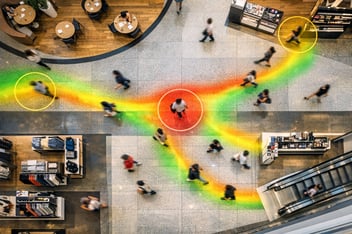
- Footfall and dwell time: Show physical store engagement patterns.
The real power comes from combining these metrics across channels so you can see how an experience in one area influences behaviour in another.
Capturing Feedback in the Moment
Surveys sent days after an interaction often suffer from low response rates and faded memories. In-the-moment feedback tools, such as in-store terminals or smiley-button kiosks, capture genuine sentiment while the experience is still fresh. Placing these touchpoint feedback devices at strategic locations gives you continuous, real-time data without burdening customers with lengthy questionnaires.
When feedback is collected immediately, you can pinpoint exactly which touchpoint triggered a positive or negative reaction. This precision is essential for accurate journey measurement.
Unifying Data Across Channels
One of the biggest obstacles to measuring the complete journey is siloed data. Your e-commerce platform, point-of-sale system, customer service software, and feedback tools often operate independently. To gain a true end-to-end view, integrate these data sources into a centralised dashboard.
A unified system lets you follow individual customers as they move between channels, revealing patterns you would otherwise miss. For example, you might discover that customers who experience long in-store wait times are more likely to abandon their online carts later. These cross-channel insights are impossible to uncover when data lives in separate systems.
Turning Insights into Action
Measurement is only valuable if it leads to improvement. Once you have identified friction points, prioritise them based on their impact on revenue and loyalty. A structured approach helps experience managers act decisively:
- Identify: Use journey data to spot the touchpoints causing the most frustration.
- Prioritise: Focus on changes that affect the largest number of customers.
- Implement: Make targeted improvements and communicate them to staff.
- Re-measure: Track the same metrics to confirm the change worked.
This continuous loop of measuring, acting, and re-measuring ensures your customer experience strategy evolves alongside changing expectations.
Building a Culture of Customer Focus
Technology and metrics alone cannot transform the customer journey. Retail directors must embed a customer-first mindset throughout the organisation. Share journey data with frontline staff, celebrate improvements, and tie team goals to experience outcomes. When everyone understands how their role influences the broader journey, measurement becomes a shared responsibility rather than a back-office task.
Take the Next Step
Measuring the entire customer journey is a powerful way to boost loyalty, increase conversions, and stay ahead of competitors. With the right tools and a connected data strategy, you can turn scattered touchpoints into a clear, actionable picture. If you are ready to gain deeper insight into your customers' experiences, contact our team today to discover how we can help you measure and improve every step of your retail journey.