


/global/header/smart-buildings.svg)


/global/header/facility-management.svg)






/global/header/leisure.svg)






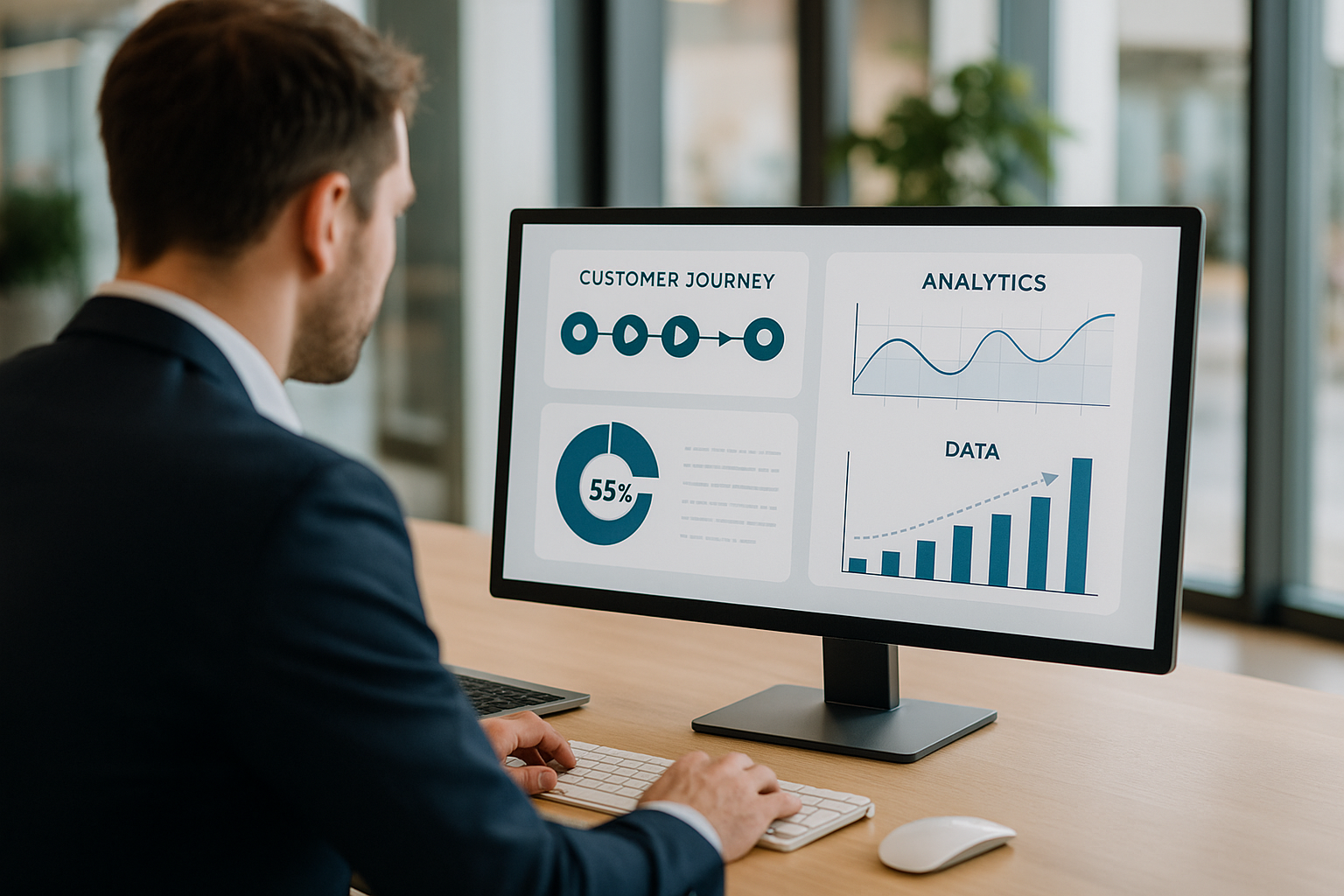
Understanding the Modern Retail Customer Journey
Every shopper who walks into a physical store follows a path. They enter, browse, pause at displays, compare products, queue at checkout, and either complete a purchase or leave empty-handed. For decades, retailers had little visibility into this journey beyond final sales figures. Today, customer journey analytics transforms these once-invisible movements into actionable intelligence that directly improves retail store performance. By mapping how customers behave from entry to exit, retail directors and store managers can pinpoint exactly where experiences succeed and where they fail.
What Customer Journey Analytics Actually Measures
Customer journey analytics combines data from multiple touchpoints to create a complete picture of in-store behaviour. Rather than relying on guesswork, operations teams gain measurable insights into how shoppers interact with the physical space. Key metrics include:
- Footfall and traffic patterns – how many people enter and how they move through the store.
- Dwell time – how long customers spend in specific zones or departments.
- Conversion rates – the percentage of visitors who become buyers.
- Queue lengths and wait times – friction points that drive abandonment.
- Hot and cold zones – areas that attract attention versus those that are ignored.
When these data points are combined, they reveal the full story behind your numbers and help explain why performance rises or falls.
Turning Insights into Better Store Layouts
One of the most immediate benefits of customer journey analytics is optimising store layout. If analytics show that shoppers consistently bypass a high-margin product display, you can relocate it to a high-traffic zone. If dwell time is high in one section but conversion remains low, this signals a pricing, signage, or staffing issue. Retail directors can use this evidence to redesign floor plans that guide customers naturally toward key products, increasing both basket size and overall sales.
Smarter Staffing and Resource Allocation
Labour is one of the largest controllable costs in retail. Customer journey analytics allows operations teams to align staffing with actual demand rather than assumptions. By analysing footfall patterns across hours and days, managers can schedule employees precisely when and where they are needed. This reduces long queues during peak periods and prevents overstaffing during quiet times. The result is a measurable improvement in customer satisfaction and a more efficient payroll, directly boosting retail store performance.
Reducing Friction at Critical Touchpoints
Abandoned purchases are often caused by avoidable friction. Long checkout queues, confusing layouts, and out-of-stock shelves all push customers toward competitors. Journey analytics highlights exactly where these breakdowns occur. For example, if data reveals that conversion drops sharply when queue times exceed three minutes, you can introduce additional registers or mobile checkout solutions during busy periods. Eliminating these pain points keeps shoppers engaged through to the final transaction.
Connecting Online and In-Store Behaviour
Modern shoppers move fluidly between digital and physical channels. They research online, check stock, then visit a store to buy. Customer journey analytics bridges these worlds by linking online intent with in-store action. Retail teams can identify which digital campaigns drive store visits and how online behaviour influences physical purchasing. This unified view helps operations teams deliver consistent, seamless experiences across every channel, strengthening loyalty and lifetime value.
Benchmarking and Continuous Improvement
For organisations with multiple locations, journey analytics enables powerful benchmarking. Store managers can compare performance across branches, identify best practices in top-performing stores, and roll them out network-wide. If one location achieves significantly higher conversion, analytics can uncover the reasons, whether it is layout, staffing, or product placement, and replicate that success elsewhere. This creates a culture of continuous, data-driven improvement rather than reactive decision-making.
Measuring the Return on Investment
The value of customer journey analytics is ultimately proven in measurable returns. Retailers who adopt these tools typically see improvements in several key areas:
- Higher conversion rates from optimised layouts and reduced friction.
- Increased average transaction value through strategic product placement.
- Lower operating costs via demand-based staffing.
- Improved customer satisfaction and repeat visits.
These gains compound over time, making analytics one of the most cost-effective investments a retail organisation can make.
Getting Started with Journey Analytics
Implementing customer journey analytics does not require a complete overhaul. Start by defining clear objectives, such as reducing queue times or improving conversion in specific departments. Choose technology that integrates with your existing systems and provides intuitive dashboards for store managers. Most importantly, ensure your teams are trained to act on the insights. Data only delivers value when it drives concrete decisions on the shop floor.
Ready to transform your stores with data-driven insights? Contact our team today to discover how customer journey analytics can elevate your retail store performance.